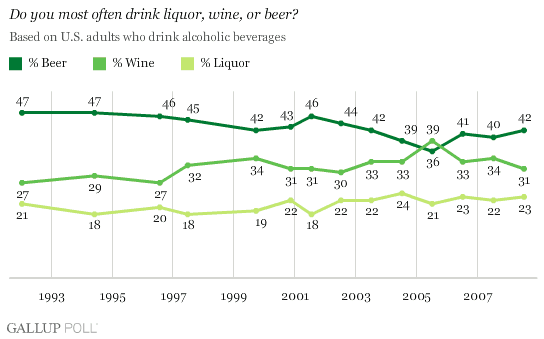
PRINCETON, NJ -- Beer has regained a comfortable margin over wine when U.S. drinkers are asked to name which alcoholic beverage they most often drink. In recent years, wine had narrowed the gap, including pulling slightly ahead in 2005 (though not by a significant margin), but for the first time since 2002, beer enjoys a better-than-double-digit advantage over wine.
These results are based on Gallup's annual Consumption Habits poll, conducted July 10-13 of this year.
As the graph shows, beer still is not as widely preferred today as it was in the early 1990s, when close to half of Americans said it was their alcoholic drink of choice. Preferences for wine have fallen back from their 2005 high (39%) to 31%.
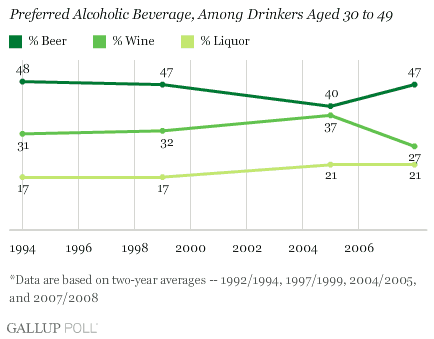
The shift back to beer from wine in recent years has occurred mostly among Americans between the ages of 30 and 49. In combined data from the 2004 and 2005 Consumption surveys, drinkers between 30 and 49 were about as likely to prefer wine as beer. Now, drinkers in this age bracket have shifted back to beer, with an average of 47% in the combined 2007-2008 data saying they most often drink beer.
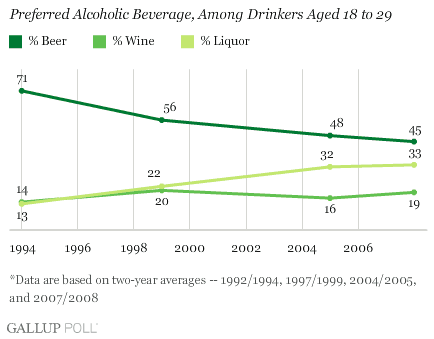
Drinking preferences of younger adults have remained stable in recent years, with 18- to 29-year-olds still showing a wide preference for beer, though nowhere near as large as it was in the 1992-1994 data. Younger adults are more likely to say they drink liquor most often than to say they drink wine.
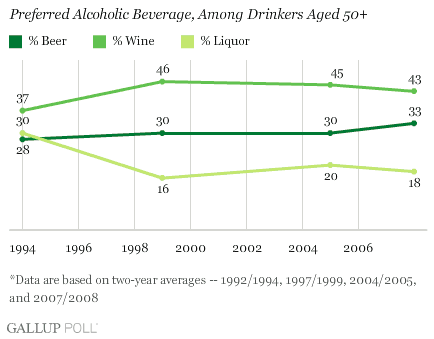
In contrast, wine is the preferred beverage of older drinkers, and has been since the early 1990s. Drinkers aged 50 and older have also had stable preferences in recent years.
This year's consumption poll also finds:
- Sixty-two percent of Americans say they drink alcohol, a percentage that has varied little in the last 10 years.
- The average drinker reports having consumed 3.8 alcoholic drinks in the past week. This is the first time the average has dropped below 4 drinks since 2001. It had been as high as 5.1 in 2003.
- Continuing a recent trend, Gallup finds a higher proportion of drinkers claiming to have had an alcoholic beverage in the last 24 hours. Exactly 36% of Americans have reported drinking alcohol in the last 24 hours in each of the last four Gallup consumption polls. This compares to an average of 30% from 2000-2004.
- "Daily drinking" is more common among Americans of higher socioeconomic status. Over the past four years, an average of 42% of college graduates report having had a drink in the last 24 hours, compared with 32% of those who have not graduated from college.
- Similarly, 41% of drinkers with incomes of $75,000 or greater say they have had a drink in the past 24 hours, compared with 36% of middle-income respondents (those with household incomes between $30,000 and $74,999) and just 23% of those residing in lower-income households (with incomes of less than $30,000).
- Men are more likely than women to have had a drink during the previous day, 43% to 28%.
- Older drinkers are more likely than younger drinkers to have consumed alcohol in the previous 24 hours -- 39% of those aged 50 and older say they drank in the last 24 hours, compared with 35% of those aged 30 to 49 and just 28% of those below 30.
Survey Methods
Results are based on telephone interviews with 1,016 national adults, aged 18 and older, conducted July 10-13, 2008. For results based on the total sample of national adults, one can say with 95% confidence that the maximum margin of sampling error is ±3 percentage points.
For results based on the sample of 625 adults who drink alcoholic beverages, the maximum margin of sampling error is ±4 percentage points.
Interviews are conducted with respondents on land-line telephones (for respondents with a land-line telephone) and cellular phones (for respondents who are cell-phone only).
In addition to sampling error, question wording and practical difficulties in conducting surveys can introduce error or bias into the findings of public opinion polls.
To provide feedback or suggestions about how to improve Gallup.com, please e-mail feedback@gallup.com.
