WASHINGTON, D.C. -- Nearly 20 years after Yemen's unification, Gallup finds distinct differences in attitudes along North-South lines. Yemenis in the South are less likely than those in the North to express faith in nearly every institution that Gallup asked about -- particularly the national government and the local police.
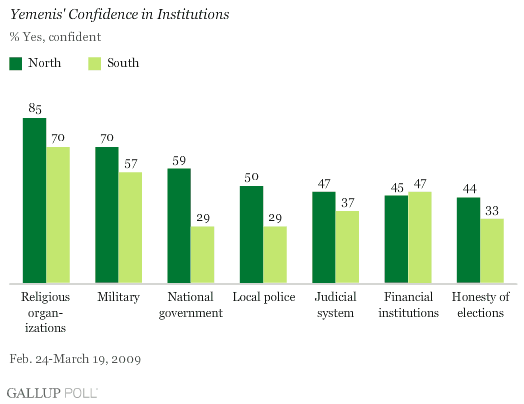
North and South Yemen unified in 1990. Civil war in 1994 cemented the merger, but as Gallup data reflect, some in the South remain dissatisfied with the national government. Dissaffection among Southerners, exacerbated by rising unemployment and prices, has boiled over into conflict numerous times since then. In July of this year, Southern separatists' violent protests resulted in the deaths of demonstrators and police officers.
Economic Divides
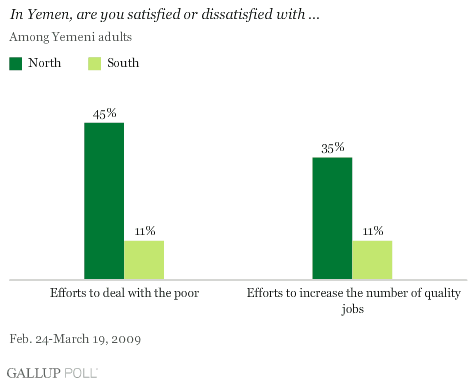
The poorest country in the Arab world, Yemen is grappling with high unemployment (estimated at 35%), high population growth, and widespread poverty, among other challenges. Citizens in neither the North nor South gave ringing endorsements to efforts to deal with the country's poor or increase the number of quality jobs. However, far fewer Yemenis in the South than in the North report being satisfied with either of these efforts. One in nine Yemenis (11%) in the South said they are satisfied with either, compared with more than 3 in 10 Yemenis in the North.
Bottom Line
Gallup's data suggest that a clear divide exists in the attitudes of Yemenis in the northern and southern regions. The regional differences observed in their confidence in the country's institutions and satisfaction with efforts to increase quality jobs and to help the poor may add to the challenges this economically disadvantaged country is already facing.
For complete data sets or custom research from the more than 150 countries Gallup continually surveys, please contact worldpollpartners@gallup.com or call 202.715.3030.
Survey Methods
Results are based on face-to-face interviews with 1,000 adults, aged 15 and older, conducted Feb. 24-March 19, 2009, in Yemen. For results based on the total sample of national adults, one can say with 95% confidence that the maximum margin of sampling error is ±4 percentage points. The sample size for the North, which includes the areas of Sa'ada, Dhamar, Ma'rib, Ibb, Taiz, Sana'a City, and Al Hodeidah, is 840, with a maximum margin of sampling error of ±4 percentage points. The sample size for the South, which includes the areas of Aden, Abyan, and Hadramawt, is 160, with a maximum margin of sampling error of ±10 percentage points.
The margin of error reflects the influence of data weighting. In addition to sampling error, question wording and practical difficulties in conducting surveys can introduce error or bias into the findings of public opinion polls.