WASHINGTON, D.C. -- With confidence in financial institutions declining in many parts of Europe, Gallup finds that many Europeans favor government intervention to address problems in the financial sector.
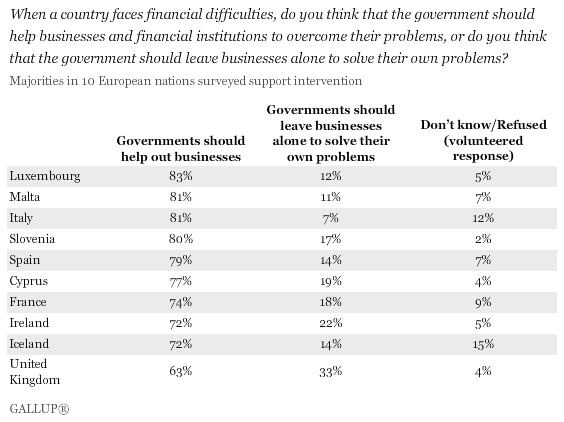
A median of 78% from 10 European countries say the government should help businesses and other financial institutions overcome their problems during times of financial difficulty. More than 7 in 10 respondents in nearly all of the countries Gallup surveyed support government intervention, including Luxembourg (83%), Malta (81%), Italy (81%), Slovenia (80%), Spain (79%), Cyprus (77%), France (74%), Ireland (72%), and Iceland (72%). Of the 10 countries, only in the United Kingdom were fewer respondents likely to say governments should help out businesses during times of economic hardship, with 63% saying this.
Despite ongoing debate over the exact nature of government interventions into the ongoing crisis, one thing is clear: action is favorable to inaction to a majority of respondents in the 10 European countries surveyed. While Gallup did not ask the same question in the U.S. as in Europe, other questions find Americans generally less favorable toward government intervention in business.
Bottom Line
Amid varied and widespread actions by European national governments and the European Union to address the current economic crisis, Gallup surveys in the region suggest citizens there are supportive of government intervention into the financial sector during times of crisis.
For complete data sets or custom research from the more than 150 countries Gallup continually surveys, please contact worldpollpartners@gallup.com or call 202.715.3030.
Survey Methods
Results are based on a nationally representative sample of adults, aged 15 and older, in each country cited in this article. Interviews were conducted via telephone between December 2008 and May 2009, with an interviewing period of approximately three weeks for each country. For results based on the total sample of national adults, one can say with 95% confidence that the maximum margin of sampling error ranged from a low of ±3.7 percentage points in the United Kingdom to a high of ±5.7 percentage points in Luxembourg.