Physician engagement (a physician's level of emotional attachment and loyalty to the hospital at which he or she practices) is one of the keys to positive financial performance for hospitals. However, high physician engagement is an elusive goal because it hinges more on emotion than on operational performance (see "Physician Engagement Is Built, Not Bought" in Related Items). Improving turnaround time for radiology reports, for example, will not achieve long-term bonding between a hospital and a physician. The physician will be happy only until another problem arises, and then dissatisfaction returns.
Gallup measures emotional attachment in customer-client relationships using eight survey items designed to ascertain customer (or physician) attitudes in four areas: confidence in the organization (or hospital, in the case of physician engagement), perceived integrity of the organization, pride in the organization, and feelings of passion toward the organization.
One of the best ways to find out how hospitals are doing at engaging physicians is to compare physician scores on these eight survey items to those of business-to-business customers in other industries. Gallup's customer engagement database includes surveys of about 5,000 physicians and 56,000 business-to-business customers.
Here's a look at how physicians' ratings of the hospitals they partner with compare with how respondents in other industries rate their business partners. The bars represent how much higher or lower ratings from the physician group are on each of the questions, at three different percentile levels for each group.
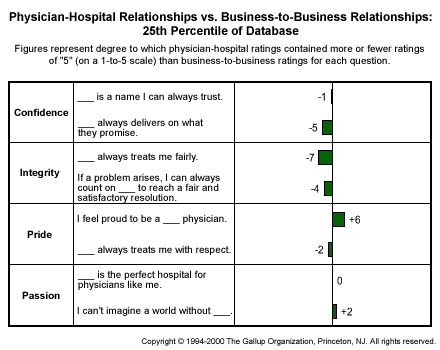
The ratings of those hospitals at the 25th percentile of Gallup's physician engagement database (meaning they do relatively poorly in this regard compared with the overall group of hospitals) are slightly below ratings at the same percentile (namely, poor performers) in other industries. Hospitals score above other industries only on two questions:
- I feel proud to be a _________ physician.
- I can't imagine a world without ____________.
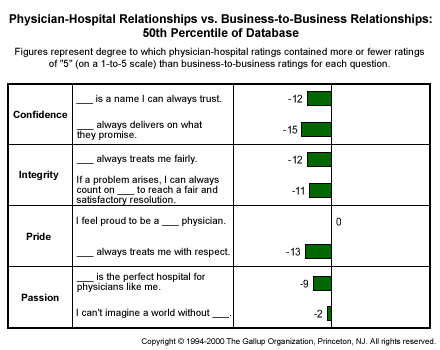
At the 50th percentile level -- average performers among each of the groups -- hospitals are significantly less successful at engaging physicians than businesses are at engaging their corporate partners (the only question on which hospitals do as well is "I feel proud to be a ________ physician"). This begins to suggest that the gap between hospital and business-to-business engagement performance increases as engagement levels rise among each group.
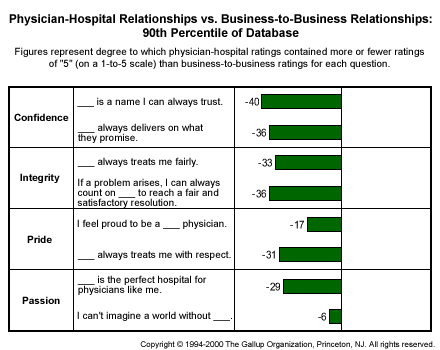
At the "world-class" engagement level (90th percentile), the gap between hospitals and businesses in other industries becomes dramatic. The percentage of physicians "strongly agreeing" with six of the eight items is at least 29 percentage points less than at the same percentile among business-to-business relationships.
How Are Hospitals Doing?
Overall, compared with businesses in other industries, hospitals are best at eliciting a sense of pride from the physicians at their hospitals (that is, physicians are proud to tell other people about the hospitals they practice at). Physicians also score comparatively well on the last engagement item, suggesting that they are somewhat passionate about their hospitals and tend to view them as irreplaceable.
But there are three key problem areas for hospitals seeking to engage their physicians. First, hospitals have been less successful in engaging their physicians than businesses in other industries have been in engaging their business customers. This lack of engagement may stem from a general sense of unhappiness that I have observed among physicians at hospitals across the country. As hospitals become more cost-conscious and quality-driven, they reduce physician decision flexibility (for example, by reducing their available choices of drugs and equipment) and are more likely to hold physicians accountable for perceived errors or misjudgments.
Second, relatively poor-performing hospitals (those in the 25th percentile of the database) do not differ dramatically in their engagement scores from poor performers in other industries. However, successful organizations in other industries (those in the 90th percentile) seem to have found pathways to enhancing engagement that hospitals have not been able to find. Thus, their scores tend to rise far higher than those of hospitals.
Finally, hospitals have failed in building medical staff engagement at the base of the pyramid. Confidence and integrity are where hospitals fall most short of other industries, suggesting that physicians don't trust their hospitals to do what's right or to satisfactorily resolve problems.
Bottom Line
Changes to policy, procedure, and equipment alone do not increase physician engagement. Hospitals have tried this approach and engagement is substantially below that of business customers in other industries. Hospitals truly seeking to improve engagement need to concentrate on restoring and maintaining physician trust by consistently delivering on what they promise, treating physicians fairly, and resolving conflicts and problems as soon as they occur.