Patient satisfaction is in the eye of the beholder -- patients have widely differing expectations when they go to the hospital, and may therefore perceive the same interactions differently. Age differences seem to alter people's perceptions of their patient experiences. These differences impact patient satisfaction scores.
Gallup's 2003 patient database, which contains tens of thousands of patient satisfaction surveys from approximately 400 hospitals for inpatient, outpatient surgery, outpatient test and treatment, and emergency department services, provides specific insight on how people of different ages view their healthcare experiences.
Emergency Department
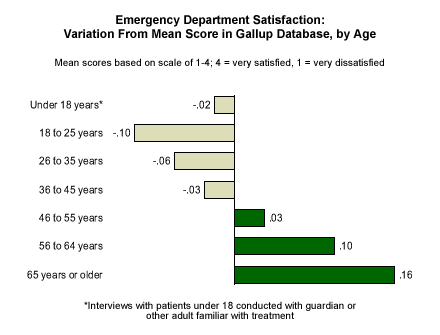
Gallup examined 130,000 patient ratings of satisfaction with the emergency department, looking at how the mean scores for each of seven age groups differ from the overall mean patient satisfaction scores.
There is a direct relationship between emergency department satisfaction and age, with the four youngest age groups (patients under 45) each averaging below the overall mean and the three oldest age groups averaging above the mean. Patients between the ages of 18 and 25 have the lowest satisfaction (.10 below the mean) and patients aged 65 and older have the highest satisfaction (.16 above the mean).
Outpatient Surgery
Emergency department facilities provide urgent, unplanned care, while outpatient surgery procedures are usually scheduled in advance. Despite the differing nature of these two services, outpatient surgery satisfaction by age follows a similar pattern to emergency department satisfaction by age, although the variation between age groups is not as great. Again, 18- to 25-year-olds are least satisfied at .07 below the mean. Patients between 56 and 65 years of age are most satisfied at .02 above the mean.
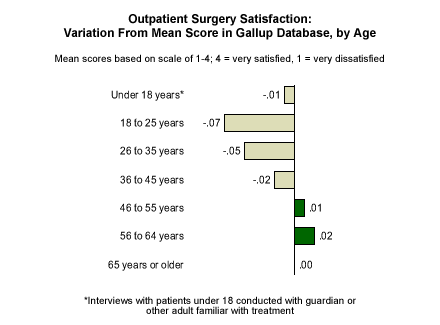
Outpatient surgery has the highest level of patient satisfaction among the four areas, while the emergency department receives the lowest satisfaction scores. This relationship may help explain why outpatient surgery receives more consistent satisfaction scores across all age groups. The planned nature of outpatient surgery services may help providers to provide a higher level of care to all patients, regardless of age.
Outpatient Test and Treatment
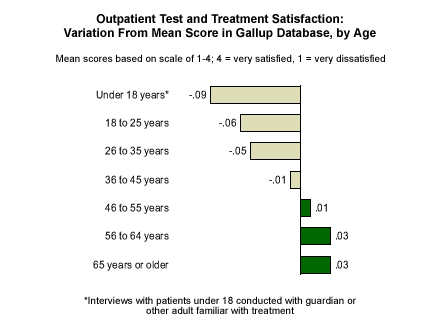
Outpatient test and treatment satisfaction by age also follows a pattern similar to that of the emergency department and outpatient surgery. Scores for patients in the middle age groups (those between the ages of 36 and 55) do not differ significantly from the overall mean scores, and patients over 56 score .03 above the mean. In this area, the lowest rating comes from patients under 18 -- .9 below the mean. (For these patients, Gallup conducts interviews with a guardian or other person familiar with the patient's treatment.)
Inpatient
Inpatient satisfaction breaks the mold when broken down by age. Patients between the ages of 18 and 35 are the most satisfied (.07 above the mean for 18- to 25-year-olds, .03 above the mean for 26- to 35-year-olds), and patients between the ages of 36 and 55 are the least satisfied (.05 below the mean).
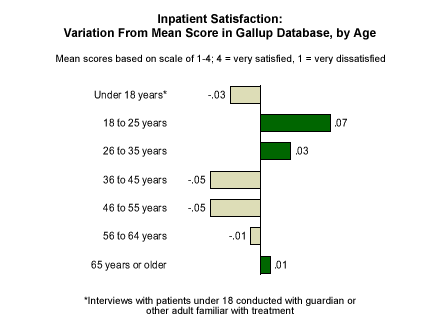
The high level of satisfaction among inpatients between the ages of 18 and 35 could be explained by the high percentage of women of childbearing age in that group. Women in childbirth make up a significant proportion of inpatients in their 20s and 30s, and my experience has suggested that obstetrical patients tend to have above average satisfaction with their inpatient experiences.
Bottom Line
These results do not indicate that patients of different ages receive different standards of care. Rather, patients of different ages have different expectations when they enter the hospital. Many older patients came of age in an era when doctor's orders were followed without question. But younger patients, who grew up in an age of healthcare consumerism, may tend to question their doctors more and have higher expectations of service. Healthcare organizations need to understand and anticipate the varying expectations of different age populations and modify their services accordingly.
Patient satisfaction scores by age also underscore the importance of ensuring a representative sample of all age groups when measuring satisfaction. If older patients (who are often more likely to respond to surveys) are over-represented in a survey sample, the scores may appear to be unrealistically high.