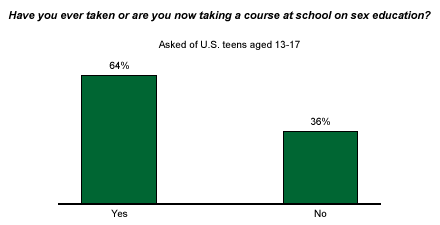
Sex education has become a standard part of the curriculum in most American schools, although the approach to teaching it is not nearly as universal. Almost two-thirds of 13- to 17-year-olds (64%) say they are taking or have taken a sex education course at their schools, according to a new Gallup Youth Survey*. The figure is lower among 13- to 15-year-olds (58%) than 16- to 17-year-olds (69%) -- so many younger teens who haven't taken sex education probably soon will.
A 1999 Gallup Poll found that most Americans were fine with teaching sex education at school: 60% of adults said it should be a required course in high schools, while another 32% said it should be offered but not required. However, there has been controversy in recent years about the approach those classes should take -- specifically, whether they should provide teens with information about birth control and safe sex, or whether they should promote abstinence from sexual activity. Those who prefer an abstinence-only curriculum argue that discussion of safe sex sends a mixed message and may encourage teen sexual activity. Those in favor of a comprehensive curriculum maintain the abstinence-only approach deprives teens of information important to their health.
A major study on sex education conducted in the fall of 2003 by National Public Radio, Harvard University, and the Kaiser Family Foundation found that (of three programs described to respondents) the most popular was a middle-ground solution, stressing abstinence but also discussing condoms and contraception. Forty-six percent of respondents chose that option, while 15% chose an "abstinence-only" approach that does not dispense information on contraception, and 36% selected an approach that put less emphasis on teaching abstinence and more on teaching teens to make responsible decisions about sex.
Which Approach Is More Common?
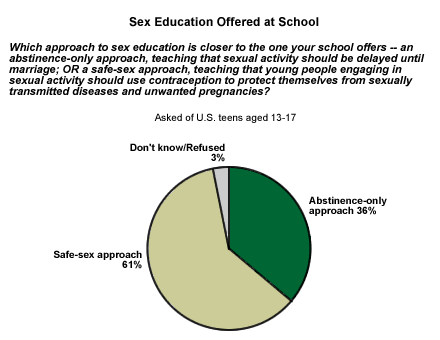
The Gallup Youth Survey asked teens who have taken a sex education class which approach is closer to the one their school takes -- an abstinence-only approach or a safe-sex approach. Thirty-six percent of teens who have taken sex education said "abstinence-only" is closer to their schools' approach, while 61% said the safe-sex approach is closer. These figures are fairly consistent with the NPR/Harvard/Kaiser study, which also included a survey of middle school and high school principals, 30% of whom said an approach that focuses only on abstinence (and does not mention contraception) best describes their schools' sex education classes.
Since 1996, federal funds have been available for abstinence-only programs, which has further fueled the debate about which approach is most effective. The federal funds may make abstinence-only programs attractive to schools, but community mores probably also influence the approach schools take. Teens in the more conservative Midwestern and Southern regions of the country are more likely than those on the coasts to say their schools stick closer to an abstinence-only curriculum.
Which Approach Is Best?
Do students rate the two approaches differently in terms of helping them understand matters related to sex?
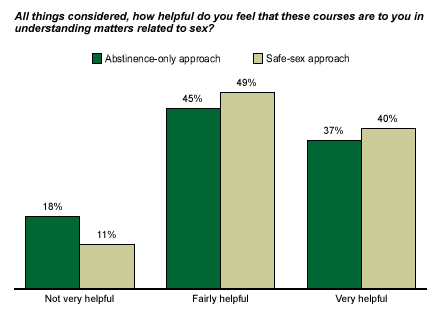
Not really. Overall, 38% of teens who took sex ed classes say these classes were "very helpful" to them, 47% say "fairly helpful" and 14% say "not very helpful." Teens who've had a class with an abstinence-only based approach are only slightly more likely than those who've taken one with a comprehensive approach to say their sex education class was "not very helpful."
Bottom Line
Opponents of the abstinence-only approach contend that it leaves teens ill equipped to protect themselves from STDs and unwanted pregnancies. But teens who've actually taken such classes are almost as likely as those in comprehensive classes to say they were helpful to their understanding of sex-related issues. Is this because those teens remain blissfully unaware of the issues that weren't discussed? That's not clear, although most teens are exposed to sex-related information from other sources (60% of teens told Kaiser they get "a lot" or "some" information about sex and relationships from television, 52% from friends, and 47% from magazines).
In any case, majorities of teens who've taken classes with either approach feel they were at least fairly helpful, which suggests the type of class is less important than the availability of some type of sex education in general.
*These results are based on telephone interviews with a randomly selected national sample of 1,028 teenagers in the Gallup Poll Panel of households, aged 13 to 17, conducted Jan. 17 to Feb. 6, 2005. For results based on this sample, one can say with 95% confidence that the maximum error attributable to sampling and other random effects is ±3 percentage points. In addition to sampling error, question wording and practical difficulties in conducting surveys can introduce error or bias into the findings of public opinion polls.