It's hardly surprising to find that Chinese consumers under age 30 are quite different from those over age 60. They've had different experiences and have different dreams and aspirations. Much less expected are the differences that exist within the under-30 population. The most recent Gallup Poll of China shows the emerging "Generation Y" segment (Chinese aged 18 to 24) stands quite apart from the tail end of the Chinese "Generation X" (aged 25 to 29).
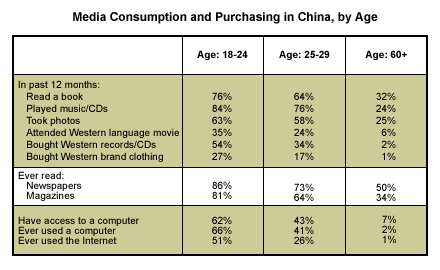
The younger "Gen Y" Chinese are highly active information seekers and sharers, but not just in the ways typically ascribed to the young (namely interest in movies, computers, and television). Members of Gen Y are also more likely than Gen Xers to have read a book in the last year, and they're more likely to have read newspapers and magazines. Gen Y Chinese appear to be voracious information consumers -- in all media -- and they're far more oriented toward all things "Western."
Gen Y Brand Awareness and Preferences
Like younger consumers in other countries, the youngest Chinese consumers have high hopes and ambitious plans. And because they're in the formative and family-building years, their expressed needs are many. But Gen Y Chinese may also be a bit skeptical of traditional ways, and they appear eager to establish their own paths rather than simply follow in the footsteps of those who've gone before.
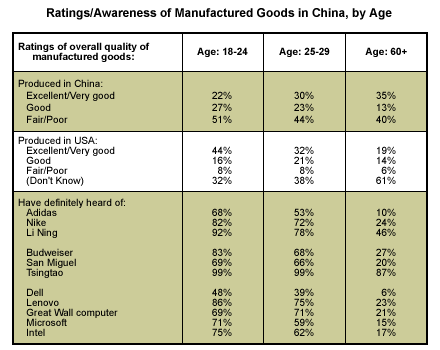
In contrast with young Gen Xers, China's Gen Y consumers are less enamored of the quality of Chinese products and they're more attuned to (and aware of) goods produced elsewhere. They're appreciably more aware than older Chinese of a multitude of both imported and domestic brands in the categories that interest them.
Yet while Gen Y Chinese may have brand preferences, nobody "owns" them. Only one in five people in this age group (19%) believe only one soft drink brand is the best, only a third (34%) feel there is only one beer for them, and less than a third (30%) say a single brand of athletic shoes stands out from all the rest. Thus, there are many places Gen Y consumers may go in order to satisfy their burgeoning needs for consumer and household goods.
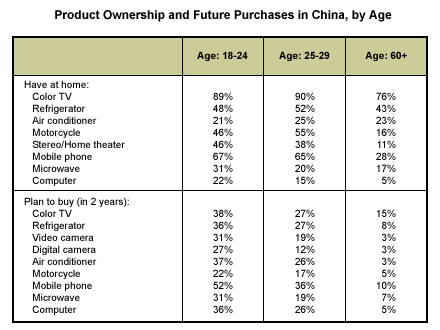
While the youngest consumer segment hasn't yet acquired all the consumer goods enjoyed by young Gen Xers, they're already buying many of the things they really want, and they're preparing to buy a lot more.
Bottom Line
Marketing to Generation Y in China will not be "same old, same old." They're an obviously attractive marketing target, but they'll continue to have more options and hear many more competing promises than their predecessors. Living as they do, immersed in an information-rich world of marketing message clutter, Gen Y will likely prove to be a more challenging, savvy, and demanding audience.