New Gallup Poll economic data suggest that the crisis of confidence that has been dominating Wall Street for weeks is now spreading to Main Street. Nearly twice as many American consumers now say that the economy is getting worse (57%) than say it is getting better (31%). And the percentage of consumers worried about such things as paying their monthly bills is increasing. Consumer sentiment, like investor optimism, seems to be returning to its pre-Sept. 11 lows.
While the accounting/reporting debacle continues to be the major source of the current confidence problem, the underlying economic story may be a little more complicated. Last summer, the U.S. economy was in recession. Both consumer and investor confidence were dropping. The fear was that consumer spending, which had been holding the economy up, was finally going to break, increasing the length and severity of the recession.
Then the Sept. 11 attacks took place. Instantly, both investor and consumer perceptions of the economy plunged, as did economic activity. Within weeks, however, we saw a major rally effect take hold. Americans united, not only to support the war on terrorism, but also the U.S. economy. By early 2002, investors and consumers were showing a lot of optimism about the economy's future, and the level of economic activity increased sharply.
During the second quarter, the vestiges of the so-called rally effect dissipated. At the same time, it became clear that "Enronitis" was not an isolated event and the current crisis of confidence on Wall Street took hold. While the economic data don't indicate the U.S. economy has returned to the recession of late last summer, we are actually close to those conditions in terms of investor/consumer perceptions. And the economy will follow.
Financial Worries Are Increasing
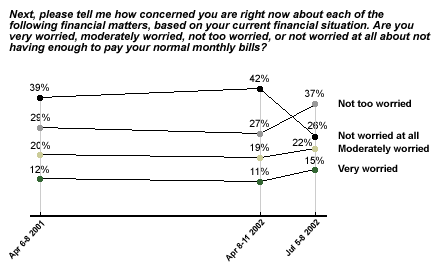
According to new Gallup poll data (July 5-8)*, the percentage of Americans very or moderately worried about having enough money to pay their monthly bills increased to 37% in July. This is up from 30% in April 2002 and the 32% in April 2001.
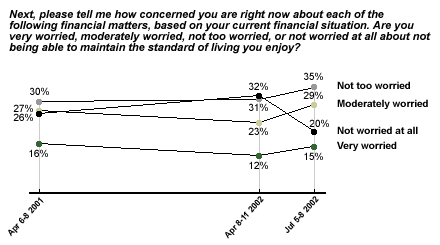
Similarly, the percentage of Americans very or moderately worried about having enough money to maintain the standard of living they enjoy increased to 44% in July, up from 35% in April of this year and equal to the 43% in April 2001.
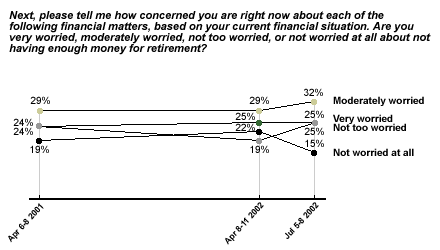
More reflective of the negative wealth effect associated with the crisis of confidence on Wall Street than the worries on Main Street, the percentage of Americans very or moderately worried about having enough money for retirement increased to 57% in July. This is up from 54% in April and 53% a year ago.
Worries Suggest Weakness
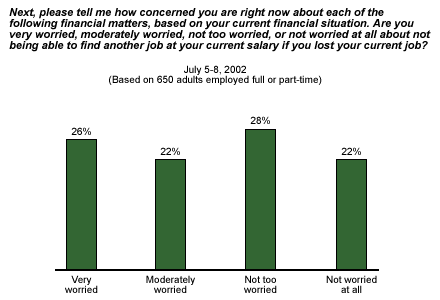
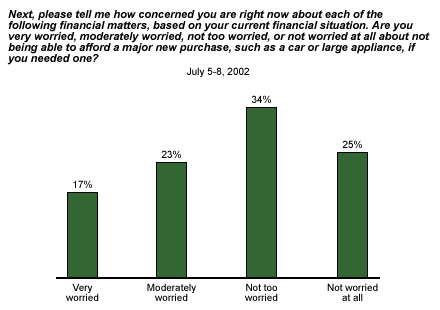
Consumers' financial worries are also elevated in more specific areas. Gallup poll data show four in 10 consumers are very or moderately worried about being able to afford a major new purchase, such as a car or large appliance, if they needed one. Even more significantly, 48% of currently employed adults say they very or moderately worried about being able to find another job at their current salary if they lose the job they now have. With so many Americans worried about these financial issues, it is not surprising that investor and/or consumer optimism have plummeted.
*Results are based on telephone interviews with 1,013 national adults, aged 18 and older, conducted July 5-8, 2002. For results based on the total sample of investors, one can say with 95% confidence that the margin of sampling error is ±3 %.