GALLUP NEWS SERVICE
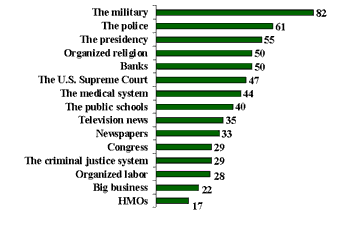
PRINCETON, NJ -- There has been little change since last year in Americans' expressed confidence in the major institutions in American society. Americans remain most confident in the military, followed by the police, the presidency, the church or organized religion, and banks. Americans remain least confident in health maintenance organizations (HMOs) and big business.
None of this year's confidence ratings are substantially different from those measured last year in Gallup's annual Confidence in Institutions poll. Notably, despite the highly publicized New York Times scandal in which a young reporter was found to have fabricated and plagiarized material in many of his stories (leading to the resignation of the paper's top two editors), the public's confidence in newspapers did not change significantly from last year. Americans' confidence in the church has rebounded slightly from its all-time low last year.
Confidence in 15 Basic American Institutions
Thirty years ago, The Gallup Poll began routinely asking Americans to rate their confidence in a number of American institutions, with a question that reads as follows: "Now I am going to read you a list of institutions in American society. Please tell me how much confidence you, yourself, have in each one -- a great deal, quite a lot, some, or very little."
The list of institutions included in the question has varied from year to year, although a core list of institutions has generally been included each time the confidence question has been asked. This year's poll included 15 institutions (see complete list below). Most of the discussion that follows is based on the analysis of the percentage of Americans registering a great deal or quite a lot of confidence in each institution. The results range from a high point of 82% who have a great deal or quite a lot of confidence in the military, down to the low point of 17% who have a great deal or quite a lot of confidence in HMOs.
| Confidence in Institutions % Great Deal/Quite a Lot |
 |
As noted, there has been very little change from last year to this year in the confidence levels for each institution:
| Confidence in Institutions % Change from 2002 |
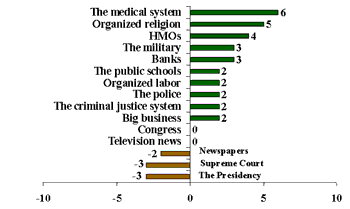 |
As can be seen, confidence in 10 of the institutions increased slightly this year, two stayed exactly the same, and confidence dropped slightly in the remaining three.
Confidence in Selected Institutions
The Church
| Confidence in Institutions % Great Deal/Quite a Lot |
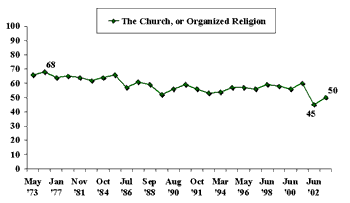 |
There has been a slight recovery of confidence in the "church or organized religion" this year. The percentage of Americans who expressed a great deal or quite a lot of confidence in the church rose from 45% last year to 50% this year.
Last year's 45% level was the lowest measured in Gallup Poll history, perhaps not surprisingly, given the extraordinarily negative publicity last year given to the Catholic Church relating to the priest sex abuse scandals. The current 50%, while up from last year, is the second-lowest rating Gallup has recorded for this institution. Both last year's and this year's measures sharply contrast to the results obtained in the 1970s through the mid-1980s, when two-thirds of the public said it had a great deal or quite a lot of confidence in the church.
More generally, the image of the church and organized religion has been rocky over the last 30 years. In 1989, on the heels of scandals involving television evangelists, only 52% of Americans gave the church high ratings, and in 1993, confidence in the church came in at only 53%. Confidence had climbed back to the 61% level by 2001 -- only to plummet 16 points last year.
Catholics are more confident in the church than they were last year (51% compared to 42%), while Protestants show a much smaller increase in confidence (from 59% to 62%). While the gap between Protestants' and Catholics' expressed confidence in the church is smaller than last year, earlier data in this series showed no gap at all between Catholics and Protestants. The continuing Protestant-Catholic gap suggests that the effects of the Catholic sex abuse scandal still linger most specifically among the nation's Catholics.
Newspapers
| Confidence in Institutions % Great Deal/Quite a Lot |
 |
If ever there was a year in which some observers might expect Americans' confidence in newspapers to drop, it would be this year. The saga of Jayson Blair, the young New York Times reporter who was discovered to have plagiarized and fabricated stories, was prominently featured in the press, including the cover of at least one major weekly newsmagazine. The scandal was ultimately so significant that it became a major factor in the unprecedented resignation of the two top New York Times editors.
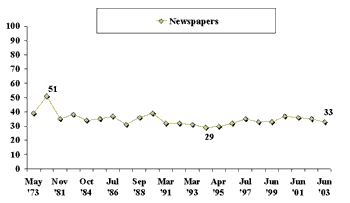
Despite this, we simply don't find much change in Americans' confidence in newspapers this year. Thirty-three percent of Americans have a great deal or quite a lot of confidence in newspapers, compared with 35% last year. Indeed, as recently as 1994, an even lower 29% of Americans gave newspapers a high confidence rating.
There are several possible reasons why the New York Times situation has not affected Americans' confidence in newspapers. First, despite its extraordinary impact on journalism, many Americans simply weren't paying that much attention to the story. A Gallup Poll conducted May 19-21 showed that only 7% were following the story very closely, while 65% were not following it closely. Second, the overall level of confidence in newspapers was relatively low to begin with, meaning that the latest revelations may have simply confirmed some Americans' already poor image of papers, rather than lowering it further. Finally, it may be that the American public, even if aware of the New York Times situation, has not generalized it to all American newspapers.
The Military
| Confidence in Institutions % Great Deal/Quite a Lot |
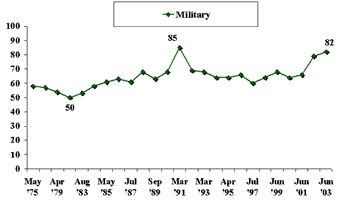 |
The 82% confidence rating for the military this year is the second highest in Gallup's history -- just slightly lower than the 85% confidence level recorded in March 1991, just after the victorious end of the Persian Gulf War. After subsiding in the interim, the military's confidence rating again increased to 79% last June, up from 66% the year before, which reflected in part the continuing aftereffect of the Sept. 11 terrorist attacks and the military's role in the war against terrorism in Afghanistan. Outside of the March 1991 reading, military confidence ratings had been in the 60% range throughout the 1990s. The low point for ratings of confidence in the military came in 1981, less than a decade after the end of the Vietnam War, and just as President Ronald Reagan was beginning his efforts to boost the U.S. military to combat communism and the influence of the Soviet Union.
Banks
| Confidence in Institutions % Great Deal/Quite a Lot |
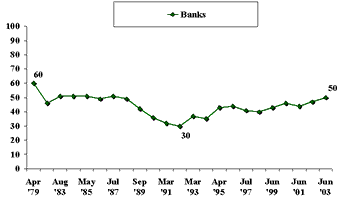 |
Banks have been slowly but surely gaining confidence over the past five years, climbing from a 40% confidence rating in 1998, to a 50% confidence rating this year. The current 50% rating is the highest since 1987.
Confidence in banks as an institution has been up and down over the years. The all-time low for banks came in with a 30% rating in 1991. The high point occurred in 1979, with a 60% confidence rating.
Congress
| Confidence in Institutions % Great Deal/Quite a Lot |
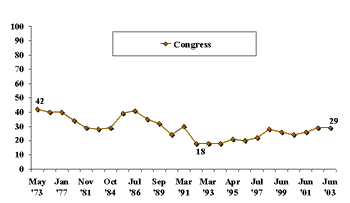 |
Confidence in Congress -- now at 29% -- is little changed over the last several years, and about midrange compared to the last 30 years. The high point for confidence in Congress as an institution was 42% during the Watergate scandal Senate hearings in May 1973. The low point was an 18% rating recorded in 1991, 1993, and 1994, when public frustration with the institution fueled term-limit initiatives in many states, and which may have contributed to the Republican takeover of Congress after 40 years of Democratic control. As noted, this year's 29% confidence rating for Congress is unchanged from last year, but both years' ratings remain slightly higher than what was recorded through the 1990s.
Big Business
| Confidence in Institutions % Great Deal/Quite a Lot |
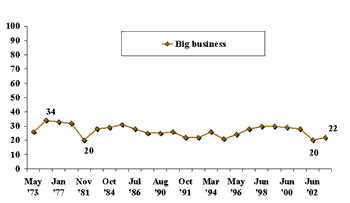 |
Very few Americans (22%) have a great deal or quite a lot of confidence in big business. That's not surprising, given the lingering impact of the Enron, WorldCom, Tyco, Global Crossing, ImClone, and Martha Stewart scandals that have rocked the business world. Confidence in big business fell to 20% last year from 28% the year before, but confidence levels for big business have never been high. The recent high point for positive confidence in big business has been 30%, recorded in 1998 and 1999 during the economic boom years when CEOs graced the covers of magazines and business was seemingly making all Americans richer. Prior to that, however, confidence in big business was as low as 21% in 1995, and 20% (tied with last year as the all-time low point) in 1981.
Differences in Confidence Levels by Gender, Age, and Partisanship
Gender
There are no major differences in confidence in institutions by gender, with a few exceptions:
- Women's confidence in the church is 12 points higher than men's confidence.
- Men are eight points and nine points more confident in the Supreme Court and in the medical system than women are.
- Women express slightly more confidence in television news and newspapers than men do.
|
Confidence in Institutions % Great Deal/Quite a Lot of Confidence June 9-10, 2003 |
||||
|
Total |
Men |
Women |
Gender Gap |
|
|
% |
% |
% |
||
|
Military |
82 |
82 |
81 |
+1 |
|
Police |
61 |
60 |
61 |
-1 |
|
Presidency |
55 |
58 |
53 |
+5 |
|
Banks |
50 |
51 |
50 |
+1 |
|
Church/org religion |
50 |
44 |
56 |
-12 |
|
Supreme Court |
47 |
51 |
43 |
+8 |
|
Medical system |
44 |
49 |
40 |
+9 |
|
Public schools |
40 |
40 |
40 |
0 |
|
TV news |
35 |
32 |
38 |
-6 |
|
Newspapers |
33 |
30 |
37 |
-7 |
|
Criminal justice system |
29 |
29 |
28 |
+1 |
|
Congress |
29 |
30 |
28 |
+2 |
|
Organized labor |
28 |
28 |
28 |
0 |
|
Big business |
22 |
24 |
20 |
+4 |
|
HMOs |
17 |
19 |
14 |
+5 |
Age
Younger Americans are generally more confident than older Americans in most of the institutions tested in this year's poll.
Those aged 18 to 49 are particularly more likely than those 50 and older to express high levels of confidence in newspapers and television news, the medical system, in HMOs, in organized labor, and in big business.
The older group expresses more confidence than younger Americans in the church and in the military.
|
Confidence in Institutions % Great Deal/Quite a Lot of Confidence June 9-10, 2003 |
||||
|
Total |
18-49 |
50+ |
Age Gap |
|
|
% |
% |
% |
||
|
Military |
82% |
78% |
85% |
-7 |
|
Police |
61 |
60 |
64 |
-4 |
|
Presidency |
55 |
56 |
55 |
+1 |
|
Banks |
50 |
58 |
54 |
+4 |
|
Church/org religion |
50 |
46 |
55 |
-9 |
|
Supreme Court |
47 |
46 |
44 |
+2 |
|
Medical system |
44 |
55 |
40 |
+15 |
|
Public schools |
40 |
46 |
39 |
+7 |
|
TV news |
35 |
46 |
31 |
+15 |
|
Newspapers |
33 |
42 |
27 |
+15 |
|
Criminal justice system |
29 |
35 |
28 |
+7 |
|
Congress |
29 |
31 |
25 |
+6 |
|
Organized labor |
28 |
35 |
25 |
+10 |
|
Big business |
22 |
26 |
17 |
+9 |
|
HMOs |
17 |
28 |
15 |
+13 |
Partisanship
Republicans are more confident than Democrats in 10 of the 15 institutions tested.
It is not surprising to find that Republicans are overwhelmingly more confident in the presidency, reflecting the fact that their party controls the White House. Democrats were more confident in the presidency while Bill Clinton was in office.
Similarly, the data show that Republicans are more confident in Congress than are Democrats (not surprising given that both houses of Congress are controlled by Republicans). And, perhaps because the Supreme Court is viewed as conservative in its overall nature and/or because of the court's role in deciding the 2000 election in Bush's favor, Republicans are more confident in the Supreme Court than are Democrats.
Republicans also express more confidence than Democrats in the military, banks, big business, the police, the church, and in the medical system.
Democrats, on the other hand, are considerably more confident than Republicans in organized labor and in public schools, and more confident than Republicans in newspapers.
|
Confidence in Institutions % Great Deal/Quite a Lot of Confidence June 9-10, 2003 |
|||||
|
Total |
Republicans |
Independents |
Democrats |
Republican minus Democrat |
|
|
% |
% |
% |
% |
||
|
Military |
82% |
92% |
79% |
74% |
-18 |
|
Police |
60 |
71 |
55 |
58 |
-13 |
|
Presidency |
55 |
80 |
52 |
34 |
-46 |
|
Banks |
50 |
62 |
44 |
47 |
-15 |
|
Church/org religion |
50 |
63 |
39 |
52 |
-11 |
|
Supreme Court |
47 |
56 |
45 |
41 |
-15 |
|
Medical system |
44 |
48 |
45 |
40 |
-8 |
|
Public schools |
40 |
34 |
37 |
48 |
+14 |
|
TV news |
35 |
35 |
34 |
38 |
+3 |
|
Newspapers |
33 |
30 |
30 |
41 |
+11 |
|
Criminal Justice system |
29 |
32 |
26 |
29 |
-3 |
|
Congress |
29 |
35 |
26 |
26 |
-9 |
|
Organized labor |
28 |
22 |
26 |
36 |
+14 |
|
Big Business |
22 |
30 |
19 |
19 |
-11 |
|
HMOs |
16 |
16 |
16 |
17 |
+1 |
Survey Methods
These results are based on telephone interviews with a randomly selected national sample of 1,029 adults, 18 years and older, conducted June 9-10, 2003. For results based on this sample, one can say with 95% confidence that the maximum error attributable to sampling and other random effects is ±3 percentage points. In addition to sampling error, question wording and practical difficulties in conducting surveys can introduce error or bias into the findings of public opinion polls.
Now I am going to read you a list of institutions in American society. Please tell me how much confidence you, yourself, have in each one -- a great deal, quite a lot, some, or very little? First, ... Next, [RANDOM ORDER]
|
|
|
|
|
|
|
|
Great deal/ Quite |
|
% |
% |
% |
% |
% |
% |
% |
|
|
The military |
48 |
34 |
14 |
4 |
* |
* |
82 |
|
The police |
29 |
32 |
29 |
9 |
1 |
* |
61 |
|
The presidency |
26 |
29 |
28 |
14 |
1 |
2 |
55 |
|
The church or organized religion |
27 |
23 |
30 |
17 |
2 |
1 |
50 |
|
Banks |
19 |
31 |
38 |
11 |
1 |
* |
50 |
|
The U.S. Supreme Court |
20 |
27 |
38 |
12 |
1 |
2 |
47 |
|
The medical system |
19 |
25 |
36 |
19 |
1 |
* |
44 |
|
The public schools |
15 |
25 |
40 |
18 |
1 |
1 |
40 |
|
Television news |
16 |
19 |
47 |
16 |
1 |
1 |
35 |
|
Newspapers |
11 |
22 |
49 |
16 |
1 |
1 |
33 |
|
Congress |
10 |
19 |
50 |
19 |
1 |
1 |
29 |
|
The criminal justice system |
10 |
19 |
45 |
25 |
1 |
* |
29 |
|
Organized labor |
12 |
16 |
47 |
20 |
2 |
3 |
28 |
|
Big business |
8 |
14 |
44 |
31 |
2 |
1 |
22 |
|
Health Maintenance Organizations, HMOs |
7 |
10 |
39 |
38 |
4 |
2 |
17 |
CONFIDENCE IN INSTITUTIONS -- FULL TREND
(COMBINES "GREAT DEAL" AND "QUITE A LOT")
|
A. |
B. |
C. |
D. |
E. |
F. |
G. |
H. |
I. |
J. |
K. |
L. |
M. |
N. |
O. |
P. |
Q. |
R. |
|
|
% |
% |
% |
% |
% |
% |
% |
% |
% |
% |
% |
% |
% |
% |
% |
% |
% |
% |
|
|
2003 Jun |
50 |
82 |
47 |
50 |
40 |
33 |
29 |
35 |
28 |
55 |
61 |
44 |
29 |
22 |
17 |
-- |
-- |
-- |
|
2002 Jun |
45 |
79 |
50 |
47 |
38 |
35 |
29 |
35 |
26 |
58 |
59 |
38 |
27 |
20 |
13 |
-- |
-- |
19 |
|
2001 Jun |
60 |
66 |
50 |
44 |
38 |
36 |
26 |
34 |
26 |
48 |
57 |
40 |
-- |
28 |
15 |
28 |
37 |
-- |
|
2000 Jun |
56 |
64 |
47 |
46 |
37 |
37 |
24 |
36 |
25 |
42 |
54 |
40 |
24 |
29 |
16 |
-- |
-- |
-- |
|
1999 Jun |
58 |
68 |
49 |
43 |
36 |
33 |
26 |
34 |
28 |
49 |
57 |
40 |
23 |
30 |
17 |
-- |
-- |
-- |
|
1998 Jun |
59 |
64 |
50 |
40 |
37 |
33 |
28 |
34 |
26 |
53 |
58 |
40 |
24 |
30 |
-- |
-- |
-- |
-- |
|
1997 Jul |
56 |
60 |
50 |
41 |
40 |
35 |
22 |
34 |
23 |
49 |
59 |
38 |
19 |
28 |
-- |
-- |
-- |
-- |
|
1996 May |
57 |
66 |
45 |
44 |
38 |
32 |
20 |
36 |
25 |
39 |
60 |
42 |
19 |
24 |
-- |
-- |
-- |
-- |
|
1995 Apr |
57 |
64 |
44 |
43 |
40 |
30 |
21 |
33 |
26 |
45 |
58 |
41 |
20 |
21 |
-- |
-- |
-- |
-- |
|
1994 Mar |
54 |
64 |
42 |
35 |
34 |
29 |
18 |
35 |
26 |
38 |
54 |
36 |
15 |
26 |
-- |
-- |
-- |
-- |
|
1993 Mar |
53 |
68 |
44 |
37 |
39 |
31 |
18 |
46 |
26 |
43 |
52 |
34 |
17 |
22 |
-- |
-- |
-- |
-- |
|
1991 Oct |
56 |
69 |
39 |
30 |
35 |
32 |
18 |
-- |
22 |
50 |
-- |
-- |
-- |
22 |
-- |
-- |
-- |
-- |
|
1991 Mar |
59 |
85 |
48 |
32 |
44 |
32 |
30 |
-- |
25 |
72 |
-- |
-- |
-- |
26 |
-- |
-- |
-- |
-- |
|
1990 Aug |
56 |
68 |
47 |
36 |
45 |
39 |
24 |
-- |
27 |
-- |
-- |
-- |
-- |
25 |
-- |
-- |
-- |
-- |
|
1989 Sep |
52 |
63 |
46 |
42 |
43 |
-- |
32 |
-- |
-- |
-- |
-- |
-- |
-- |
-- |
-- |
-- |
-- |
-- |
|
1988 Sep |
59 |
68 |
56 |
49 |
49 |
36 |
35 |
-- |
26 |
-- |
-- |
-- |
-- |
25 |
-- |
-- |
-- |
-- |
|
1987 Jul |
61 |
61 |
52 |
51 |
50 |
31 |
-- |
-- |
26 |
-- |
-- |
-- |
-- |
-- |
-- |
-- |
-- |
-- |
|
1986 Jul |
57 |
63 |
54 |
49 |
49 |
37 |
41 |
-- |
29 |
-- |
-- |
-- |
-- |
28 |
-- |
-- |
-- |
-- |
|
1985 May |
66 |
61 |
56 |
51 |
48 |
35 |
39 |
-- |
28 |
-- |
-- |
-- |
-- |
31 |
-- |
-- |
-- |
-- |
|
1984 Oct |
64 |
58 |
51 |
51 |
47 |
34 |
29 |
-- |
30 |
-- |
-- |
-- |
-- |
29 |
-- |
-- |
-- |
-- |
|
1983 Aug |
62 |
53 |
42 |
51 |
39 |
38 |
28 |
-- |
26 |
-- |
-- |
-- |
-- |
28 |
-- |
-- |
-- |
-- |
|
1981 Nov |
64 |
50 |
46 |
46 |
42 |
35 |
29 |
-- |
28 |
-- |
-- |
-- |
-- |
20 |
-- |
-- |
-- |
-- |
|
1979 Apr |
65 |
54 |
45 |
60 |
53 |
51 |
34 |
-- |
36 |
-- |
-- |
-- |
-- |
32 |
-- |
-- |
-- |
-- |
|
1977 Jan |
64 |
57 |
46 |
-- |
54 |
-- |
40 |
-- |
39 |
-- |
-- |
-- |
-- |
33 |
-- |
-- |
-- |
-- |
|
1975 May |
68 |
58 |
49 |
-- |
-- |
-- |
40 |
-- |
38 |
-- |
-- |
-- |
-- |
34 |
-- |
-- |
-- |
-- |
|
1973 May |
66 |
-- |
44 |
-- |
58 |
39 |
42 |
-- |
30 |
-- |
-- |
-- |
-- |
26 |
-- |
-- |
-- |
-- |
|
KEY: |
|||||
|
A. |
The church or organized religion |
G. |
Congress |
M. |
The criminal justice system |
|
B. |
The military |
H. |
Television news |
N. |
Big business |
|
C. |
The U.S. Supreme Court |
I. |
Organized labor |
O. |
Health Maintenance Organizations (HMOs) |
|
D. |
Banks |
J. |
The presidency |
P. |
The electric power utilities |
|
E. |
The public schools |
K. |
The police |
Q. |
Faith-based charitable organizations |
|
F. |
Newspapers |
L. |
The medical system |
R. |
Wall Street |
