To say that times are tough for the Roman Catholic Church is an understatement. Even as it tries to heal from the scandal epidemic that exploded in the media last year, new incidents continue to create setbacks. Last Wednesday, Bishop Thomas J. O'Brien, head of the Phoenix Roman Catholic diocese, resigned after being arrested for leaving the scene of an accident in which a pedestrian was killed. The arrest came soon after O'Brien admitted to shielding priests in his diocese accused of child sex abuse.
And as previously reported in The Gallup Poll Tuesday Briefing, church attendance by Catholics is down, Catholics give clergy a lower rating for honesty and ethics than do Protestants, and fewer Catholics than Protestants have confidence in organized religion (see Related Items). However, Catholics are more confident in the church than they were last year (51% compared to 42%), while Protestants show a smaller increase (from 59% to 62%).
Is a complete recovery possible for the Catholic Church? At the local level, the answer is yes. While local parish priests may not have a great deal of influence on the way the church hierarchy conducts itself, they can greatly impact their members' sense of belonging to their congregations. The keys to this type of recovery are found in responses to Gallup's Congregational Engagement Index survey*, conducted at the end of 2002.
Looking at Gallup's 12 congregational engagement items, (see "The Driving Factor Behind Spiritual Health" in Related Items), there are considerable differences between Catholics' and Protestants' responses on 9 of the 12 items. While a significant percentage of Catholics "strongly agree" that they know what is expected of them as members of their churches (59%), that their spiritual needs are met in their congregations (50%), and that they have opportunities in their churches to learn and grow (51%), far lower percentages strongly agree with each of the other items.
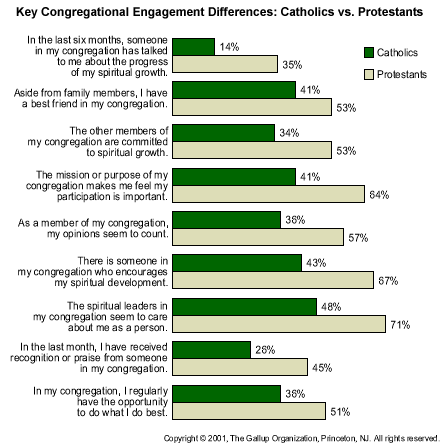
Based on these responses, it appears that a large percentage of Catholics feel isolated and unappreciated as members of their parishes. They feel isolated because they don't have a best friend in their congregations, they don't feel that other members are committed to spiritual growth, they don't feel that the spiritual leaders care about them, no one encourages their spiritual development, and no one is talking to them about the progress of their spiritual growth. They feel unappreciated because they don't have opportunities to do what they do best in their congregations, they feel their opinions don't count, they don't feel their participation is important, and they haven't received recognition or praise recently for their work with the congregation.
What Is a Priest to Do?
Parish priests and other church leaders can begin to remedy this situation by addressing these issues of isolation and perceived lack of appreciation. The following three strategies can help get the process started:
- Create opportunities for people to develop meaningful relationships with each other. The most effective congregations are those in which members feel like the church is their "second family." This is true whether it is a church of 100 members or 10,000.
- Help people discover their strengths and help them find ways to use those strengths in service to God. Members who find ways to do what they do best to help their churches have far more positive attitudes about them than those who do not.
- Create a climate of caring. While it may be impossible for church leaders to personally know each member of their parishes, they can still let people know that they care about them. The care and concern leaders show for staff and other church leaders will have a "trickle-down" effect throughout the congregation.
While such approaches may seem like baby steps in the face of the considerable image problems facing the Catholic Church, at the local level helping members to develop or maintain a positive attitude about their own congregations is a key ingredient to restoring the church's health.
*Results are based on telephone interviews with 1,000 adult members of a church, synagogue, or other religious faith community, aged 18 and older, and 500 non-members, conducted in November and December 2002. For results based on this sample, one can say with 95% confidence that the margin of sampling error is ±2.6%.
