PRINCETON, NJ -- New Hampshire exit polls show that economic conditions were a major issue for voters in the Democratic and Republican primaries. Goldman Sachs' new assertion/projection that the U.S. economy is slipping into recession suggests that voter concerns about the economy are likely to increase significantly during the months ahead. Gallup's economic data also reflects this and suggests that the consumer credit crunch is slowly intensifying.
More Consumers Know People Turned Down for Credit
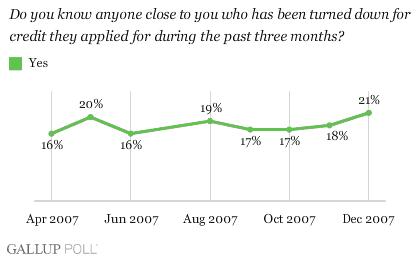
In December 2007, more than one in five consumers (21%) said they know someone close to them who has been turned down for credit he or she applied for during the past three months. This is the up 3 percentage points from November and up 4 percentage points from October/September.
Lower-Income Consumers Know More People Not Approved for Credit
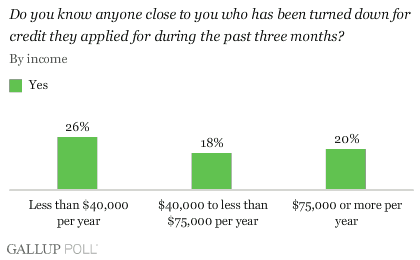
About one in four consumers (26%) making less than $40,000 a year said they know someone who has been turned down for credit he or she applied for during the past three months. This compares with one in five consumers (20%) making $75,000 or more annually and a similar percentage (18%) of those making $40,000 but less than $75,000 a year.
Recognition of Consumer Credit Crunch Takes Time
Most individuals associated with consumer finance recognize that underwriting standards have tightened during recent months. When major financial companies are reporting enormous losses, no lender wants its investors or regulators to see it as adding to its credit risk exposure. While well-run banking institutions have the competitive advantage of being able to portfolio good consumer loans, still, they will only want to do so if they are sure that these are top-quality credits.
Unlike a consumer credit squeeze resulting from increasing interest rates, the process of tightening consumer lending underwriting standards takes time to work its way through the banking and consumer finance system. It also takes time for consumers to recognize what is happening and for "word" of these tighter standards to spread. Consumers can also temporarily mitigate the impact of the credit crunch on themselves by turning to higher-cost sources of credit such as credit cards.
Still, Gallup's economic data suggest that consumers are beginning to recognize that the consumer credit crunch is intensifying. On the other hand, it also seems clear that they have yet to fully recognize or appreciate the consumer credit crunch. For example, in December 13% of consumers said that they know someone who has filed for bankruptcy or had a foreclosure during the past three months. This percentage has been essentially unchanged since October.
As the U.S. economy continues to slow, the consumer credit crunch intensifies, unemployment increases, and gas/food prices continue to surge, we can expect a plethora of new proposals to "fix" the economy from the president, Congress, and presidential candidates. The fact that we see increasing signs of voter concern about the condition of the U.S. economy suggests that many in the political arena -- just like many at the Fed -- need to give these data greater attention.
Survey Methods
Results for the survey are based on telephone interviews with 1,043 adults, aged 18 and older, conducted Dec.3-9, 2007. For results based on the total sample, one can say with 95% confidence that the margin of sampling error is ±3 percentage points.