WASHINGTON, D.C. -- Since Kosovo declared its independence from Serbia earlier this month, many of the minority ethnic Serb population living Kosovo have made their disapproval known, some through violent protests. When Gallup polled in Kosovo early last year, a majority of Serbs living in the country (51%) said that many or most people in Serbia were afraid to openly express their political views. Only 14% of Kosovar Albanians, who make up more than 90% of Kosovo's population, agreed with this statement.
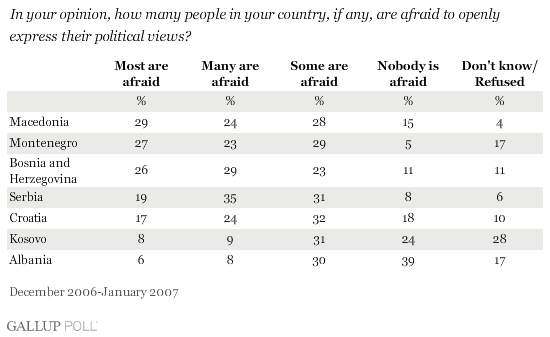
Compared with other Balkan countries, respondents from Kosovo and Albania were among the least likely to say that many or most people in their country were fearful of openly expressing their political views. Majorities in Macedonia, Bosnia and Herzegovina, and Serbia said many or most people are afraid to express their political opinions, while 50% of Montenegrins, 41% of Croatians, 17% of Kosovars, and 14% of Albanians shared this view.
Kosovar Albanians are also more likely than Kosovar Serbs to consider their communities as accepting to minorities. Only 35% of Serbs living in Kosovo said the city or area where they live is a good place for religious minorities, compared with 60% of Kosovar Albanians, a majority of whom are Muslim, who said the same. The margin is slightly smaller with regard to acceptance of racial and ethnic minorities. About a third (35%) of ethnic Serbs living in Kosovo said the city or area where they live is a good place for racial and ethnic minorities to live, compared with 49% of ethnic Albanians living in Kosovo who agree with this statement.
Respondents from Kosovo overall were the least likely among respondents from other Balkan countries surveyed to say that the city or area where they live is a good place for racial and ethnic minorities to live.
Kosovars were also among the least likely, along with Bosnians, Croatians, and Albanians, to say that the area where they live is a good place for religious minorities.
Survey Methods
Results are based on face-to-face interviews with 834 adults in Montenegro, approximately 1,000 adults in Albania, Croatia, and Macedonia, 1,556 adults in Serbia, and approximately 2,000 adults in Bosnia Herzegovina, aged 15 and older, conducted throughout December 2006 and January 2007. For results based on the total sample of national adults, one can say with 95% confidence that the maximum margin of sampling error is 2.2 to ±3.5 percentage points. For results based on the sample of 733 Kosovar Albanians, one can say with 95% confidence that the maximum margin of sampling error is ±4 percentage points. For results based on the sample of 257 Kosovar Serbs, one can say with 95% confidence that the maximum margin of sampling error is ±7 percentage points. In addition to sampling error, question wording and practical difficulties in conducting surveys can introduce error or bias into the findings of public opinion polls.