PRINCETON, NJ -- Barack Obama maintains a lead over John McCain in the latest Gallup Poll Daily tracking update from Saturday through Monday; the size of the lead varies between seven and 10 percentage points among likely voters, depending on turnout assumptions.
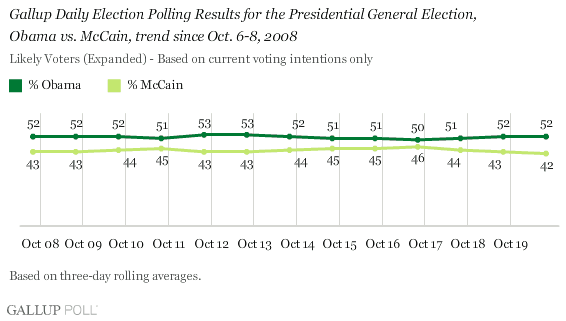
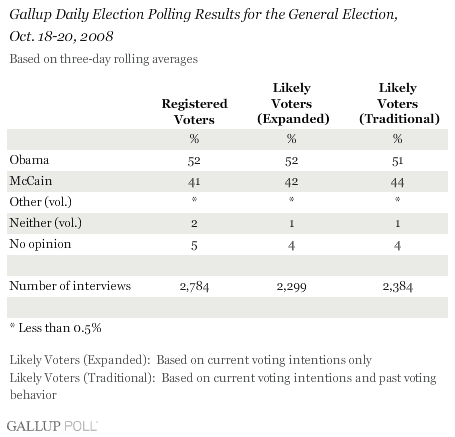
Gallup's modeling of likely voters indicates the race is slightly tighter if we assume that voter turnout patterns will be similar to those seen in most presidential elections from 1952 through 2004. Using this "traditional" definition of likely voters, which takes into account respondents' history of voting, as well as their current interest in the campaign and self-reported likelihood to vote, Obama leads McCain by seven points, 51% to 44%. This is tied for Obama's largest lead among this group since Gallup began reporting likely voters in Gallup Poll Daily tracking.
An alternative, expanded likely voter model shows what would happen if turnout reflects voters' self-reported likelihood to vote and campaign interest, but is not assumed to be dependent on their voting history. Under these assumptions, Obama leads by 10 points, 52% to 42%. -- Frank Newport
Survey Methods
For the Gallup Poll Daily tracking survey, Gallup is interviewing no fewer than 1,000 U.S. adults nationwide each day during 2008.
The general-election results are based on combined data from Oct. 18-20, 2008. For results based on this sample of 2,784 registered voters, the maximum margin of sampling error is ±2 percentage points.
For results based on the sample of 2,384 "traditional" likely voters (based on the model taking into account current voting intention and self-reported past voting behavior), the maximum margin of sampling error is ±3 percentage points. The traditional likely voter model assumes a turnout of 60% of national adults. The likely voter sample is weighted to match this assumption, so the weighted sample size is 1,816.
For results based on the sample of 2,299 "expanded" likely voters (based on the model taking into account current voting intention only), the maximum margin of sampling error is ±2 percentage points. (The expanded voter model does not make any assumptions about turnout level).
Interviews are conducted with respondents on landline telephones (for respondents with a landline telephone) and cellular phones (for respondents who are cell phone only).
In addition to sampling error, question wording and practical difficulties in conducting surveys can introduce error or bias into the findings of public opinion polls.
