WASHINGTON, D.C. -- Amid the continuing trial of former Liberian President Charles Taylor, who is accused of war crimes in Sierra Leone, Gallup found that 93% of Sierra Leoneans and 67% of Liberians say it is a good thing that Taylor is on trial.
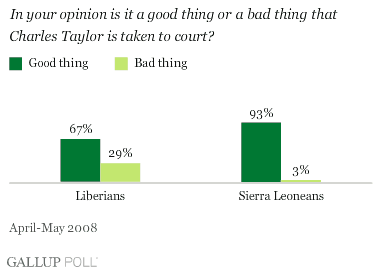
Taylor, who was president of Liberia from 1997 to 2003, has been on trial since June 2007. He is charged with 11 counts of war crimes committed during Sierra Leone's conflict, including abducting, murdering, and mutilating civilians; sexual slavery and violence; and abducting adults and children and forcing them to perform forced labor or become fighters.
When asked what they thought the outcome of the trial should be, 62% of Sierra Leoneans and 40% of Liberians say that Taylor should be convicted and get a jail sentence, but not necessarily a death sentence. One-third of Sierra Leoneans say he should be convicted and sentenced to death, along with 19% of Liberians who also support the most extreme punishment. Another 37% of Liberians, but a mere 2% of Sierra Leoneans say Taylor should be found not guilty and freed.
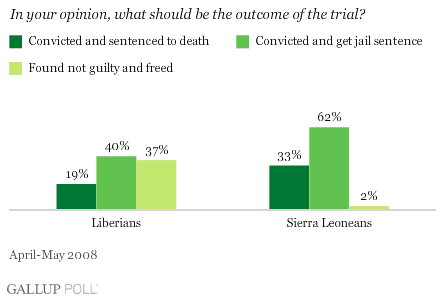
The Special Court for Sierra Leone moved Taylor's trial from Sierra Leone to the Netherlands over concerns about maintaining stability in West Africa. And with the wide diversity of opinions as indicated by the Gallup Poll, particularly that 95% of Sierra Leoneans say Taylor should be convicted but only 37% of Liberians say Taylor should be found not guilty and freed, there is reason to believe there could be a real risk of instability in West Africa after the trial ends. With the trial recessed until Jan. 12, 2009, and 10 witnesses still to be disposed, the trial is expected to end no later than spring 2009.
Survey Methods
Results are based on face-to-face interviews with at least 1,000 adults, aged 15 and older, in Liberia and Sierra Leone in April to May 2008. For results based on the total sample of national adults, one can say with 95% confidence that the maximum margin of sampling error is ±5 percentage points for Liberia and ±4 percentage points for Sierra Leone. In addition to sampling error, question wording and practical difficulties in conducting surveys can introduce error or bias into the findings of public opinion polls.