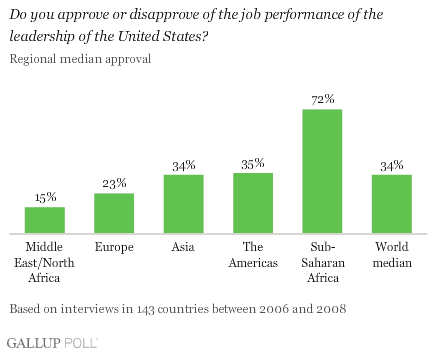
Issue at Hand: As U.S. President Barack Obama seeks to pave a new, more positive way forward with the Muslim world, Gallup Polls underscore the gravity of the task. Gallup Polls in 143 countries reveal the image of the leadership of the United States is generally poor worldwide, but that the Obama administration will have the most repair work to do on its image in the predominantly Muslim Middle East and North Africa, where regional median approval is just 15%.
Obama's Stance: Obama is already reaching out directly to residents of this region. In an interview with Al Arabiya television, the president said the most important thing for the United States to do is "get engaged right away" and "start by listening." Obama's comments in the interview echoed strains from his inaugural address, when he reaffirmed his campaign promise to restore the United States' reputation and credibility as a world leader and outlined shifts in policy that emphasize diplomacy and international cooperation. Obama said the United States will "seek a new way forward" with the Muslim world that is "based on mutual interest and mutual respect."
After less than a week in office, Obama has already set in motion one action that some residents in the predominantly Muslim Middle East and North Africa region told Gallup would improve their opinions of the United States significantly -- the closure of the Guantanamo Bay detention facility camp in Cuba. And Obama has started discussions on another action that also will likely affect a number of residents' opinions -- the expedited withdrawal of U.S. combat troops from Iraq.
Residents' Views on Actions the U.S. Can Take to Improve Its Image: In 2008, Gallup asked residents in 10 predominantly Muslim countries in the Middle East and North Africa to rate the extent to which various actions might significantly improve their opinions of the United States. In addition to asking about the withdrawal of troops from Iraq and Guantanamo Bay, respondents were asked to rate actions related to economic development, technology, poverty, and governance*.
Overall, residents in eight of the countries surveyed are most likely to say the United States' withdrawal from Iraq would improve their opinion very significantly. However, opinions about the different actions vary within the region.
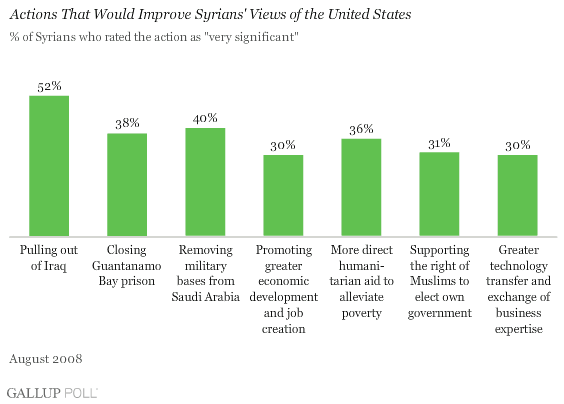
Syria: Syrians' 4% approval rating of the leadership of the United States -- one of the lowest in the world -- bespeaks years of strained ties. Signaling a potential thaw in relations, Syrian President Bashar Assad recently said that he's willing to cooperate with the Obama administration, but that the United States must withdraw from Iraq and commit to the peace process.
- Among the issues tested, Syrians were most likely to say "pulling out of Iraq" would improve their opinions of the United States very significantly; a slim majority (52%) rated this as very significant.
Egypt: Although Egypt is a key U.S. ally in the region and receives billions in foreign aid, the general public doesn't express feelings of goodwill. Egyptians' views of U.S. leadership have soured significantly since 2005; their current 6% approval rating of the leadership of the United States is among the lowest in the world.
- At least half of Egyptians said each action that Gallup asked about would improve their opinion of the United States very significantly.
- Six in 10 or more Egyptians said the United States' withdrawal from Iraq (64%) and removal of military bases from Saudi Arabia (60%) would improve their opinion very significantly.
Jordan: Another major ally in the region, Jordan and the United States have traditionally enjoyed close relations for six decades. Jordanians' 9% approval rating of U.S. leadership in 2008 represented a decline from 18% in 2007 and 15% in 2005.
- Among the issues tested, Jordanians were most likely to say the United States pulling out of neighboring Iraq would improve their opinion of the country very significantly; slightly less than half of Jordanians (47%) rated this action as very significant.
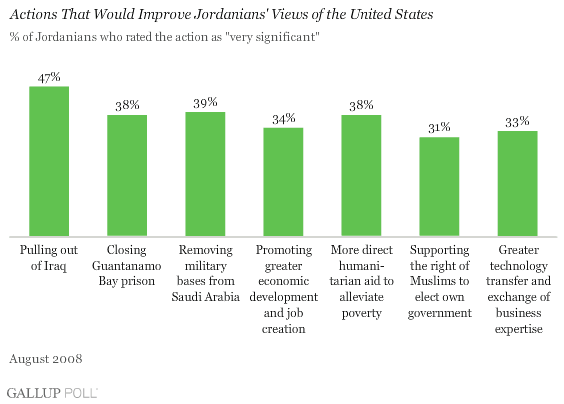
Saudi Arabia: Saudi Arabia is another strategic U.S. ally in the region and a key trade partner. Saudis are at least twice as likely as Egyptians or Syrians to approval of the United States, but the 12% of residents who approve is slightly lower than the regional median.
- Majorities of Saudis rated withdrawal from Iraq (59%), closing Guantanamo Bay prison (56%), and removing military bases from their country (52%) as actions the United States could take that would improve their opinion very significantly.
- Saudis, along with Tunisians, were the only populations surveyed in which majorities said closing Guantanamo Bay prison would improve their opinion very significantly.
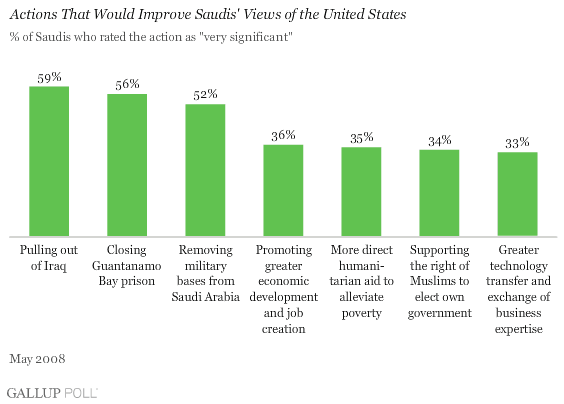
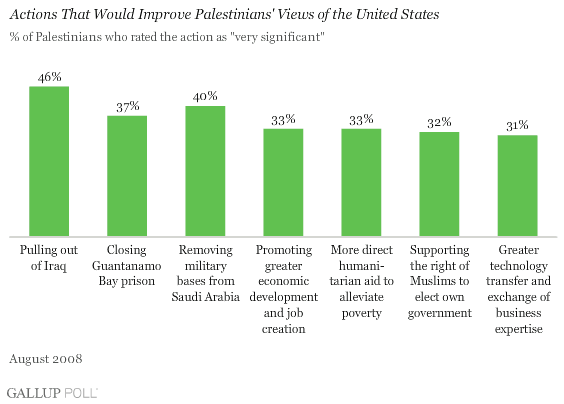
Palestinian Territories: Palestinians' approval of U.S. leadership has been low and relatively stable since 2006; 13% of Palestinians expressed approval in 2008, which is on par with 12% in 2007 and 15% in 2005.
- Among the issues tested, Palestinians were most likely to say the United States pulling out of Iraq would improve their opinions very significantly; slightly less than half of Palestinians (46%) rated this action as very significant.
Tunisia: The United States has a long history of good relations with Tunisia that dates back nearly 200 years. In 2008, just 14% of Tunisians said they approve of the leadership of the United States.
- Of the items tested, Tunisians were most likely to say the United States pulling out of Iraq would improve their opinions very significantly; a definitive three in four Tunisians (75%) rated this action as very significant.
- Majorities of Tunisians said closing Guantanamo Bay prison (57%) and removing military bases from Saudi Arabia (55%) would improve their opinions of the United States very significantly.
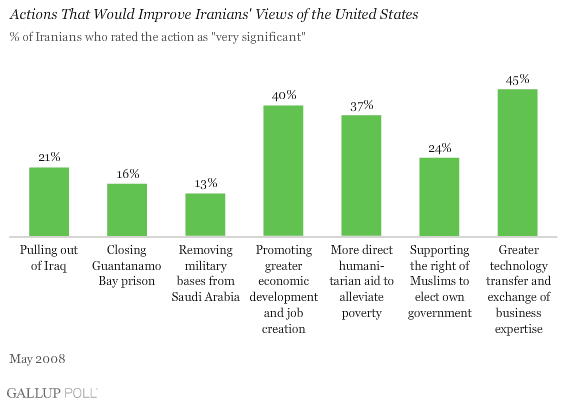
Iran: While low, Iranians' 16% approval rating of the leadership of the United States is higher than ratings among the populations of key U.S. allies in the region, which is interesting given that the countries have not had normal diplomatic relations for nearly three decades.
- Unlike other populations in the region, relatively few Iranians rate withdrawal from Iraq as very significant to improving their opinion.
- Iranians were most likely to say greater technology transfer and the exchange of business expertise with their country would improve their opinions of the United States very significantly.
- Iranians, in general, were more likely to say actions related to economic development and aid would improve their opinions of the United States very significantly.
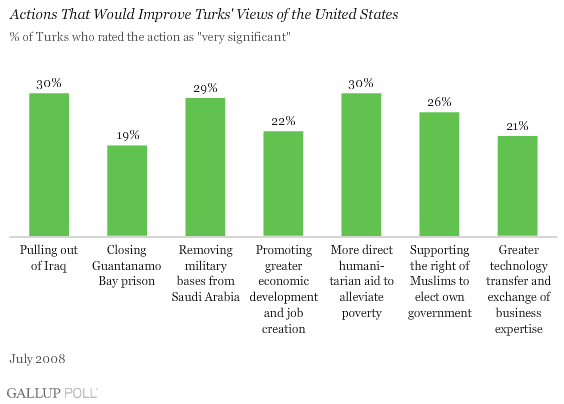
Turkey: Turks' low approval rating of U.S. leadership provides evidence of the strain the Iraq war has placed on relations between the two longtime allies. In 2008, 16% of Turks said they approved of the leadership of the United States, which is unchanged from the 16% measured in 2007 but lower than the 23% measured in 2005.
- Among the items tested, Turks were most likely to say pulling out of Iraq (30%), removing military bases from Saudi Arabia (29%), and more humanitarian aid to alleviate poverty (30%) would improve their opinions of the United States very significantly.
Lebanon: Lebanese views of the leadership of the United States have continued to erode since 2005, when 40% of residents said they approved. After the Hezbollah-Israeli conflict in 2006, which a substantial number of Lebanese held the United States primarily responsible for, approval declined significantly to 31%. By 2008, Lebanese approval had dropped even further, and stood at 25%.
- Of the items tested, Lebanese were most likely to say more direct humanitarian aid that alleviates poverty would improve their opinions of the United States very significantly; nearly 6 in 10 (59%) Lebanese rated this action as very significant.
- Majorities of Lebanese also said promoting greater economic development and job creation in their country (54%), greater technology transfer and exchange of business expertise (54%), and the U.S. withdrawal from Iraq (52%) would improve their opinions very significantly.
Algeria: Unlike other populations in the Middle East/North Africa region, Algerians' opinions of the leadership of the United States have actually improved in the past few years. In 2008, 25% of Algerians said they approved, which was up seven percentage points from 18% in 2007.
- Of the items tested, Algerians were most likely to say the U.S. withdrawal from Iraq would improve their opinions of the United States very significantly; a slight majority (54%) rated this action as very significant.
Policy Implications: The United States' ability to rebuild or construct alliances and partnerships in the Middle East does not hinge on how the United States' image is perceived among the general public, but experts in the region believe a poor image makes it more difficult for their leaders to work with the United States.
Obama's order to close the Guantanamo facility and even the United States' expedited departure from Iraq will not renew America's leadership in the region, not while a perceived imbalance in U.S. relations with Israel remains, but they may help improve its image among some residents. At the very least, they may help open a window of opportunity through which the Obama administration can see its "new way forward."
*Note: Gallup asked about each action in rotating order. Gallup did ask respondents to rate an action concerning Israel, but those data are unavailable at this time.
Read more U.S. Foreign Policy Opinion Briefings
Survey Methods
Results are based face-to-face interviews with approximately 1,000 adults, aged 15 and older in Syria, Jordan, Egypt, Lebanon, Palestinian Territories, Saudi Arabia, Algeria, Tunisia, Turkey, and Iran between May and August 2008. For results based on the total sample of national adults, one can say with 95% confidence that the maximum margin of sampling error ranges between ±3 and ±4 percentage points. In addition to sampling error, question wording and practical difficulties in conducting surveys can introduce error or bias into the findings of public opinion polls.