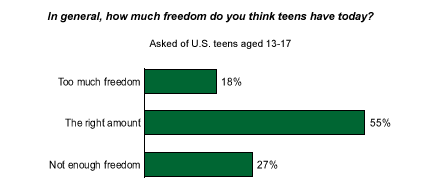
Most adults may not even recall the days when they did not have the luxury of doing as they pleased -- namely when they were kids. A recent Gallup Youth Survey* asked teenagers, aged 13 to 17, what they think about the amount of freedom that today's teens have. A slim majority (55%) say teens, generally speaking, have "the right amount" of freedom. About one in four (27%) say teens don't have enough, and 18% say teens have too much.
Parents Get Most of the Blame
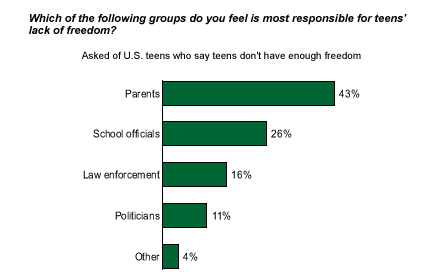
Teenage respondents who feel teens don't get enough freedom were asked whom they blame most for this lack of freedom. Parents, alas, top the list with 43% of teens mentioning them. School officials are next in line at 26%, while 16% say law enforcement officials and 11% say politicians are to blame.
Freedom to Do What?
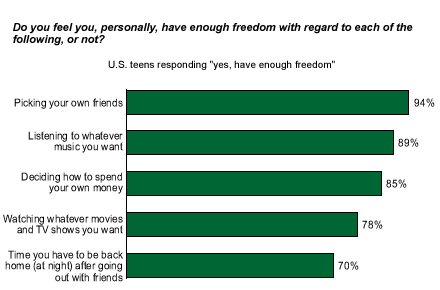
Teens were then asked about a list of specific freedoms. Nearly all teens say they are free enough to choose their own friends (94%), and nearly as many (89%) are permitted to listen to the music they like and spend their money as they please (85%). But fewer teenagers think they have enough freedom in regard to watching whatever TV shows or movies they please.
Curfews can be a real source of friction between parents and teenagers. Still, even though this is the item about which teens are least likely to say they get enough freedom, 70% say they have enough when it comes to the time they have to be home at night after going out with friends.
One might expect younger teens to complain of less freedom than older ones, but there is little difference in the perception of freedoms granted with regard to age. As many 13- to 15-year-olds as 16- and 17-year-olds say they have enough freedom when it comes to picking their own friends, listening to the music they like, watching what they want to on television and at the movies, and coming home at night after going out. There is one exception -- fewer younger teens than older teens say they have enough freedom when deciding how to spend their own money -- 81% of younger teens have enough freedom, compared with 91% of older teens.
Bottom Line
Adolescence is often thought of as a time when teens will take a mile if given an inch. Therefore, it might seem surprising to some adults that most teens say they have enough, or more than enough, freedom in their lives. An earlier youth survey may provide a clue -- almost three-quarters of teenagers told Gallup that their ideology is about the same as their parents. (See "Teens Stay True to Parents' Political Perspectives" in Related Items.) Perhaps social and political conformity go a long way to reduce family tension about teen's comings and goings and the amount of freedom they are given in general.
*These results are based on mail and Web surveys with a randomly selected national sample of 549 teenagers in the Gallup Poll Panel of households, aged 13 to 17, conducted April 15 to May 22, 2005. For results based on this sample, one can say with 95% confidence that the maximum error attributable to sampling and other random effects is ±5 percentage points. In addition to sampling error, question wording and practical difficulties in conducting surveys can introduce error or bias into the findings of public opinion polls.