GALLUP NEWS SERVICE
PRINCETON, NJ -- A recent Gallup Panel poll asked parents about their children's television viewing habits. About half say their children watch a great deal or fair amount of television, but most are not concerned about the amount of television or the types of programs their children are watching on television. More than half of parents are aware that their television sets are equipped with parental controls, but most of these parents rarely or never use these controls to monitor their children's viewing habits. Nearly half of parents say the government is doing the right amount to regulate programming for children, while among all adults nationwide, nearly half say the government is not doing enough.
Overall Results
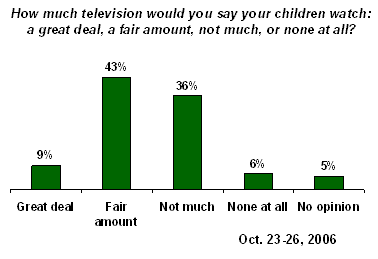
The Oct. 23-26, 2006, poll finds that roughly half of parents of children under age 18 say their children watch at least a fair amount of television, but only 9% say their children watch a great deal of it. Forty-two percent of parents say their children do not watch much (36%) or any television at all (6%). The fact that relatively few parents choose the extreme points on the scale could be a reflection that parents can limit or control how much television their children watch.
Most parents are not worried about the quantity or quality of programs their children watch.
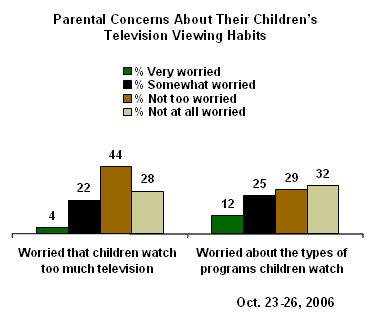
Roughly one in four parents say they are very (4%) or somewhat (22%) worried that their children watch too much television, while 72% of parents say they are not too or not at all worried. Parents express slightly higher levels of concern about the types of programs their children watch -- 37% say they are very or somewhat worried about the quality of children's programming, while 61% are not too or not at all worried.
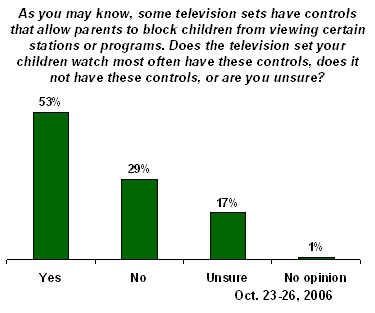
Many television sets now have controls that allow parents to block viewers from accessing certain stations or programs. Gallup asked parents if their television sets have these parental controls and found that 53% know for a fact that their television sets have these controls, while 29% know that their sets lack these controls and 17% are unsure whether their sets have these or not.
Among parents who have television sets with parental controls, 30% say they use these controls frequently, 10% occasionally, and 10% rarely. Fifty-one percent say they never use the parental controls on their television sets.
Government Role in Children's Programming
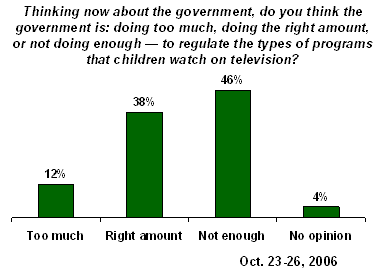
The poll also asked all Americans -- including people with children under age 18 and people without children under 18 -- about the role of government in regulating the types of programs that children watch on television. Americans are more likely to see the government as lacking in this regard (46% say it is not doing enough) than either doing the proper amount of regulating (38% say it is doing the right amount) or being too vigilant (12% say the government is doing too much).
Parents of children under age 18 are not as critical as those who are not parents of young children about the government's role in television programming for children. Nearly half of parents say the government is doing the right amount to regulate programming for children, while among non-parents, half say the government is not doing enough.
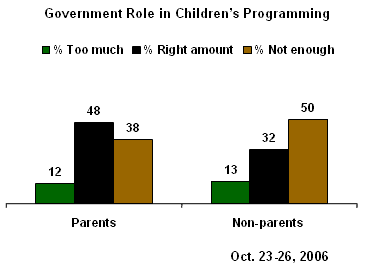
Americans' views about the role of government in regulating television programming directed toward children vary among different demographic subgroups.
|
Role of Government in Children's
Programming by Demographic Subgroups |
|||
|
Too much |
Right amount |
Not enough |
|
|
% |
% |
% |
|
|
Men |
17 |
38 |
40 |
|
Women |
9 |
37 |
51 |
|
|
|
|
|
|
18- to 34-year-olds |
17 |
46 |
35 |
|
35- to 49-year-olds |
12 |
45 |
39 |
|
50- to 64-year-olds |
11 |
33 |
51 |
|
65 years and older |
8 |
19 |
67 |
|
|
|
|
|
|
High school diploma or less |
9 |
30 |
56 |
|
Some college education |
16 |
41 |
40 |
|
College graduate |
16 |
47 |
36 |
|
Post-graduate education |
16 |
47 |
35 |
|
|
|
|
|
|
Attend church weekly |
6 |
32 |
58 |
|
Attend church nearly weekly/monthly |
8 |
39 |
49 |
|
Seldom/never attend church |
18 |
41 |
37 |
|
|
|
|
|
|
Republicans |
9 |
39 |
49 |
|
Independents |
18 |
41 |
36 |
|
Democrats |
11 |
34 |
51 |
Women are more likely than men (51% to 40%) to say the government does not do enough to regulate children's programming.
Two in three senior citizens (67%) say the government does not do enough to regulate children's programming. This percentage is much lower among non-seniors; at 51% among 50- to 64-year-olds, 39% among 35- to 49-year-olds, and 35% among 18- to 34-year-olds.
A majority of adults with a high school-level education say the government is not doing enough to regulate the types of programs children watch. Americans with some college education are divided as to whether the government is doing too much or the right amount, and nearly half of college graduates or those with post-graduate educations say the government is doing the right amount.
Fifty-eight percent of Americans who attend religious services weekly say the government is not doing enough to regulate children's television programming. This sentiment is lower among those who attend services less frequently.
The poll finds little variation in views among Republicans and Democrats, with roughly half of each group saying the government is not doing enough. Independents are more divided as to whether the government is doing the right amount (41%) or not doing enough (36%).
Survey Methods
Results for this panel study are based on telephone interviews with 1,001 national adults, aged 18 and older, conducted Oct. 23-26, 2006. Respondents were randomly drawn from Gallup's nationally representative household panel, which was originally recruited through random selection methods. For results based on the total sample of national adults, one can say with 95% confidence that the maximum margin of sampling error is ±3 percentage points.
For results based on the sample of 273 parents of children under age 18, the maximum margin of sampling error is ±7 percentage points.
For results based on the sample of 146 parents of children under age 18 who have television sets with parental controls, the maximum margin of sampling error is ±9 percentage points.
In addition to sampling error, question wording and practical difficulties in conducting surveys can introduce error or bias into the findings of public opinion polls.11. How much television would you say your children watch -- a great deal, a fair amount, not much, or none at all?
BASED ON 273 PARENTS OF CHILDREN UNDER AGE 18
|
Great deal |
Fair amount |
Not much |
None at all |
No opinion |
|
|
|
|
|
|
|
|
|
2006 Oct 23-26 |
9% |
43 |
36 |
6 |
5 |
12. How worried are you that your children watch too much television -- very worried, somewhat worried, not too worried, or not at all worried?
BASED ON 273 PARENTS OF CHILDREN UNDER AGE 18
|
Very worried |
Somewhat worried |
Not too worried |
Not at all worried |
No |
|
|
|
|
|
|
|
|
|
2006 Oct 23-26 |
4% |
22 |
44 |
28 |
2 |
13. Aside from how much television your children watch, how worried are you about the types of programs your children watch on television -- very worried, somewhat worried, not too worried, or not at all worried?
BASED ON 273 PARENTS OF CHILDREN UNDER AGE 18
|
Very worried |
Somewhat worried |
Not too worried |
Not at all worried |
No |
|
|
|
|
|
|
|
|
|
2006 Oct 23-26 |
12% |
25 |
29 |
32 |
2 |
14. As you may know, some television sets have controls that allow parents to block children from viewing certain stations or programs. Does the television set your children watch most often have these controls, does it not have these controls, or are you unsure?
BASED ON 273 PARENTS OF CHILDREN UNDER AGE 18
|
|
Yes, has controls |
No, |
|
No |
|
|
|
|
|
|
|
2006 Oct 23-26 |
53% |
29 |
17 |
1 |
15. How often, if ever, do you use these controls -- frequently, occasionally, rarely, or never?
BASED ON 146 PARENTS WHO HAVE TELEVISIONS WITH PARENTAL CONTROLS
|
Frequently |
Occasionally |
Rarely |
Never |
No opinion |
|
|
|
|
|
|
|
|
|
2006 Oct 23-26 |
30% |
10 |
10 |
51 |
-- |
16. Thinking now about the government, do you think the government is -- [ROTATED: doing too much, doing the right amount, or not doing enough] -- to regulate the types of programs that children watch on television?
|
|
Too much |
Right amount |
Not enough |
No opinion |
|
|
|
|
|
|
|
2006 Oct 23-26 |
12% |
38 |
46 |
4 |