GALLUP NEWS SERVICE
PRINCETON, NJ -- Someone seeking a job that commands high respect need look no further than nursing. According to Gallup's annual honesty and ethics poll, nurses top the list of occupations rated for their honesty and ethical standards, earning high marks from more than four in five Americans. A combined 84% of Americans describe nurses' ethics as "very high" or "high." What's more, only 2% of Americans say nurses have low ethical standards. The worst any sizeable proportion (14%) says about the integrity of nurses is that it is "average."
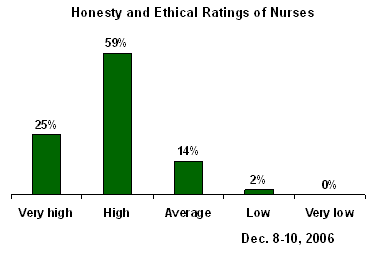
Four of the five next most highly regarded professions according to this year's poll, conducted Dec. 8-10, 2006, are also in the medical field: pharmacists, veterinarians, medical doctors, and dentists. More than 6 in 10 rate the honesty and ethics of these workers as very high or high. Engineers' ratings are essentially tied with dentists'. Coming in below the top six professions are clergy, college teachers, and police.
Not all medical professionals do as well as nurses, pharmacists, veterinarians, doctors, and dentists. Psychiatrists and chiropractors receive high praise for honesty and ethical standards from just over a third of Americans -- 38% and 36%, respectively. The good news for these professionals is that the balance of public opinion is more neutral than negative about them. Sizeable proportions of Americans call their ethics "average" while relatively few describe them as "low."
Car salesmen firmly anchor the bottom of the list with a majority (55%) saying they have low or very low ethics. No other profession comes close to this level of disparagement. This is not a new finding; car salesmen have been at the bottom every year they have been included in the list, except for the three occasions when telemarketers were included and essentially tied car salesmen for that unwelcome distinction.
The other professions included in this year's list are given mixed ratings by the public.
1) Those viewed more positively than negatively include bankers, psychiatrists, and chiropractors.
2) Those receiving about equal levels of positive and negative ratings include journalists, state governors, stockbrokers, and business executives. About half of Americans consider the ethics of each of these to be average.
3) Other than car salesmen, the professions that stand out for receiving substantially more negative than positive ratings include congressmen, HMO managers, advertising practitioners, insurance salesmen, senators, and lawyers.
The accompanying table ranks the 23 professions rated this year according to their combined "very high" and "high" scores. The "net high" figure -- calculated as the percentage very high or high, minus the percentage very low or low for each occupation -- provides additional insights into the reputations of these professions.
|
2006 Honesty and Ethical Ratings Summary |
||||
|
Very high/High |
Average |
Very low/Low |
NET HIGH |
|
|
% |
% |
% |
||
|
Nurses |
84 |
14 |
2 |
82 |
|
Druggists or pharmacists |
73 |
23 |
4 |
69 |
|
Veterinarians |
71 |
23 |
2 |
69 |
|
Medical doctors |
69 |
26 |
6 |
63 |
|
Dentists |
62 |
34 |
4 |
58 |
|
Engineers |
61 |
33 |
3 |
58 |
|
College teachers |
58 |
32 |
7 |
51 |
|
Clergy |
58 |
29 |
9 |
49 |
|
Policemen |
54 |
34 |
11 |
43 |
|
Psychiatrists |
38 |
42 |
12 |
26 |
|
Bankers |
37 |
52 |
10 |
27 |
|
Chiropractors |
36 |
48 |
10 |
26 |
|
Journalists |
26 |
48 |
25 |
1 |
|
State governors |
22 |
52 |
26 |
-4 |
|
Business executives |
18 |
53 |
27 |
-9 |
|
Lawyers |
18 |
42 |
38 |
-20 |
|
Stockbrokers |
17 |
56 |
23 |
-6 |
|
Senators |
15 |
49 |
35 |
-20 |
|
Congressmen |
14 |
45 |
40 |
-26 |
|
Insurance salesmen |
13 |
51 |
34 |
-21 |
|
HMO managers |
12 |
45 |
37 |
-25 |
|
Advertising practitioners |
11 |
49 |
35 |
-24 |
|
Car salesmen |
7 |
36 |
55 |
-48 |
Nurses have enjoyed the top position on this list for all but one of the eight years they have been measured. The one exception is 2001, when firefighters were included on the list shortly after the September 11 terrorist attacks. The heroic work of firefighters at the World Trade Center in New York after 9/11 undoubtedly helped the profession earn the all-time high ethical score of 90% in that survey.
Changes From Last Year
The standing of most of the groups and professions rated this year changed little compared with 2005. Only two changes are statistically significant.
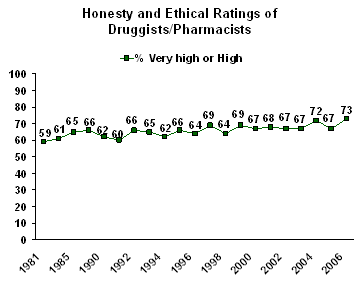
Ratings of druggists/pharmacists rose six points, from 67% in 2005 to 73% in 2006. This is similar to the level seen for pharmacists in 2004 (72%), however it is still among the highest integrity ratings received by pharmacists in the 25 years they have been rated.
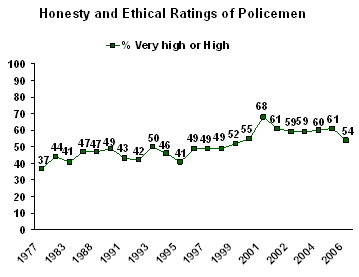
Additionally, Gallup saw a slight decline in the rating of police since 2005. The percentage rating their honesty high or very high was close to 60% or better for each of the past five years, but this year it fell to 54%. This is still well above the low points for the reputation of police recorded in the early 1980s and several points in the 1990s when as few as 41% rated the police highly.
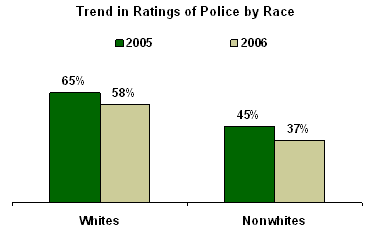
Gallup normally sees a sharp difference between whites and nonwhites in their ratings of police, with nonwhites rating police much less favorably. That sentiment is maintained this year. Also, the decline in ratings of the police since 2005 is seen about evenly with both groups.
Politicized Ratings
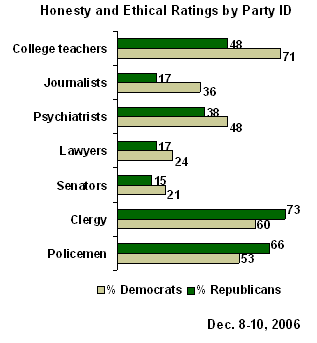
Eight of the 23 professions rated this year elicit significantly different honesty ratings from Republicans and Democrats. Democrats are more positive than Republicans about the ethics of college teachers, psychiatrists, journalists, lawyers, and senators. Republicans have a more favorable view than Democrats of clergy and policemen.
Survey Methods
Results are based on telephone interviews with 1,009 national adults, aged 18 and older, conducted Dec. 8-10, 2006. For results based on the total sample of national adults, one can say with 95% confidence that the maximum margin of sampling error is ±3 percentage points. In addition to sampling error, question wording and practical difficulties in conducting surveys can introduce error or bias into the findings of public opinion polls.
2. Please tell me how you would rate the honesty and ethical standards of people in these different fields -- very high, high, average, low, or very low? First, ... Next, ... [RANDOM ORDER]
|
2006 Dec 8-10 |
Very high |
High |
Average |
Low |
Very low |
No opinion |
|
Advertising practitioners |
2 |
9 |
49 |
28 |
7 |
5 |
|
Bankers |
3 |
34 |
52 |
9 |
1 |
1 |
|
Business executives |
2 |
16 |
53 |
20 |
7 |
2 |
|
Car salesmen |
1 |
6 |
36 |
40 |
15 |
1 |
|
Clergy |
16 |
42 |
29 |
6 |
3 |
4 |
|
Congressmen |
2 |
12 |
45 |
30 |
10 |
1 |
|
Druggists or pharmacists |
17 |
56 |
23 |
3 |
1 |
1 |
|
Lawyers |
3 |
15 |
42 |
27 |
11 |
2 |
|
Medical doctors |
16 |
53 |
26 |
5 |
1 |
* |
|
Nurses |
25 |
59 |
14 |
2 |
* |
* |
|
Policemen |
12 |
42 |
34 |
9 |
2 |
* |
|
Chiropractors |
5 |
31 |
48 |
9 |
1 |
6 |
|
College teachers |
10 |
48 |
32 |
5 |
2 |
3 |
|
Dentists |
10 |
52 |
34 |
3 |
1 |
* |
|
Engineers |
13 |
48 |
33 |
2 |
1 |
4 |
|
HMO managers |
1 |
11 |
45 |
27 |
10 |
7 |
|
Insurance salesmen |
2 |
11 |
51 |
28 |
6 |
1 |
|
Journalists |
3 |
23 |
48 |
18 |
7 |
2 |
|
Psychiatrists |
5 |
33 |
42 |
9 |
3 |
7 |
|
Senators |
2 |
13 |
49 |
26 |
9 |
1 |
|
State governors |
4 |
18 |
52 |
19 |
7 |
1 |
|
Veterinarians |
16 |
55 |
23 |
2 |
* |
3 |
|
Stockbrokers |
3 |
14 |
56 |
19 |
4 |
5 |
|
* = Less than 0.5% |
||||||
