Levels of education vary substantially among the nine predominantly Islamic countries that Gallup surveyed in December and January. Kuwait and Saudi Arabia enjoy the most highly educated public, while Pakistan is the lowest educated, followed closely by Morocco.
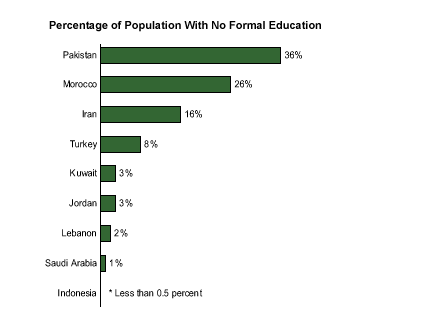
No Formal Education
One of the most telling figures is the proportion of people in each country who have received no formal education at all. Pakistan ranks highest on this measure -- 36% of its adult population is without formal education. Morocco is second with 26%, followed by Iran (16%) and Turkey (8%). Only 3% or less of the residents in each of the other countries report no formal education.
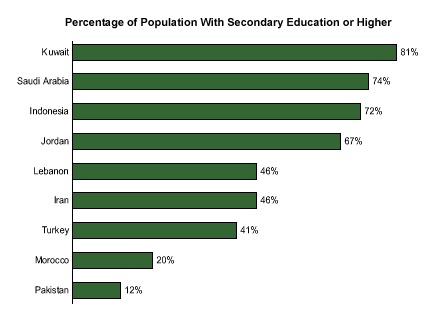
Secondary Education or Higher
The countries with the highest numbers of people achieving a secondary level of education or more are Kuwait (81%), Saudi Arabia (74%), Indonesia (70%) and Jordan (67%). The lowest-ranking countries are Pakistan (12%) and Morocco (20%).
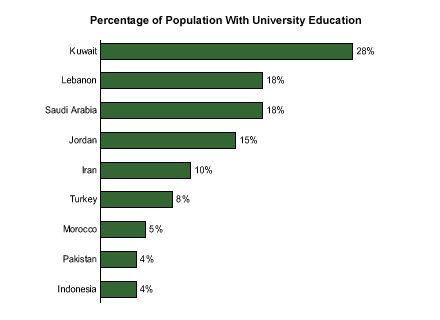
University Education
Although 70% of Indonesians have completed secondary school, just 4% have completed university-level training, the same percentage as in Pakistan. Kuwait ranks highest in this category, with 28%, followed by Lebanon and Saudi Arabia, each with 18%.
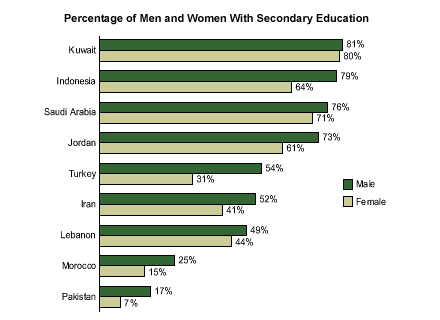
Differences by Gender
In the two most highly educated nations, men and women report virtually the same levels of education. In Kuwait, 81% of men and 80% of women have completed a secondary education or higher, and in Saudi Arabia, 76% of men and 71% of women have reached that level.
The largest gender gap is found in Turkey, where 54% of men, but only 31% of women, report at least a secondary level of education -- a difference of 23 percentage points. Gaps of 10 percentage points or more exist in Jordan (12 points), Pakistan (10 points), Iran (11 points), Morocco (10 points), and Indonesia (15 points).
In several of the countries surveyed, gaps also exist between the percentages of men and women with no education. Morocco has the greatest gap, with 41% of women and only 11% of men having received no formal education. Pakistan shows a similar pattern, with 49% of women, but only 22% of men with no education. Women are also more likely to report no education in Iran (by 11 points) and Turkey (by 10 points).
Education by Age
Examining the difference in educational levels between the youngest and oldest groups of people can help to determine how much progress a country is making toward improving the education of its citizens. Gallup compared the educational levels of people below age 30 with people 40 and older.
The country with the least amount of change is Pakistan -- also the lowest-educated nation of the nine. Only 14% of its young people have a secondary education or better, compared with 9% of older people. The largest difference is found in Indonesia, where 45% of those over age 40 have a secondary education, but 86% of those under age 30 reported having achieved that level. Other nations with educational progress include Turkey (36-point difference between the oldest and youngest), Iran (31 points), Jordan (24 points), and Lebanon (22 points).
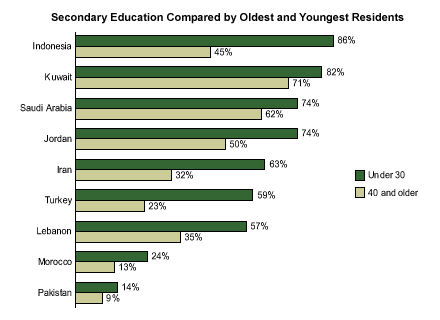
In the two most highly educated nations, there are still gaps between the educational levels of the oldest and youngest groups -- 11 points in Kuwait and 12 points in Saudi Arabia. While Morocco also shows an 11-point difference, the percentages reporting a secondary education are quite small -- 13% in the oldest and 24% in the youngest groups. Only Pakistan is lower.