The National Youth Anti-Drug Media Campaign launched a set of television ads this year aimed at debunking teens' perceptions that marijuana is a harmless drug. The timing is good: government data show that marijuana use is on the rise among U.S. teens. The U.S. surgeon general reports that marijuana is the most widely used illegal drug among America's youth. And according to the Centers for Disease Control and Prevention, marijuana use increased from 15% in 1991 to 24% in 2001 among 9th- to 12th-grade students.
Who are the teens most likely to try marijuana? What kinds of behaviors may lead teens to try it? Data from Gallup's 2003 Gallup Youth Survey* provide some insight on these questions.
Teen-age Use of Marijuana and Alcohol
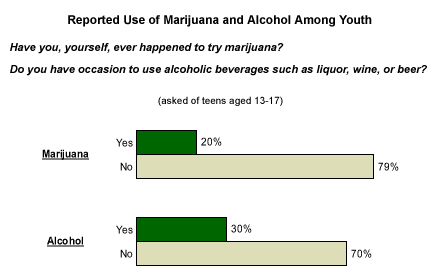
The 2003 survey asked teens a series of questions about their use of various substances, including marijuana and alcohol, that can be damaging to one's health. Results show that one in five teens (20%) has tried marijuana, compared to 30% who report using alcohol (see "One in Three Teens Admits Drinking Alcohol" in Related Items).
As might be expected, older teens (those aged 16 to 17) are twice as likely to report trying marijuana than younger teens (those aged 13 to 15) are -- 29% compared to 14%.
There also seems to be a connection between teens' likelihood to report engaging in other unhealthy behaviors, and their reported marijuana use. Forty-three percent of teens who say they drink alcohol also report trying marijuana, compared with just 10% of those who say they don't drink alcohol. Thirty-five percent of youth who say they eat an unhealthy diet report trying marijuana, compared to 18% who say they eat a healthy diet and 17% who say they eat an "okay" diet. Perhaps most telling is the fact that 75% of teens who say they have smoked cigarettes in the last week report having tried marijuana, five times greater than the percentage of those who say they have not smoked.
Bottom Line
Substance abuse professionals frequently observe multiple addictions among their patients. For example, those with alcohol abuse problems often also have problems with illegal drug use. Substance abuse patients who are weaned off alcohol and/or illegal drugs often increase tobacco use or caffeine consumption to compensate.
This pattern may also be reflected in the Gallup Youth Survey data. Marijuana is often simply one aspect of a teen's unhealthy lifestyle. Decreasing marijuana use among this population may hinge on more broadly targeting the underlying causes of numerous unhealthy behaviors. Simply dispelling myths about marijuana use (as in the current anti-marijuana ad campaign) or instructing teens to "just say no," may have no more impact than the "reefer madness" approach used to try to scare previous generations of teens away from the drug.
*The Gallup Youth Survey is conducted via an Internet methodology provided by Knowledge Networks, using an online research panel that is designed to be representative of the entire U.S. population. The current questionnaire was completed by 1,200 respondents, aged 13 to 17, between Jan. 23-Feb. 10, 2003. For results based on the total sample, one can say with 95% confidence that the maximum margin of sampling error is ±3%. For a complete description of the sampling and weighting procedures used to conduct the survey, click here.