GALLUP NEWS SERVICE
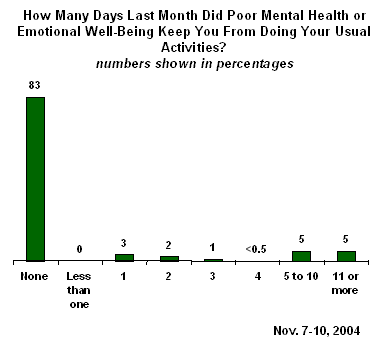
PRINCETON, NJ -- Although the vast majority of Americans rate their general mental health as excellent or good, one out of six admit that poor mental health or emotional well-being has kept them from doing their usual activities at least once during the last month. About one third of Americans say that there has been a time within the last month when their mental or emotional well-being was "not good". Twelve percent of Americans have visited a mental health professional such as a psychologist, psychiatrist, or therapist within the past 12 months.
Self-reports of Overall, Personal Mental Health
Americans are somewhat more positive about their general mental health this year than they have been in the past three years. Fifty-one percent of Americans surveyed in Gallup's Nov. 7-10 poll say they would describe their mental health as excellent, compared to 43% in each of the previous three years when Gallup measured this variable. Another 37% this year rate their mental health as good, meaning that 88% give their mental health a generally positive rating. Only 9% say their mental health is just fair, and only 3% poor.
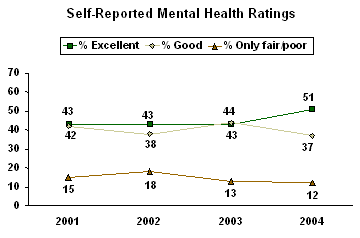
The major change over time has been in the "excellent" category. There is no immediately apparent reason for this increase in the percentage rating their mental health as excellent this year.
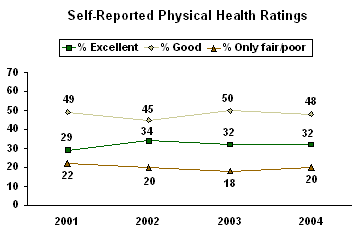
Americans are in better shape mentally than physically. Just about a third of the country labels their physical health as excellent, although another 48% rate it is as good -- leaving 20% who say their physical health is only fair or poor. Unlike the trend on mental health, there has been little change in the physical health ratings over the last three years.
There is a significant relationship between physical health and mental health. Of those who rate their physical health as only fair or poor, only 25% say their mental health is excellent. Forty-one percent of those whose physical health is only fair or poor also rate their mental health as only fair or poor. It seems reasonable to assume that physical ailments or diseases may lead to mental or emotional problems.
|
How Would You Describe Your Own Mental Health or Emotional Well-Being at This Time? |
|||
|
Excellent |
Good |
Only fair/poor |
|
|
Physical Health |
|
|
|
|
Excellent |
76% |
23 |
1 |
|
Good |
45% |
48 |
7 |
|
Only fair/poor |
25% |
34 |
41 |
Socioeconomic Status
There is a strong relationship between Americans' socioeconomic status and their self-reported mental health. Americans with higher incomes and higher levels of education are significantly more likely to report having excellent mental health than are those with lower levels of household income and only a high school degree or less.
|
How Would You Describe Your Own Mental Health or Emotional Well-Being at This Time? |
|||
|
Excellent |
Good |
Only fair/poor |
|
|
Education |
|
|
|
|
Post-graduate |
61% |
35 |
4 |
|
College graduate |
64% |
30 |
6 |
|
Some college |
52% |
38 |
10 |
|
High school or less |
41% |
40 |
19 |
|
|
|
|
|
|
Income |
|
|
|
|
$75,000 or more |
63% |
34 |
3 |
|
$50,000 - $74,999 |
62% |
32 |
6 |
|
$30,000 - $49,999 |
44% |
41 |
15 |
|
$20,000 - $29,999 |
42% |
43 |
15 |
|
$20,000 or less |
31% |
39 |
30 |
Age
Younger Americans are more likely to report excellent mental health than are those who are aged 50 or older. Since older Americans are less likely to report excellent physical health, it is possible that the relationship evident in this table is to some degree a result of physical problems of those who are older.
|
How Would You Describe Your Own Mental Health or Emotional Well-Being at This Time? |
|||
|
Excellent |
Good |
Only fair/poor |
|
|
Age |
|
|
|
|
18- to 29-year-olds |
55% |
29 |
16 |
|
30- to 49-year-olds |
55% |
34 |
11 |
|
50- to 64-year-olds |
43% |
43 |
14 |
|
65 years and older |
43% |
46 |
11 |
Region
Excellent mental health is slightly more prevalent in the South and West than in the Midwest and East. Americans living in urban areas are also more likely to report excellent mental health than are those living in suburban and rural areas.
|
How Would You Describe Your Own Mental Health or Emotional Well-Being at This Time? |
|||
|
Excellent |
Good |
Only fair/poor |
|
|
Region |
|
|
|
|
East |
45% |
43 |
12 |
|
Midwest |
47% |
43 |
10 |
|
South |
54% |
31 |
15 |
|
West |
56% |
34 |
10 |
|
|
|
|
|
|
Community |
|
|
|
|
Urban |
55% |
36 |
9 |
|
Suburban |
49% |
38 |
13 |
|
Rural |
48% |
37 |
15 |
Political Party Identification
Republicans are more likely to report having excellent mental health than are independents and, in particular, Democrats. Republicans generally tend to have higher levels of income and education, which may account for some of this relationship, but previous research has suggested that identifying with the party occupying the White House is associated with a wide variety of more positive outlooks on various indicators.
The biggest change in the relationship between party identification and self-reported mental health from last year to this year came among independents, who went from 37% reporting excellent in 2003 to 49% this year. Republicans and Democrats stayed virtually the same, with Republicans moving from 59% last year to 62% this year and Democrats reporting 36% last year and 40% this year. In other words, the disparity between the self-reported mental health of Republicans and Democrats was just as evident last year as it is this year.
|
How Would You Describe Your Own Mental Health or Emotional Well-Being at This Time? |
|||
|
Excellent |
Good |
Only fair/poor |
|
|
|
|
|
|
|
Republicans |
62% |
31 |
7 |
|
Independents |
49% |
37 |
14 |
|
Democrats |
40% |
43 |
17 |
Health Habits
Perhaps not surprisingly, smoking and being overweight are correlated with a less positive mental outlook. Individuals in both of these groups are less likely to say their mental health is excellent than are those who do not smoke and whose weight is about right or who are underweight. There is no difference in the self-reported mental health of those who report drinking alcohol (about two-thirds of the adult population) and those who do not, although those who drink weekly are slightly more likely to report excellent mental health than those who drink less frequently.
|
How Would You Describe Your Own Mental Health or Emotional Well-Being at This Time? |
|||
|
Excellent |
Good |
Only fair/poor |
|
|
|
|
|
|
|
Smokers |
41% |
40 |
19 |
|
Non-smokers |
53% |
36 |
11 |
|
|
|
|
|
|
Overweight |
43% |
40 |
17 |
|
Weight about right |
55% |
35 |
10 |
|
|
|
|
|
|
Drink alcohol |
51% |
39 |
10 |
|
Don't drink alcohol |
50% |
32 |
18 |
Episodes of Mental or Emotional Health Problems Relatively Frequent
Despite the fact that just 12% of Americans rate their overall mental health as only fair or poor, about a third of adult Americans experience temporary or transient mental health episodes in an average month. More specifically, 34% of Americans say there was at least one day in the month preceding the interview during which their mental or emotional well-being was "not good". That includes 17% who say their mental or emotional health was not good during five or more days.
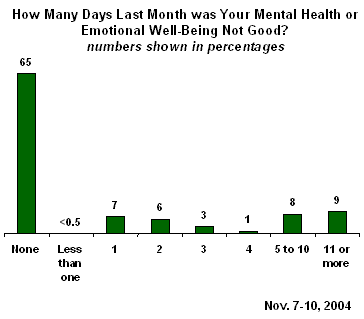
Despite the fact that Americans' descriptions of their mental health have become more positive (as measured by the increased percent who rate it as excellent), there has been no significant change in this last month's measure of monthly episodes of poor mental health.
The implications of poor mental health are not trivial. Fifteen percent of the national adult population said that poor mental health or emotional well-being kept them from doing usual activities, such as self-care, work, or recreation at least one day during the past month. Sixty-one percent of those who report their mental health is only fair or poor say that it has kept them from doing their usual activities at least one day in the past month, underscoring the toll mental health problems take on personal lives and society.
Seeking Help
Twelve percent of Americans have visited a mental health professional over the last 12 months, a number roughly the same as a result found in November 2001, just after the 9/11 terrorist attacks.
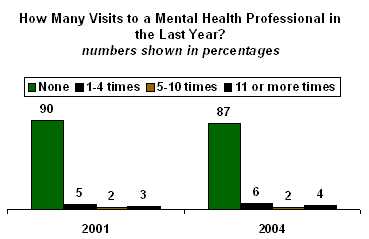
This includes 42% of those whose mental health is only fair or poor. Although this is a high number, it still means that a majority of those who have self-defined mental health problems are not seeking professional help for their issues.
Despite the fact that excellence in mental health is positively correlated with education and income, there is no consistent relationship between these socioeconomic variables and seeking therapeutic help.
There is, however, an interesting relationship with age. Younger people appear to be somewhat more likely than older people to have consulted a mental health professional within the last year.
|
Visited Psychologist, Therapist, Psychiatrist or Some Other Mental Health Official in the Last 12 Months? |
||
|
Sought help from mental health official at least one time during last year |
Did not seek help from mental health official during last year |
|
|
Age |
% |
% |
|
18- to 29-year-olds |
20 |
80 |
|
30- to 49-year-olds |
14 |
86 |
|
50- to 64-year-olds |
12 |
87 |
|
65 years and older |
5 |
94 |
It is not surprising to find that visits to mental health professionals are much less frequent than visits to a general physician. Indeed, the data from the November poll show that nine out of ten Americans have been to a medical doctor within the past year, including 33% who have been five or more times.
Survey Methods
Results are based on telephone interviews with 1,016 national adults, aged 18 and older, conducted Nov. 7-10, 2004. For results based on the total sample of national adults, one can say with 95% confidence that the maximum error attributable to sampling and other random effects is ±3 percentage points.
In addition to sampling error, question wording and practical difficulties in conducting surveys can introduce error or bias into the findings of public opinion polls.
13. How would you describe your own physical health at this time? Would you say your physical health is -- excellent, good, only fair, or poor?
|
Excellent |
Good |
Only fair |
Poor |
No opinion |
|
|
% |
% |
% |
% |
% |
|
|
2004 Nov 7-10 |
32 |
48 |
14 |
6 |
* |
|
|
|
|
|
|
|
|
2003 Nov 3-5 |
32 |
50 |
14 |
4 |
* |
|
2002 Nov 11-14 |
34 |
45 |
14 |
6 |
1 |
|
2001 Nov 8-11 |
29 |
49 |
17 |
5 |
* |
|
* Less than 0.5% |
|||||
17. How would you describe your own mental health or emotional well-being at this time? Would you say it is -- excellent, good, only fair, or poor?
|
Excellent |
Good |
Only fair |
Poor |
No opinion |
|
|
% |
% |
% |
% |
% |
|
|
2004 Nov 7-10 |
51 |
37 |
9 |
3 |
-- |
|
|
|
|
|
|
|
|
2003 Nov 3-5 |
43 |
44 |
11 |
2 |
* |
|
2002 Nov 11-14 |
43 |
38 |
15 |
3 |
1 |
|
2001 Nov 8-11 |
43 |
42 |
12 |
3 |
* |
|
* Less than 0.5% |
|||||
18. Now, thinking about your mental health or emotional well-being, for how many days during the past month was either of these not good? [Open-ended]
|
|
Less than one |
|
|
|
|
|
|
|
|
|
|
|
% |
% |
% |
% |
% |
% |
% |
% |
% |
|
|
|
|
2004 Nov 7-10 |
65 |
* |
7 |
6 |
3 |
1 |
8 |
9 |
1 |
2.9 |
0 |
|
|
|
|
|
|
|
|
|
|
|
|
|
|
2003 Nov 3-5 |
64 |
* |
4 |
7 |
6 |
2 |
8 |
7 |
2 |
2.4 |
0 |
|
2002 Nov 11-14 |
61 |
1 |
5 |
7 |
4 |
2 |
9 |
8 |
3 |
2.6 |
0 |
|
2001 Nov 8-11 |
62 |
* |
5 |
8 |
4 |
2 |
9 |
8 |
2 |
2.7 |
0 |
|
* Less than 0.5% |
|||||||||||
19. During the past month, for about how many days did poor mental health or emotional well-being keep you from doing your usual activities, such as self-care, work or recreation? [Open-ended]
|
|
Less than one |
|
|
|
|
|
|
|
|
|
|
|
% |
% |
% |
% |
% |
% |
% |
% |
% |
|
|
|
|
National Adults |
|
|
|
|
|
|
|
|
|
|
|
|
2004 Nov 7-10 |
83 |
-- |
3 |
2 |
1 |
* |
5 |
5 |
1 |
1.7 |
0 |
|
2003 Nov 3-5 |
85 |
* |
2 |
1 |
2 |
* |
3 |
4 |
2 |
1.0 |
0 |
|
2002 Nov 11-14 |
82 |
* |
3 |
1 |
1 |
1 |
5 |
4 |
3 |
1.5 |
0 |
|
2001 Nov 8-11 |
85 |
* |
3 |
2 |
1 |
1 |
4 |
4 |
* |
1.3 |
0 |
|
|
|
|
|
|
|
|
|
|
|
|
|
|
Experienced Poor Mental Health ^ |
|||||||||||
|
2004 Nov 7-10 |
54 |
-- |
8 |
5 |
3 |
1 |
14 |
15 |
-- |
4.9 |
0 |
|
2003 Nov 3-5 |
62 |
1 |
6 |
4 |
6 |
1 |
9 |
11 |
1 |
2.9 |
0 |
|
2002 Nov 11-14 |
57 |
* |
7 |
4 |
4 |
2 |
13 |
12 |
1 |
4.0 |
0 |
|
2001 Nov 8-11 |
58 |
* |
7 |
5 |
4 |
2 |
11 |
12 |
1 |
3.7 |
0 |
|
|
|
|
|
|
|
|
|
|
|
|
|
|
^ Based on 314 who experienced day(s) of poor mental health |
|||||||||||
|
* Less than 0.5% |
|||||||||||
38. Using your best estimate, in total, how many times have you visited a psychologist, therapist, psychiatrist, or some other mental health official in the last 12 months? [Record exact number]
|
|
|
1 time |
2 times |
3 times |
4 times |
5-10 times |
11 + times |
No opinion |
|
|
|
% |
% |
% |
% |
% |
% |
% |
% |
|
|
|
|
2004 Nov 7-10 |
87 |
2 |
2 |
1 |
1 |
2 |
4 |
1 |
1.5 |
0 |
|
2001 Nov 8-11 |
90 |
2 |
1 |
1 |
1 |
2 |
3 |
* |
1.1 |
0 |
|
* Less than 0.5% |
||||||||||
39. Using your best estimate, in total, how many times have you visited a doctor in the last 12 months? [Record exact number]
|
|
|
1 |
2 times |
3 times |
4 times |
5-10 times |
11 + times |
No opinion |
|
|
|
% |
% |
% |
% |
% |
% |
% |
% |
|
|
|
|
2004 Nov 7-10 |
9 |
16 |
19 |
13 |
9 |
19 |
14 |
1 |
6.3 |
3 |
|
2001 Nov 8-11 |
13 |
20 |
18 |
12 |
8 |
18 |
10 |
1 |
4.7 |
2 |
|
1991 Jun 27-30 |
16 |
19 |
17 |
14 |
7 |
16 |
10 |
1 |
-- |
-- |