Given the frantic pace of emergency departments, it seems that ER staff wouldn't have time to treat patients differently, but patients consistently end up with different perceptions according to their method of payment. Satisfaction with hospital emergency departments varies significantly by payor type: Medicare patients -- older patients covered by insurance -- give the highest satisfaction scores, while self-pay patients -- typically low-income patients paying out of their own pockets, or not able to pay for their services at all -- give the lowest scores. (See "ER Satisfaction Varies With Payment Type" in Related Items.) What is causing the gap between these two groups in emergency department satisfaction?
To answer this question, Gallup looked for patterns in the way Medicare and self-pay patients scored the core emergency department satisfaction items in Gallup's 2003 healthcare database. Taking the scores of all the items together, Medicare patients' overall average is a significant .17 above that of self-pay patients' (each item is based on a scale of 1 to 4). If the group of core items is divided into "process" items (those related primarily to hospital operations) and "people" items (those related primarily to human interaction), the gap between Medicare and self-pay patients remains the same for both sets.
Of the eight questions with the largest gaps between Medicare and self-pay patients, three are process items, four are people items, and one (quality of emergency department physicians) fits neither category and is therefore considered "overall evaluation." It appears that the satisfaction gap between Medicare patients and self-payors is not limited to "people"- or "process"-related factors, but reflects of the whole emergency department experience.
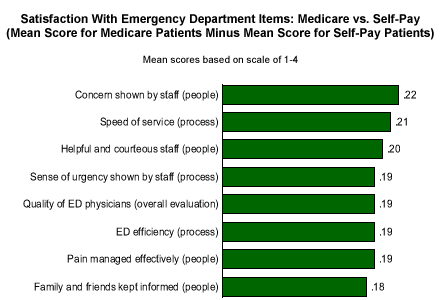
Furthermore, all of the eight items that differ most between the two payor groups correlate highly with patients' overall rating of the emergency department. Of the six emergency department items that correlate most highly with overall emergency department satisfaction, five are among the key differentiators between Medicare and self-pay patients.
Why the Difference?
Self-pay patients tend to be more dissatisfied with the basic aspects of emergency department service, including speed, efficiency, and interaction with staff members. That areas of heightened dissatisfaction are not limited to those involving people suggests that overt discrimination against self-pay patients by emergency department staff is not necessarily the root of the problem.
The broad-based nature of the gap between Medicare patients and self-pay patients suggests instead that self-pay patients may simply have different expectations than Medicare patients do. Patients who visit the emergency department with full insurance coverage may have a different perspective on the ER's function than do patients with no coverage, who are less likely to have a primary care physician to treat day-to-day health problems and more likely to turn to emergency departments in a broader range of situations. Consequently, both process and people factors may be geared to more frequently assign these patients a lower priority -- not because of their payment method but because of the nature of their ailments. Regardless, the first step toward improving satisfaction among self-pay patients is to better understand the motivations and unique expectations of this payor group.