As the Chinese economy posted another year of near-double-digit growth in 2004, the global commodity markets felt the aftershocks. With China accounting for 53% of the world consumption of cement and 20% of steel, demand helped drive commodity prices upward. And while Chinese demand makes its presence felt in the global marketplace, consumerism is increasing back home as well. In this country of 1.3 billion people, there has been an explosion in demand for consumer goods from mobile phones to personal computers to microwave ovens. The Gallup Poll of China provides some more specifics on where this demand is coming from.
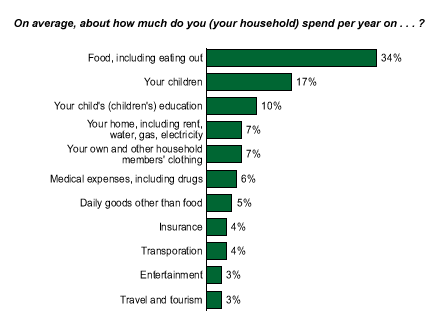
The bulk of the average Chinese household's yearly expenditures are on non-discretionary purchases such as food, shelter, clothing, utilities, and medical expenses. Discretionary spending such as entertainment and travel accounts for just 6% of spending. And in keeping with the Chinese reputation for doting on their "little emperors," spending on children is second only to spending on food. While households, on average, spend 34% of all outlays on food, expenditures on children (including education) account for 27% of spending.
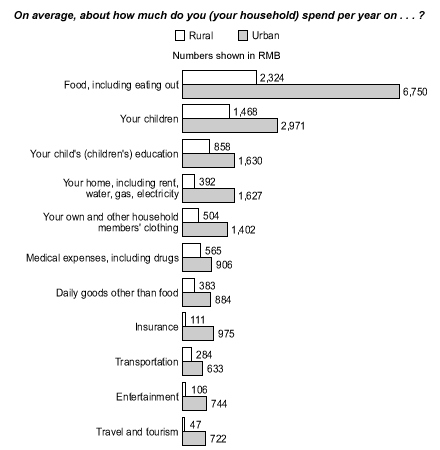
As would be expected given the income disparities, consumption habits differ significantly between urban and rural China. And these differences are magnified where discretionary spending is concerned. The average urban household spends 15 times more on travel and tourism and 7 times more on entertainment than the average rural household. The urban/rural gap is smallest when it comes to spending on medical expenses and one's children -- priorities for both urban and rural Chinese.
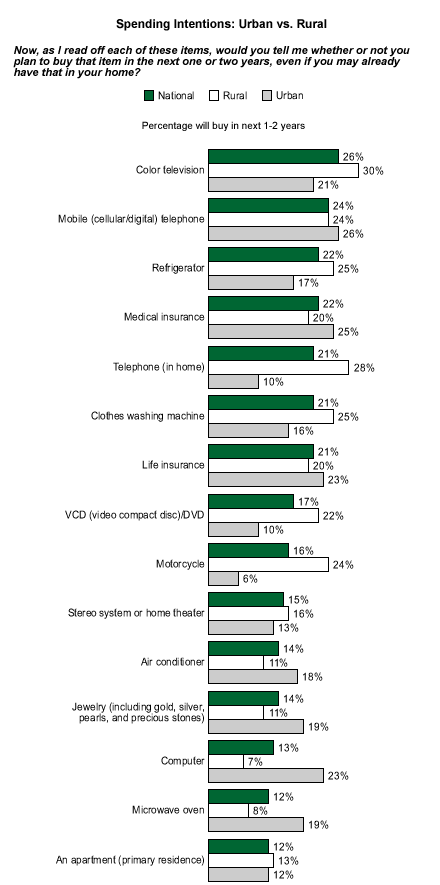
To determine where the pent-up demand for consumer goods might lie, Gallup asked respondents what purchases they are considering making in the next one or two years. About one in four Chinese have the following four items on their shopping lists: a color television, mobile phone, refrigerator, and medical insurance. About one in every four rural Chinese covets color televisions, in-home telephones, refrigerators, washing machines, mobile phones, and motorcycles. One-fourth of urban Chinese are also looking to purchase mobile phones; other upcoming purchases for this group include medical insurance, life insurance, and computers.
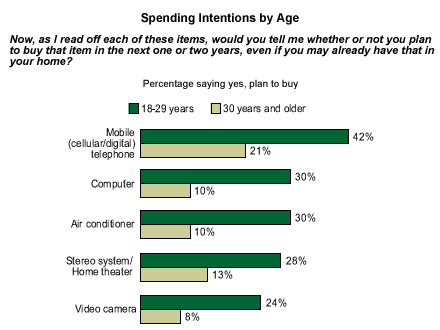
Chinese between the ages of 18 and 29 make up the demographic group with the most ambitious spending intentions. A look at 18- to 29-year-old spending intentions compared with people in other age categories reveals that on every single consumer good mentioned, young adults represent the single largest potential market, especially when it comes to high-tech goods. While 10% of Chinese aged 30 and older expect to buy a computer over the next couple of years, 30% of 18- to 29-year-olds have the same expectation. The comparison is dramatic for mobile phones: just 21% of the over-30 crowd is in the market, compared with 42% of young Chinese adults.