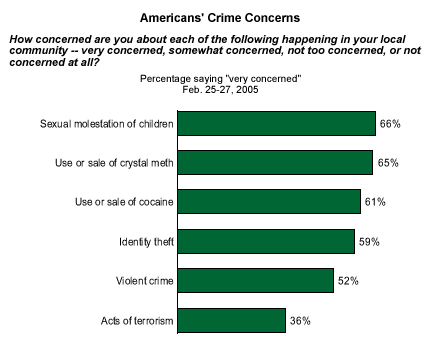
When presented with a list of six crimes that could happen in their local communities, a recent CNN/USA Today/Gallup poll finds that Americans express the greatest concern about child molestation and the sale and use of methamphetamines or "crystal meth." The public also expressed considerable worry about the sale and use of cocaine as well as identity theft, but is less worried about violent crime or terrorism.
Two in Three Americans "Very Concerned" About Child Molestation, Crystal Meth
The poll, conducted Feb. 25-27*, asked Americans to rate their level of concern on five different aspects of crime in their local communities. In a separate question, Gallup also asked Americans to describe their level of concern about identity theft, the crime in which someone steals personal information, such as a Social Security number, and uses that information to commit fraud.
Sexual molestation of children and the use or sale of methamphetamines top the list of these local crime worries, with roughly two in three Americans saying they are "very concerned" about these two issues. The use or sale of cocaine, with 61% saying they are very concerned, and identity theft, with 59%, follow closely behind. Americans are less concerned about violent crime, although a slim majority (52%) still says it is very concerned about it. Just about a third of all Americans, 36%, say they are very concerned about acts of terrorism occurring in their local communities.
Crystal Meth a Concern in Rural Communities, the Midwest, South, and West
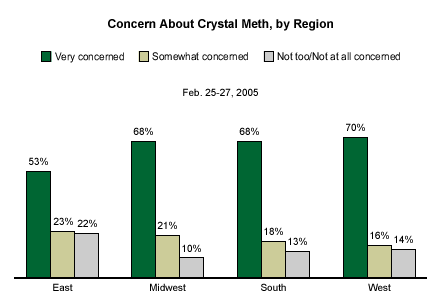
News reports depict how the sale and use of crystal meth has been surging in rural and suburban communities across the country in recent years, particularly in the Midwest and the West.
The current poll finds that a slight majority of Americans (53%) living in the eastern part of the country say they are very concerned about crystal meth. However, this sentiment is much higher among those living in the Midwest (68%), the South (68%), and the West (70%).
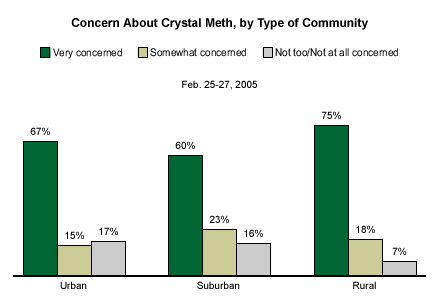
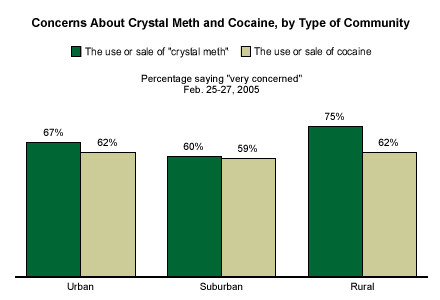
People residing in suburban areas are less likely than people in urban or rural areas to say they are very concerned about crystal meth. Seventy-five percent of adults living in rural areas and 67% of adults in urban areas say they are very concerned about the drug, compared with 60% of those living in suburban communities.
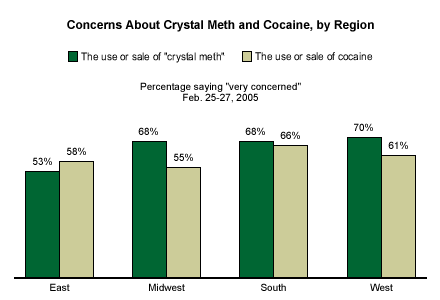
When comparing Americans' concerns about crystal meth with their concerns about cocaine, the data also show some differences by region and type of community. Roughly two in three adults living in the Midwest say they are very concerned about the use or sale of crystal meth, while 55% of those living in that region are concerned about cocaine. Among residents living in the West, 70% are very concerned about crystal meth, compared with 61% who are concerned about cocaine. The data show only slight variations among residents in the eastern and southern parts of the country on these two measures.
There are only modest differences in the levels of concern about crystal meth compared with cocaine in urban and suburban communities. Americans living in rural communities, however, are more likely to express concern about crystal meth than about cocaine.
Women, People in Lower-Income Households More Concerned About Child Molestation
The ongoing and highly publicized Michael Jackson child molestation case has propelled the issue to the forefront of the news over the past several months.
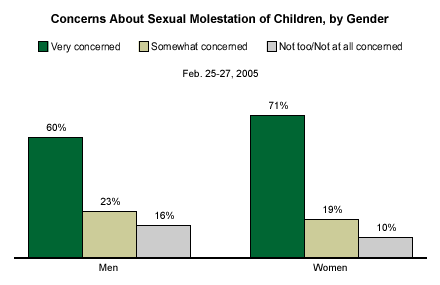
Gallup's data show that women are much more likely than men to be concerned about child molestation, although majorities of both groups are worried about it. Slightly more than 7 in 10 women say they are very concerned, compared with 60% of men.
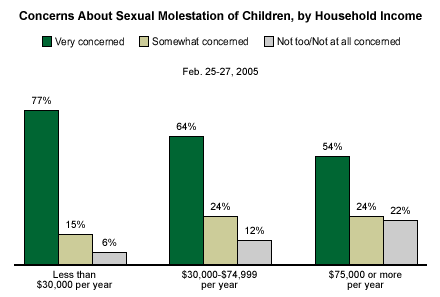
Americans living in lower-income households are also more likely to express concern about sexual abuse of children than are those in higher-income households. More than three in four adults earning less than $30,000 per year say they are very concerned about child molestation, while 64% of those earning between $30,000 and $75,000 per year, and just 54% of those earning $75,000 per year or more express this level of concern.
Interestingly, the poll finds no difference in the levels of concern about child molestation between parents of children aged 18 and younger and those who do not have young children.
*These results are based on telephone interviews with a randomly selected national sample of 1,008 adults, aged 18 and older, conducted Feb. 25-27, 2005. For results based on this sample, one can say with 95% confidence that the maximum error attributable to sampling and other random effects is ±3 percentage points. In addition to sampling error, question wording and practical difficulties in conducting surveys can introduce error or bias into the findings of public opinion polls.
