In 1998, Riley Weston made front-page news for lying. Weston, an actor and a writer for the television show Felicity, didn't lie about her education, work history, or criminal record -- she lied about her age. She told them she was 18. In fact, Weston was 32. Why did she do it? As she told E!, "In a business fraught with age bias, I did what I felt I had to do to succeed." And succeeding, it seems, meant resembling the people watching the show -- teens.
Weston's deception reflects the entertainment industry's intense desire to cater to teens, who as a demographic group are among the most rabid consumers of television fare. The 2003 Gallup Youth Survey* asked kids between the ages of 13 and 17 about their media usage habits, including how many hours they spend watching TV. Nearly a third of teens, 32%, said they watch between one and five hours a week. Thirty percent said they watch 5 to 10 hours, and 20% said 10 to 20 hours. Eleven percent watch more than 20 hours a week. Only 5% watch less than an hour a week, and 1% of American teens watch no television at all.
In other words, just about every member of the American adolescent population is watching. But who watches most?
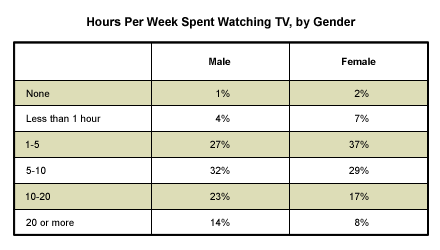
Boys report watching a little more television than girls do: 37% of boys say they spend 10 hours or more per week in front of the tube, compared with 25% of girls.
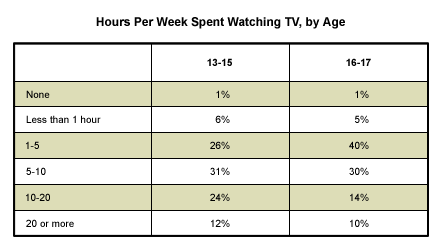
Studies of the effect of television on teens often particularly scrutinize the youngest teens because it is assumed they watch more television. There do seem to be some slight differences in TV-watching by age. Thirty-six percent of 13- to 15-year-olds watch 10 or more hours of television per week, compared with 24% of teens aged 16 to 17.
Dietary Connection?
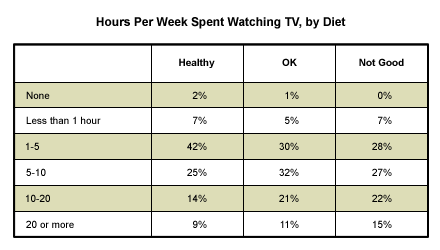
There have been many studies focusing on television's potentially ill effects on kids, and the seriousness of these potential effects has been widely debated. These latest Gallup Youth Survey numbers indicate that teens who say they eat a bad diet tend to watch a bit more television than other teens do. Thirty-seven percent of teens who say they eat a poor diet watch 10 or more hours of television a week, compared with 23% of teens who say they eat a healthy diet.
*The Gallup Youth Survey is conducted via an Internet methodology provided by Knowledge Networks, using an online research panel that is designed to be representative of the entire U.S. population. The current questionnaire was completed by 1,200 respondents, aged 13 to 17, between Jan. 23-Feb. 10, 2003. For results based on the total sample, one can say with 95% confidence that the maximum margin of sampling error is ±3%. For a complete description of the sampling and weighting procedures used to conduct the survey, click here.