In 1999, Napster introduced a file-sharing program that forever changed the relationship between music lovers and the industry that serves them. Napster made it possible to download music from the Internet for exactly the right price -- free -- an activity the music industry calls piracy.
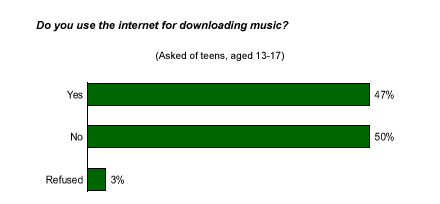
Since then, the record industry has brought a successful legal suit against Napster and tried implementing monthly fee services to encourage legal downloading. In the latest turn of events, a federal court ruled in early June that an Internet service provider, Verizon Communications, must turn over the name of an individual suspected by the music industry of using a file-sharing program, Kazaa, to share more than 600 songs illegally over the Internet. But the record industry may be fighting an uphill battle, as downloading music is a fairly widespread activity among U.S. teens. According to a recent Gallup Youth Survey*, nearly half (47%) of U.S. teens (aged 13 to 17) said they use the Internet for downloading music.
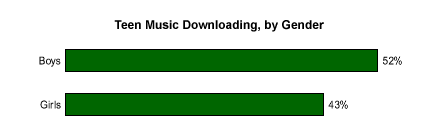
Although boys appear to be slightly more likely to use the Internet for downloading music (52%) than girls appear to be (43%), the process doesn't lack appeal among either gender. Mary, who will be starting college this fall, likes to download music from the Internet. "It's so much more convenient than having to buy a CD -- especially if you only like one song on the whole album. You can do it for free and save yourself 16 bucks and a car ride," she said.
Ben, a high school junior from New York City, echoed Mary's sentiments about not having to buy the entire CD. He said, "File-sharing is great because (1) unknown artists get to be heard; (2) you can hear the music before you buy it; and (3) it's totally free."
White teens are more likely than nonwhite teens to download music from the Internet (53% to 38%, respectively). Although whites tend to have higher income levels than nonwhites, whether teens have the financial means to purchase CDs may increasingly be a moot point. When asked if she foresees any time in the future when she would again pay $16 for a CD, Elza, a 17-year-old high school senior responded, "Not likely."

The Web site for the Recording Industry Association of America clearly states, "The online infringement of copyrighted music can be punished by up to three years in prison and $250,000 in fines." But apparently, the criminal implications of file-sharing -- piracy of intellectual property -- aren't yet a real concern for Elza or her friends. "I hate to say it, but I don't think about that much," Elza said when questioned about the issue. "[File-sharing] is so popular that no one seems to ever have a problem with it."
Bottom Line
In response to rampant file-sharing, particularly among teens, the music industry is being forced to explore new strategies. Last month, with the industry's blessing, Apple introduced iTunes Music Store, a legal download service that charges $.99 per tune. iTunes may become the first successful and legal digital download service, setting the standard for a new relationship between music buyers and sellers. Such a tack is in line with the advice Ben offers the music industry: "They should get the technology working for them instead of against them. If the quality of the sound improves and there's access to most all the music, then I just might pay."
*The Gallup Youth Survey is conducted via an Internet methodology provided by Knowledge Networks, using an online research panel that is designed to be representative of the entire U.S. population. The current questionnaire was completed by 1,200 respondents, aged 13 to 17, between Jan. 23-Feb. 10, 2003. For results based on the total sample, one can say with 95% confidence that the maximum margin of sampling error is ±3%. For a complete description of the sampling and weighting procedures used to conduct the survey, click here.