It's difficult to keep up with generational labels these days -- baby boomers, Generation X, Generation Y, etc. But regardless of what they're called, generation designations have one thing in common: they assume that people in different age groups have certain characteristic values, perceptions, and expectations that set them apart from those who came before and after. Does this assumption hold true when looking at hospital patient satisfaction scores, especially among the oldest and youngest patients?
A recent analysis of Gallup's 2003 patient satisfaction database shows that overall, satisfaction with hospital inpatient services differs by age group (see "Do Patient Expectations Mellow With Age?" in Related Items). A closer look at satisfaction with specific inpatient attributes among the youngest adults -- 18- to 25-year-olds -- and the oldest adults -- those aged 65 and older -- turns up some particularly interesting differences.
Inpatient Scores on Core Items: Seniors vs. Young Adults
The 20 core attributes that Gallup measures for its inpatient satisfaction database can be divided into two categories: "process" items and "people" items. "Process" items encompass patients' basic operational expectations. Patients expect these needs to be met, and failure to meet them leads to dissatisfaction. "People" items measure the interaction between patients and staff members. These items tend to address factors above and beyond basic expectations, and high scores on these items tend to push patients from satisfied to delighted.
There is little difference between young adults (patients between the ages of 18 and 25) and seniors (patients aged 65 and older) on the people items. But the two groups do differ significantly on the process items. Seniors tend to rate process items more positively than young adults do.
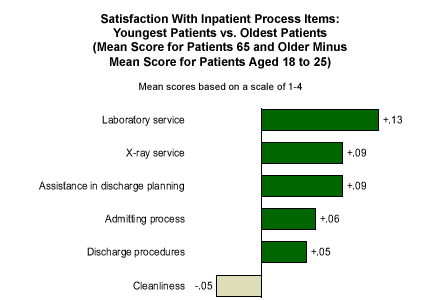
The items on which seniors score highest in comparison to young adults have to do with the hospital's core operations -- laboratory services, radiology, and assistance in discharge planning. Seniors also give higher ratings to the starting and ending points of the inpatient process -- admitting and discharge.
So why do seniors rate these process items more positively than young adults? As we've seen in prior analyses, seniors may be more tolerant of process glitches. They have lived in a world before high-speed computers and automation, when things moved at a slower pace. Conversely, young adults grew up during the information age and probably can't remember a time before computers. They expect hospital processes to be seamless and automated and may have less patience when things don't go as planned.
But there is one process item -- cleanliness -- on which young adults give higher scores than seniors. While young adults expect high-tech processes, seniors may have higher standards for basics like a clean and orderly environment.
Bottom Line
Surprisingly, the difference in inpatient satisfaction between seniors and young adults is not about people; it's about process. Hospitals seeking to improve satisfaction among younger patients should consider upgrading technology and systems that affect patients in the laboratory, X-ray, admitting, and discharge areas. Those looking to improve among seniors may need to focus more on the fundamentals, concentrating on issues such as hospital cleanliness.