Gallup Access vs. Lattice
Employee engagement platforms differ in how they measure, interpret and act on workforce data. This page provides a feature-by-feature comparison of Gallup Access and Lattice to help leaders evaluate which approach fits their organization. All Lattice product details come from lattice.com.
Two Approaches to Employee Engagement

Science-Backed Survey Software
The platform uses the Q12®, an employee engagement survey built through decades of Gallup research and validated across millions of employees worldwide. It also includes a library of nearly 400 validated pulse questions, which allow organizations to measure any topic at any time.
Organizations use this employee engagement platform to measure and improve engagement, run pulse survey software, understand what affects performance and equip managers to act on results.
The platform includes benchmarking, CliftonStrengths®, learning content, AI-powered guidance, and employee engagement tools in one place. Organizations can adjust how they gather employee feedback and what topics they measure while keeping a consistent research foundation behind the data.

People Management Platform
Lattice is a people management platform that combines performance management, employee engagement, career development and compensation tools. HR teams and managers can use it to conduct performance reviews, set and track goals, measure employee engagement through surveys, and support career development.
Organizations use Lattice to create a continuous feedback culture, connecting employee development, performance and engagement in one system.

What’s the difference between these platforms?
Gallup Access is a research-backed platform for measuring and improving employee engagement. Built on decades of original workplace research, it gives organizations validated survey instruments, CliftonStrengths, AI-powered guidance and manager development tools linked to business outcomes.
Lattice is a people management platform built around the operational infrastructure of HR: performance reviews, goal setting, career development, compensation management, and engagement surveys in one system.
The main difference is purpose. Gallup Access helps organizations understand whether employees are engaged and what to do about it. Lattice helps HR teams manage the daily processes of managing, developing and compensating the workforce.
Feature Comparison
This table compares key features of Gallup Access and Lattice, including employee engagement surveys, analytics, manager tools and platform scope.
| Feature | Gallup Access |
Lattice |
|---|---|---|
| Engagement Survey Methodology | Gallup developed the 12-item Q12 employee engagement survey and validated it across industries, cultures and company sizes. | No public methodology described on lattice.com; survey templates covering engagement topics are available |
| Survey Question Library | 12 core engagement items plus nearly 400 additional validated questions covering topics like leadership, organizational culture, AI adoption and remote work. | Surveys on engagement, onboarding, exit, and manager effectiveness, supported by a question bank of unspecified size. |
| Benchmarking | Benchmark database with over 1 billion Q12 responses across 146 industries, 230 countries, and 55+ languages, which allow direct comparisons. | Benchmarks drawn from Lattice customer data and a third-party dataset, segmented by industry, company size, and geography. |
| Pulse Surveys | Unlimited employee pulse survey capabilities available at any time on any topic across the full workforce or selected groups. Consulting support is available for organizations that want to build a continuous listening strategy. | Pulse surveys that track progress on specific themes between engagement surveys. |
| AI Features | Provides real-time guidance on strengths, engagement, and workplace challenges based on each user's CliftonStrengths and survey data. | AI tools that analyze survey results to identify factors linked to engagement, summarize open-text comments and coach managers. |
| Action Planning | Built-in tools for action planning, goal setting and progress tracking tied to Q12 results. | Action planning tools that let managers create plans from survey results and use platform-suggested actions. |
| Text Analytics | Analyzes open-ended comments to identify themes, employee sentiment and factors that affect performance. | Open-text analysis that identifies themes and sentiment. |
| Strengths-Based Development | Includes the CliftonStrengths assessment with AI-powered team and partnership insights available in the platform. | No corresponding platform features listed on lattice.com. |
| Manager-Level Reporting | Team reports linked to Q12 results with heatmap tools for cross-team analysis. | Manager and executive dashboards with heat maps and demographic segmentation. |
Key Platform Features in Detail
These sections expand on features that show the most meaningful differences between the platforms.
Engagement Survey Methodology
Engagement Survey Methodology
How each platform measures employee engagement
Gallup Access
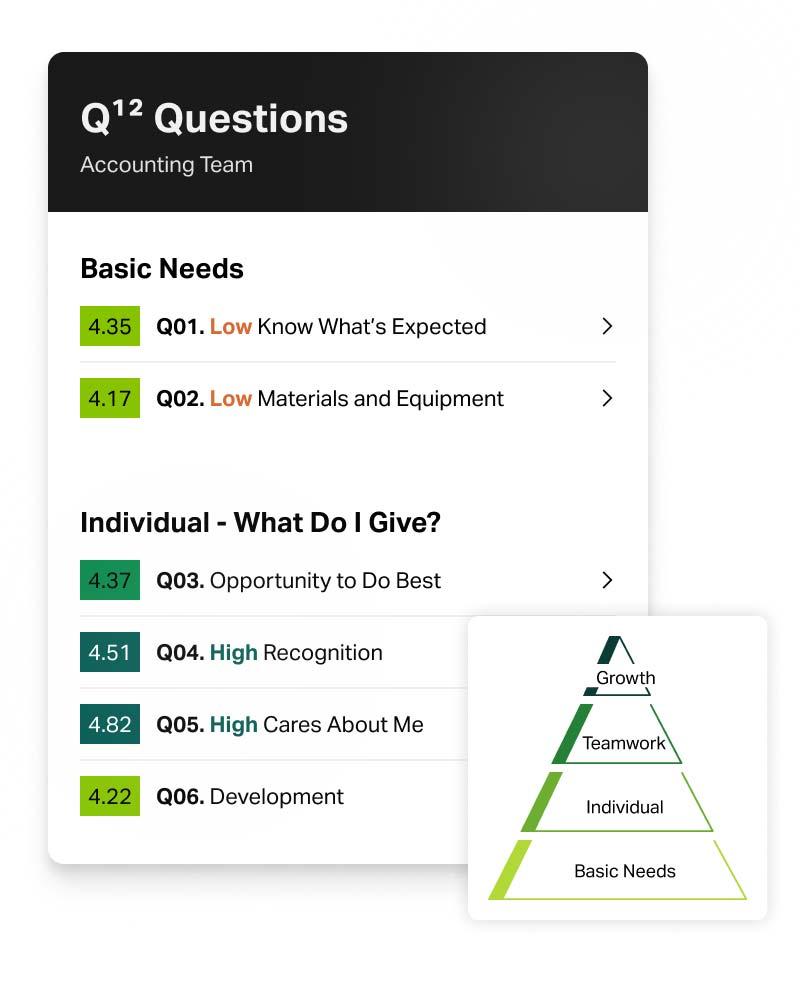
The 12 items are organized into a hierarchy of employee needs: basic needs, individual needs, teamwork needs and growth needs. Each item supports action at the team level.
Gallup has conducted 11 meta-analyses on the Q12, using data from more than 112,000 teams to examine the relationship between engagement and 11 specific business outcomes, including productivity, profitability, customer loyalty, turnover, safety and absenteeism.
The most recent meta-analysis found that top-quartile business units achieved:
23% higher profitability
18% higher productivity
63% fewer safety incidents
51% lower turnover for low-turnover organizations (those with over 40% annualized turnover)
Because the Q12 employee engagement tool is fixed and proprietary, the framework is only available through Gallup Access. Every organization in the benchmark database answers the same 12 items, which makes comparisons consistent across organizations.
Beyond the core Q12, Gallup Access supports unlimited pulse surveys. Organizations can survey employees at any time, on any topic and across all or targeted segments of their workforce. Pulse surveys can draw from a library of nearly 400 validated questions each tied to documented workplace outcomes. With this approach, the flexibility Gallup Access offers through employee pulse survey tools is based on the same evidence-based approach as the Q12 itself.
Gallup’s consulting approach begins by understanding an organization’s goals, then builds a listening strategy around them. This approach gives the organization flexibility while keeping each listening event, from the core engagement survey to targeted pulse surveys, connected to the business outcomes that matter most.
Lattice
Lattice does not publicly describe an engagement survey methodology. The platform offers pre-built, customizable survey templates on employee engagement topics.
Benchmarking
Benchmarking
How each platform compares survey results to external data
Gallup Access
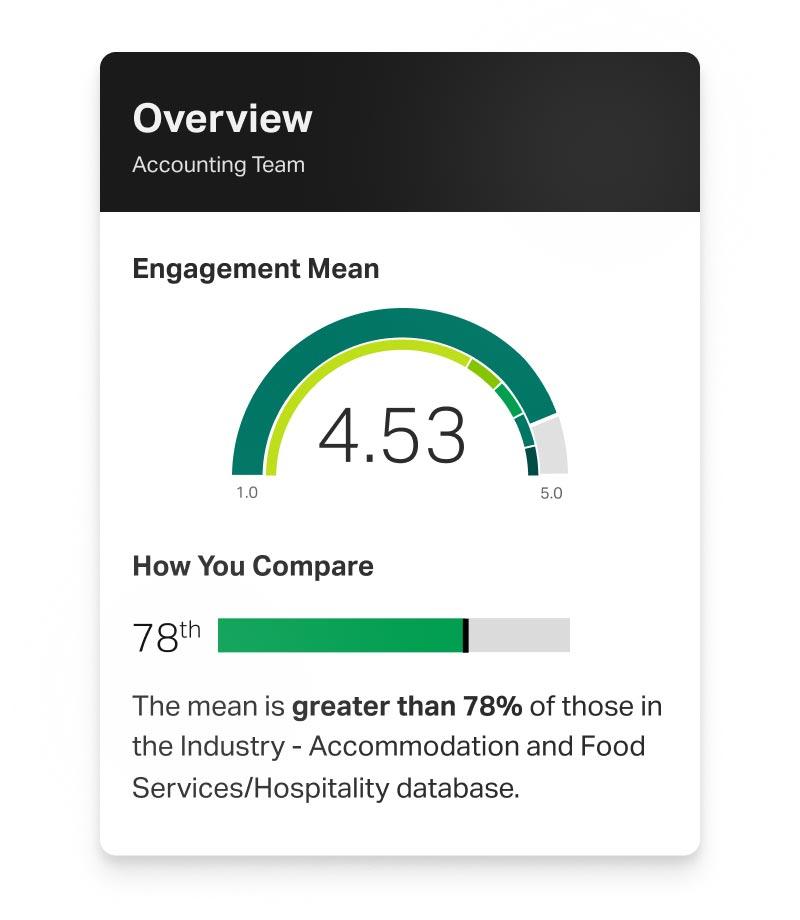
Beyond industry benchmarks and size benchmarks, organizations can segment results by organizational hierarchy, job level, job function, tenure, employment status, location and work arrangement. Gallup also provides benchmarks by survey administration number, which allows organizations to compare their results with others at the same stage of their engagement journey: first administration, second administration and so on.
Lattice
Lattice provides benchmarks based on its customer data and from Mercer’s global HR dataset, which adds approximately 1.5 million employee survey responses each year. Benchmarks are available by industry, company size and geography for organizations that use Lattice’s recommended question bank.
Research and Insights
Research and Insights
The research behind each platform's guidance and recommendations
Gallup Access
One of Gallup's widely cited findings shows that managers account for 70% of the variance in team engagement. This finding shapes the platform’s design. Tools, guidance and learning resources focus on helping managers take action on workplace data.
The platform delivers research findings in several ways: a learning library, guidance tied to survey results and Gallup AI.
Gallup AI uses retrieval-augmented generation (RAG) and draws only from Gallup-owned science. It does not rely on general internet sources or client data, meaning every response is based on proprietary Gallup research. Leaders and managers can ask Gallup AI questions in plain language about their engagement results, CliftonStrengths, or workplace challenges and receive research-backed responses in real time.
Lattice
Lattice publishes an annual State of People Strategy report drawing on surveys of HR professionals and managers. Its AI tools use OpenAI models and platform data to generate findings and recommendations.
Learning
Learning
How each platform supports ongoing development for managers, leaders and teams
Gallup Access
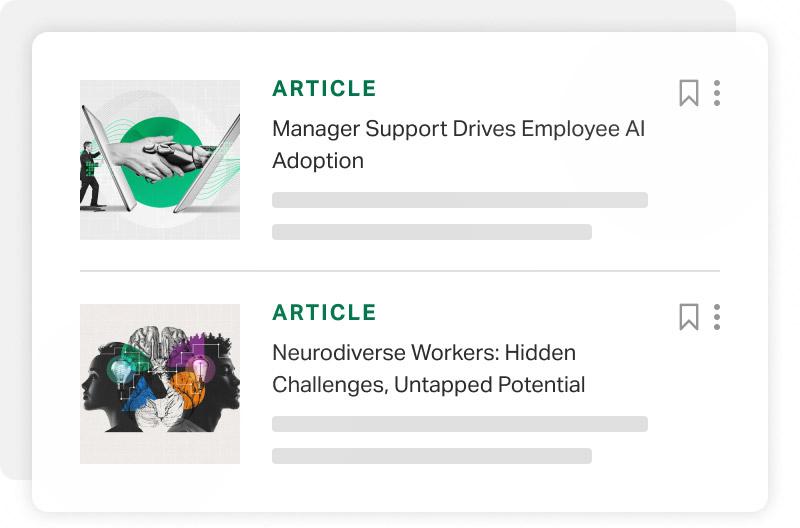
Topics include:
- Content formats include:
- videos
- how-to articles
- e-learning modules
- quick-learning clips
The platform organizes content by role so that each person sees what applies to their responsibilities. The library updates weekly, and individuals can connect learning modules directly to action plans, linking development resources to specific engagement priorities.
Gallup also offers external courses on strengths, employee engagement, and manager development. Organizations that invested in these courses across all three content areas saw an average 20-percentage-point increase in employee engagement and an estimated $1,812 in productivity per employee in the first year.
Lattice
Lattice’s learning offering focuses on career development tools, including competency frameworks, individual development plans and career paths. Its AI provides personalized coaching to managers and employees based on performance data and career goals. Lattice also offers articles, templates and webinars on HR and people management topics.
CliftonStrengths and Strengths-Based Development
CliftonStrengths and Strengths-Based Development
How each platform approaches talent development and its connection to engagement
Gallup Access
Gallup's research shows that employees who receive strengths-based development experience increased performance, lower employee turnover, and their workgroups post increased profit, sales, and customer engagement metrics.
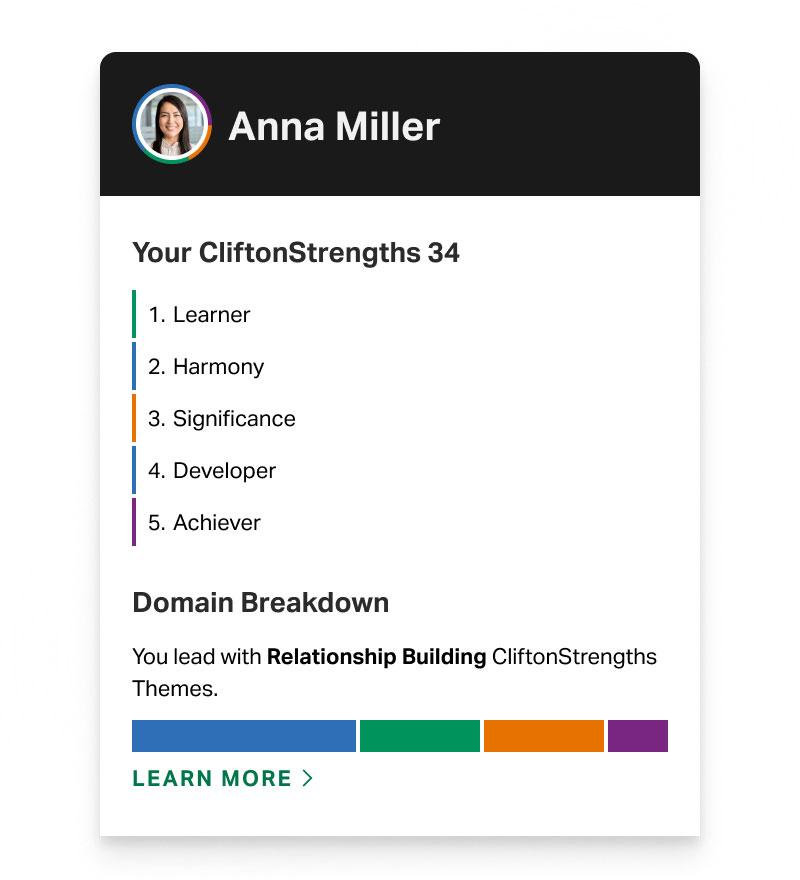
The platform’s AI incorporates each user's CliftonStrengths automatically into every response. This allows the system to tailor guidance on engagement results, coaching conversations and workplace challenges to each person’s natural way of working.
Lattice
Lattice does not include a strengths-based development framework. Manager development on Lattice focuses on performance management and career development tools rather than individual talent identification.
Gallup Access at a Glance
350+ research-validated employee survey questions
1B+ employee survey responses in Gallup’s global database
55+ survey languages available
What Leaders Ask When Comparing Gallup Access and Lattice
See Gallup Access in Action
Explore how Gallup Access helps you measure engagement, identify what matters most and equip managers to improve performance. Request a demo to get started.