
Global Safety Report
The Global Safety Report annually tracks whether people feel safe across 140 countries. For decades, Gallup has used nationally representative, probability-based sampling to measure the world’s progress toward achieving the United Nations' goal for peaceful societies.
The 2026 report shares people’s perceptions of personal safety and everyday security, and analyzes how national prosperity, homicide rates and armed conflict relate to them.
Thank you for downloading the Global Safety Report.
Global Safety Report
The Global Safety Report annually tracks whether people feel safe across 140 countries. For decades, Gallup has used nationally representative, probability-based sampling to measure the world’s progress toward achieving the United Nations' goal for peaceful societies.
The 2026 report shares people’s perceptions of personal safety and everyday security, and analyzes how national prosperity, homicide rates and armed conflict relate to them.
Can People Feel Safe in a World in Conflict?
Even in countries experiencing armed conflict, many people feel safe in their own communities.
In 2025, 69% of adults worldwide said they felt safe walking alone at night. Although this represents a four-percentage-point decline from the previous year’s high, perceptions of safety were stable or improved in five of seven global regions.
New analysis finds that national prosperity and homicide rates are more consistently associated with perceptions of personal safety than the severity of armed conflict. Meanwhile, armed conflict is more strongly associated with whether people identify safety and security as their country’s most important problem.
This distinction matters for understanding progress toward peaceful societies. People can feel safe in their communities even when their countries face serious security challenges. Countries free from major armed conflict can still struggle to provide everyday security.
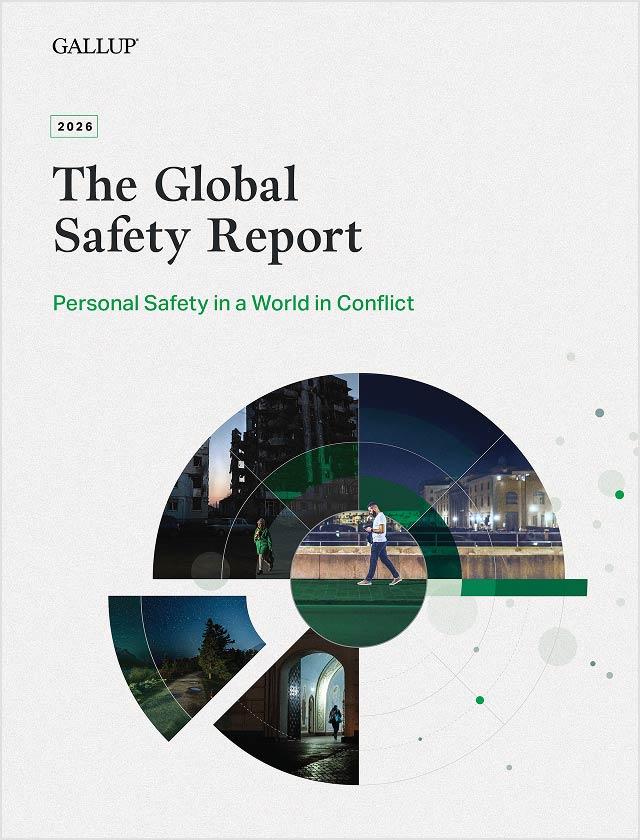
Download this report to explore regional trends, country rankings and Law and Order Index scores.
How Safe and Secure Do People Feel Around the World?
Northern America had the highest percentage of adults who felt safe walking alone at night in 2025, at 78%. The Middle East and North Africa, Post-Soviet Eurasia and Western Europe followed at 74% each. Latin America and the Caribbean as well as sub-Saharan Africa continued to lag considerably behind the rest of the world in perceived safety. In Latin America and the Caribbean, 50% of adults said they felt safe walking alone at night in 2025. Perceptions of safety in sub-Saharan Africa were also stable, at 54%.
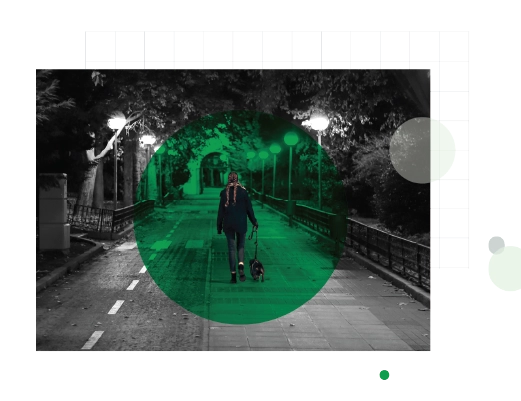 +9 points Even after the latest decline, the percentage of adults who felt safe walking alone at night in 2025 remained nine percentage points above the 2014 level of 60%.
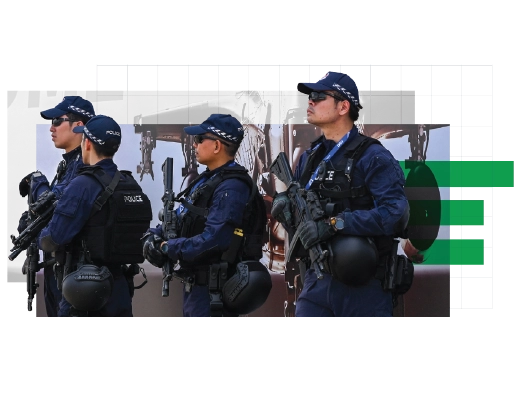 72% Seventy-two percent of adults worldwide expressed confidence in their police in 2025.
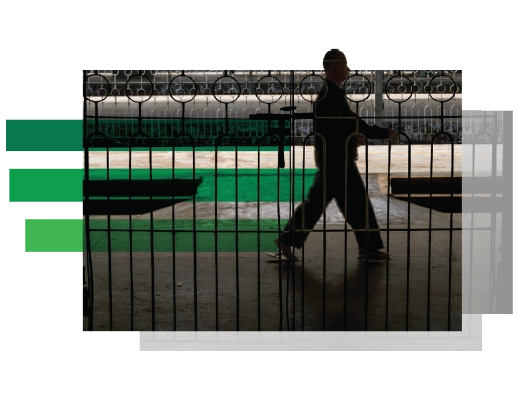 80/100 The global Law and Order Index score in 2025 was 80 out of a possible 100, down three points from 2024.
In Which Countries Do People Feel Safest and Least Safe?
The United Arab Emirates and Singapore ranked first and second, respectively, in 2025, with 96% of adults in both countries saying they felt safe walking alone at night. Botswana (28%) ranked lowest.
Use the interactive map to explore how safe people in each country felt in 2025, or switch to the bar graphs to see the 10 countries and territories where people felt safest and least safe.
How Do Countries Rank on Gallup’s Law and Order Index, and What Is the Global Score?
Country-level Law and Order Index scores in 2025 ranged from a high of 96 in Tajikistan to a low of 55 in Liberia and Sierra Leone. Tajikistan, which leads the world on the index for the second consecutive year, has posted scores in the 90s since 2018. Liberia and Sierra Leone have occupied the bottom two positions on Gallup’s Law and Order Index for the past two years.
The global score in 2025 was 80 out of a possible 100, down three points from 2024, largely attributable to declines in Asia-Pacific and Western Europe but generally in line with most scores since 2017.
About This Research
Below are answers to frequently asked questions about Gallup’s Global Safety Report and the Law and Order Index.
What is global safety, and how does Gallup measure perceptions of personal safety?
In Gallup’s Global Safety Report, global safety refers to how secure people feel in their communities. Gallup measures perceptions of personal safety by the percentage of adults who say they feel safe walking alone at night in the city or area where they live. The Law and Order Index adds a broader measure of everyday security by including the survey question about feelings of safety walking at night, plus items about confidence in local police and whether people have experienced theft or assault in the past year.
Is the world safe? How many people feel safe where they live?
Gallup’s Global Safety Report measures perceptions of personal safety. In 2025, 69% of adults worldwide said they felt safe walking alone at night where they live. Although this represents a four-percentage-point decline from the previous year’s high, perceptions of safety were stable or improved in five of seven global regions. Even after the latest decline, the percentage of adults who feel safe walking alone at night remains nine percentage points above the 2014 level of 60%.
Which are the safest countries, based on people's perceptions?
The United Arab Emirates ranked numerically first in the world for perceived safety in 2025. In both the UAE and second-ranked Singapore, 96% of adults said they felt safe walking alone at night where they live. The difference between the two countries was not statistically significant. Tajikistan (93%), Hong Kong (90%), El Salvador (90%), Switzerland (90%) and Norway (90%) also ranked among the top 10. Gulf Cooperation Council (GCC) countries were particularly well represented, with four members among the top 10: the UAE, Saudi Arabia (95%), Kuwait (93%) and Bahrain (92%).
Which are the least safe countries, based on people's perceptions?
Botswana was the country where people felt least safe walking alone at night where they lived in 2025. Twenty-eight percent of adults in Botswana said they felt safe, down from 34% in 2024. The 10 countries where people felt least safe were Botswana (28%), South Africa (35%), Lesotho (37%), Zimbabwe (37%), Chile (37%), Ecuador (38%), the Republic of the Congo (39%), Liberia (41%), Myanmar (42%) and Zambia (43%).
How safe do people feel in sub-Saharan Africa, Latin America and other regions?
Northern America had the highest percentage of adults who felt safe walking alone at night in 2025, at 78%, largely because of an increase in the United States from 71% to 78%. The Middle East and North Africa, Post-Soviet Eurasia and Western Europe followed at 74% each. In Latin America and the Caribbean, 50% of adults said they felt safe walking alone at night in 2025, unchanged from 2024, when the region reached that level for the first time. Perceptions of safety in sub-Saharan Africa were also stable, at 54%. Both regions continue to lag considerably behind the rest of the world in perceived safety.
Can people feel safe in their communities when their countries are engaged in armed conflict?
Even in countries experiencing armed conflict, many people feel safe in their communities. In Ukraine, 64% of adults felt safe walking alone at night in 2025, while 83% identified safety and security as their country’s most important problem. This does not mean that armed conflict has little bearing on personal safety. War can disrupt local policing, public services and the conditions that allow people to feel safe in their communities.
What is associated with perceptions of personal safety?
Gallup’s analysis finds substantial relationships between perceptions of personal safety, national prosperity and homicide rates. Across 114 countries, perceptions of safety were positively associated with national prosperity, measured by gross domestic product (GDP) per capita adjusted for differences in purchasing power (r = +0.53), and negatively associated with intentional homicide rates (r = −0.46). The relationship with armed conflict was weaker (r = −0.22). After accounting for national prosperity and homicide rates, the association with armed conflict was no longer statistically significant, while both prosperity and homicide retained significant independent associations with perceived safety.
What is Gallup's Law and Order Index?
Gallup’s Law and Order Index, a global safety index collected through the Gallup World Poll, provides a broad measure of everyday security based on answers to these survey items:
- Do you feel safe walking alone at night in the city or area where you live?
- Do you have confidence in the local police force in the city or area where you live?
- Within the last 12 months, have you had money or property stolen from you or another household member?
- Within the past 12 months, have you been assaulted or mugged?
Gallup compiles the “positive” responses to these four questions into a Law and Order Index score for each country, ranging from 0 to 100. Higher scores indicate larger percentages of the population feel secure. The index is linked to national prosperity, public health and other measures of development.
Why does Gallup measure feelings of safety?
Safety is one of the Gallup World Poll’s core global security indicators, tracked consistently since 2006. The United Nations’ Sustainable Development Goal 16 calls for promoting peaceful and inclusive societies, providing access to justice and building effective, accountable and inclusive institutions. An important measure of progress toward that goal is whether people feel safe in their own communities.
Survey methods
The results in Gallup’s 2026 Global Safety Report are based on nationally representative, probability-based samples among the adult population aged 15 and older in 140 countries and territories in 2025. In all countries except China, results are based on telephone or face-to-face surveys of approximately 1,000 or more respondents in each country or territory. Surveys in China were conducted online.
For results based on the total sample of national adults in 2025, the margin of sampling error ranges between ±2.2 and ±5.5 percentage points at the 95% confidence level. The margin of error reflects the influence of data weighting. In addition to sampling error, question wording and practical difficulties in conducting surveys can introduce error or bias into the findings of public opinion polls.
Gallup’s analysis of national prosperity, homicide rates and armed conflict included 114 countries with complete data on all these measures. National prosperity was measured using GDP per capita adjusted for purchasing power, intentional homicide rates came from the United Nations Office on Drugs and Crime (UNODC), and armed conflict was measured using the Global Peace Index’s Ongoing Conflict domain. The cross-country models identify associations, not causal effects.
See the full methodology by downloading the 2026 report.
Additional Insights


Track the Global Safety Trends: Download Past Reports
-
2025 Global Safety Report
-
2024 Global Safety Report
-
2023 Law and Order Report
Get This Report Via Email
We will send you a copy of the full Global Safety Report and updates about our latest global analytics research and polling.