The Strategy of Hope With John Hope Bryant
Find Leading With Strengths on all major podcast platforms. 


About the Leader
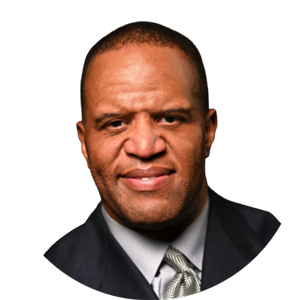
John Hope Bryant
CEO of Operation HOPE
- Strategic®
- Learner®
- Activator®
- Achiever®
- Context®
John Hope Bryant is the founder, chairman and CEO of Operation HOPE, the nation’s largest nonprofit dedicated to financial literacy and economic empowerment, and the founder and CEO of Bryant Group Ventures. In the aftermath of the 1992 Los Angeles riots, Bryant built Operation HOPE around his conviction that financial literacy is a civil right. Under his leadership, the organization has helped direct more than $5 billion in capital into underserved communities and served millions nationwide. Bryant is a seven-time bestselling author whose book Capitalism for All debuted as a national bestseller. He has served as a presidential advisory appointee under Presidents Bill Clinton, George W. Bush and Barack Obama. Referred to as the “Conscience of Capitalism” by Fortune 500 CEOs, he was named one of Forbes’ 250 Greatest Self-Made Americans and one of Time’s inaugural “The Closers,” a list of global leaders working to close the racial wealth gap.
“I use my Strategic strength, informed by my authenticity, to activate in you something that maybe you’ve even forgotten — your humanity.”
Strategic thinking for Bryant isn’t a private mental exercise — it’s aimed outward at people. He treats his Strategic strength as the mechanism for reaching someone, not a substitute for connection.
“I like high-frequency people. I know high-frequency people have high standards.”
Bryant is his own greatest adviser, but he surrounds himself with people who challenge him intellectually — to be better and worthy of their investment. As an Activator, he doesn’t just move fast alone. He chooses those who inspire him and avoids those who are toxic.
“I refuse to learn hate. If you wrap yourself in the cloth of goodness and love and joy and faith and belief and confidence and vision … now you’ve got the universe on your side, and you might just leave an imprint that lasts for hundreds and hundreds and hundreds of years.”
For Bryant, Learner isn’t simply about what he chooses to learn. It’s also about what he refuses to learn. His refusal to learn hate reflects a conscious choice to focus instead on the beliefs and qualities he sees as forces for good.
John Hope Bryant:
[0:00] You're successful because you saw a banker growing up or you saw a businessman growing up and you said, I can be him. And they all go, yep. We're modeling what we see. So they don't need to break the cycle. They're just taking the signal.
Jon Clifton:
[0:18] John Hope Bryant was 9 years old when a banker walked into his classroom in Compton and taught him the word entrepreneur. Then he spent the next 50 years becoming the answer, a business at 10, homeless at 18, an investment firm at 21, and just days after Los Angeles burned in 1992, created Operation HOPE, which was built on one idea. Hope is not a feeling. It is an economic input. Today, when John Hope Bryant walks into a classroom, he's now the man in the suit. This is John Hope Bryant, and this is Leading with Strengths.
John, welcome back to Gallup.
John Hope Bryant:
[0:59] My honor to be here. Gallup was my first real thought leadership credibility and I've forever been grateful.
Jon Clifton:
[1:06] You're obviously out with a new book, Capitalism for All. I think one of the messages that people know you best for is hope. What is the state of hope in America right now?
John Hope Bryant:
[1:18] Well, people are challenged. They're not feeling a sense of vision. The Bible says where there is no vision, the people perish. They know in their soul will be true. But it's in conflict with what you're being told, what's being taught, what's being sold, what's being bought, and what's being communicated. And what, in the short term, gets somebody, whoever that somebody is, gain, because we're on a bit of a sugar high in this country. Immediate gratification, stock market, everything is a sugar high. But these things don't last. So, for good reason, people are fractured on their hope. Faith is what you do when you don't have all the facts.
We're not human beings having a spiritual experience. We're spiritual beings having a human experience. So energy matters, but no one's promoting spirituality. And no one's really trying to promote and encourage your positive energy. In fact, in many ways, our lesser tendencies are being encouraged. Hate, division, frustration, hit you in the cheek, don't turn the cheek. Our lesser tendencies are being encouraged. We have adults acting like children, leaders acting like losers, everywhere. You can't find any hope to grab a hold of because you're seeing it from every political party. You're seeing it from so-called adults. So I think that rainbows only follow storms.
Jon Clifton:
[2:58] You know, you also get invited to a lot of places, and I think it's because people want to be inspired or get that feeling of hope from you because they know that they can feel in a lot better place when they hear you talk about the future of this country, the future of the world. But when you look at your own top five strengths, we all arrive at delivering hope differently. What of your strengths do you feel like you use when you're trying to make someone feel more hopeful?
John Hope Bryant:
[3:31] From a StrengthsFinders perspective, from a Gallup perspective, from a scientific perspective, I think that would translate most elegantly through strategy. I would communicate that slightly differently. I would say it's authenticity that meets the moment with relevancy for the person on the other side of the table. What I try to do is to feel you. I look in your eyes and I see your soul. I find something that's in common ground. So you shouldn't focus on somebody's weaknesses. You should focus on their strengths. So I use my Strategic strength, informed by my authenticity, to activate in you something that maybe you've even forgotten, your humanity. Here's my philosophy for living, Jon. Talk without being offensive. Listen without being defensive. And always leave even your adversary with their dignity.
Jon Clifton:
[4:36] Every time I see you, you're encouraging me to do something next. And so that Activator is probably what ... You've started dozens of organizations. You've inspired countless amounts of individuals. Who's the one that got you started?
John Hope Bryant:
[5:00] On what?
Jon Clifton:
[5:01] Anything. Everything. Who's the one where the story of John Hope Bryant? Who's the one that activated you?
John Hope Bryant:
[5:07] I mean, first of all, it's God. But God works with people. So my first experience that I remember was traumatic. Rainbows after storms. My mom and my dad loved each other, amazing humans, created a little mini conglomerate in South Central Los Angeles. But my dad was financially illiterate, so he'd make a dollar, he'd spend a dollar fifty. The more money he made, the broker we got. But we didn't know we were getting broke. We didn't know we were going broke. My dad confused cash flow with profit. Confused momentary richness contract with wealth, won the battle and lost the war, sugar high. And so my dad thought my mother was cute, beautiful, whatever, but didn't think that was his business partner. Mistake, because he could make it, but she could reinvest it. I mean, she was brilliant.
But they didn't realize that in that relationship, two plus two should equal six, eight or 10. Not two plus two should equal four. If two plus two is four or two or three, you shouldn't even be with that person. I can do bad all by myself. I don't need help. I think that relationship capital is the real capital. And if you can get somebody else on your side who has influence and power in the streets, suites, whatever, and activate them, no pun intended, now you have compounding. So you make money during the day, you build wealth in your sleep, compounding. So it's not just money that compounds. Hope compounds. Relationship capital compounds, access compounds, education compounds, culture. Everything's culture. So I saw my dad not cash a check, but write one and pay other workers who respected him, irrespective of their race or his. So I didn't realize, but that was an early lesson in human dignity and all kinds of intangible messages. Race wasn't the thing. Class was the thing. And then, so that was the good news. Johnny Smith, thank you very much. The bad news is that Johnny Smith and Juanita Smith, my mother, got into a domestic situation, and I witnessed it. My dad hit my mother.
But that was traumatic. I can sort of joke about it now, but of course I remember it. My mother leaves. Now this is California, Jon. Community property state. Just real talk. So my mother had three children. We had a lot of assets. Eight unit apartment building, a cement contracting business, a home, gas station. A lot of assets. She could have taken them for everything. The courts would have given her the assets, told him to leave. She leaves. My brother goes in the military. Me and my sister go to my mother. We go stay in my mother's girlfriend's home, which was the home of my mother's girlfriend's boyfriend. So she stays there to save money so she can buy a house. Our first home. And while I'm staying there with her, the guy, who's, unfortunately Jon, I can't remember his name. This guy saves my life, clears my throat. I'm looking for him every day to come home because he saved my life. He's my hero. I didn't realize that because of pride, he didn't want to sit down with my mother and tell her he couldn't take care of his family and ours on what he made. So he went to a part-time job selling marijuana around the corner. He wasn't very good at it.
So the guys who were really good at it, for whom they considered this their corner, didn't appreciate that. So they followed him back home. And they wanted to send a message, Jon. So he was on his bicycle, he came home, he was pulling up to the place where it's his house. And I, sitting there watching him, because he's my hero, I'm waiting for him to come home. And a truck comes down the street, lifted, and hits him from behind. And drags him down the street until he was dead, mangling the bike, so we could all see it. That was a message.
It was about money, his murder. It was about money, what he was doing to allow us to live in his house. The domestic abuse about my mom and my dad was about money. They were fighting over money. Number one cause of divorce is money. But also this murder was silly and senseless because the guys who were fighting over that street corner don't even own that street corner. The city of L.A. owned that street corner. So just rearranging the deck chairs on the Titanic. The ship is sinking, we're picking drapes. Winning battles, losing wars. Here's his brilliance, gone.
The guy who saved my life, he's gone. And the guys who hit him, they're gone to prison forever. We leave there. We go to the house that my mother bought, 15502 South Fraley, Compton, California. And my next door neighbor was Tweet, the little drug dealer. I met a best friend, George. I really wanted to be like George, a really smart kid, had good grades. I had C grades. He had A grades. George got murdered with Tweet, selling drugs. I'm 9 years old now, man. I've witnessed a murder. I've heard of my best friend murdered. And I saw my family net worth and family structure destroyed. All over money. So when I go to school, to answer your question about what inspired me, and this White banker comes in my classroom from Bank of America, and he's teaching financial literacy. He came in once a week for six weeks. And he didn't want to be there. The Community Reinvestment Act, which is a law I use today, by the way, to raise $5 billion for investing in underserved communities. A conversation for another time. But CRA said, if you're an FDIC-insured bank, you got to give back to the community. So the bank sent him into our neighborhood to teach financial literacy. He didn't want to be there. We didn't want him there. So the second week, he's like, you know, you kids aren't so bad. And we're like, you're not so bad for a White dude. So we're bonding. Third week, I'm wearing a suit just like him.
Excuse me, sir. What do you do for a living? How'd you get rich legally? I was completely dead serious for all the reasons I just told you in this backstory. No one taught me about entrepreneurship or financial literacy or capitalism or free enterprise or all this stuff. No one taught me any of that. And what I've learned also is it's what we don't know that we don't know. It's what we think we know that's killing us. So this banker says I'm a banker and I finance entrepreneurs. What's an entrepreneur? French word, build, create, innovate. I said, man, I don't know what an entrepreneur is, but if you're financing it and it's legal, I'm going to be one. Boom. That's who I am today. Then I asked this last question. I said, the next week I said, so are there more bankers like you? He's like, what do you mean? I said, well, you lend poor people money. Yep. And all I have to do is pay it back and prove I can pay it back. Yep. And I don't get dead if I don't pay it back. All of my story of growing up. He says, no, why would I kill you? Of course not. We gave you a notice of default. I said, wait a minute, you give me a piece of paper?
Sign me up. I said, so there are other people like you. Well, that's Operation HOPE. If you look at what Operation HOPE is today, it's teaching financial literacy, teaching how to access capital, how you get your credit score up, your debt down, your savings up at scale. It took me a long time to realize what I'm telling you. It's not like I had this epiphany when I was younger. It took me, probably what I just told you that last part that came to me in the last five years, that's what Operation HOPE really, that's where it came from, is that classroom experience. So that banker, who I do not know, changed my entire life. And I'm forever grateful. And I'm just paying it forward.
Jon Clifton:
[13:11] How do you break that cycle? You know, a lot of times when people have trauma in their past, traumatic experience, it might consume them or they might break bad as a result of it. You didn't. Why? And how do we replicate that for other societies?
John Hope Bryant:
[13:27] You interrupt this cycle through mentors and role models and experiences and somebody who cares, if only for a moment. I say, you're successful because you saw a banker growing up or you saw a businessman growing up and you said, I can be him. And they all go, yep. I'll go to a White lady. I'm saying this intentionally. A wealthy White lady. How are you getting it? I said, you saw a woman growing up who was a professional. When you said, well, I can raise my kids and I can do that. I can be her. And they go, yep. We're modeling what we see. So they don't need to break the cycle. They're just taking the signal.
Jon Clifton:
[14:05] Speaking of ... the conversations you and I have, I think one of the things that you have that you know I envy deeply is the fact that you have Learner very high, and you are a deep study on all things all the time. Is there anything that you've learned as CEO, as an author, as a thought leader, that you would pay to unlearn today?
John Hope Bryant:
[14:32] That I've learned is a very interesting question, that I would pay to unlearn.
Jon Clifton:
[14:36] That's right.
John Hope Bryant:
[14:37] Oh, yes.
Jon Clifton:
[14:38] Like?
John Hope Bryant:
[14:39] Most fears are worthless. I learned fear. It's a learned skill. Then I had anxiety that would layer on that from my mother. And every week, there's something that happens in my life, in my mind. There's some fear that I've made in my mind that 99.9% of the time never manifests. But it worried me. It made me anxious. It had me locked in some temporary fear cabin. It had me thinking the worst of people. It had me putting things in their mind, in their mouth, that they didn't say and they didn't do. It was my ghosts and my insecurities working in my head. And this is a radical, it's a crazy thing about humans. So then when it doesn't happen, we just move on to something else. Most of fear is fear itself. Replace that with hope. Replace that with belief. I can't guarantee that being positive is going to make you a success. But I absolutely guarantee that being negative is going to make you fail.
Jon Clifton:
[15:55] Again, because I deeply envy Learner, I can't understand it without, you know, asking and understanding it better. But to my understanding is Learners want to absorb information about anything. But would you say that there's anything that you've ever refused to learn?
John Hope Bryant:
[16:12] Yes. Hate.
Jon Clifton:
[16:15] Say more about that.
John Hope Bryant:
[16:16] Hate is the first cousin of evil. Evil, the mastery of evil, the master of evil is Lucifer. Lucifer is a fallen angel. God gives him permission to exist, as I said earlier. He's a punk. In the long arc of history, you've had a lot of bad people. They do a lot of damage, but they go away. If you wrap yourself in the cloth of goodness and love and joy and faith and belief and confidence and vision and something larger and more important to yourself, now you've got the universe on your side. And you might just leave an imprint that lasts for hundreds and hundreds and hundreds of years and changes generations. But if you're that negative person, if you're that evil person, if you're that fear-based person, if you're that hateful person, it dies with you. So, I refuse to learn hate.
Jon Clifton:
[17:14] Power flattens the learning curve. People stop correcting you, and the honest feedback that learning depends on dries up. How do you make sure that you still feel that sort of joy of being a beginner at something?
John Hope Bryant:
[17:27] Oh my God, I'm forever a kid. I am more youthful and I'm more alive now at 60 than I was when I was 16. I mean, I've got more energy now than when I was 25. I'm in better shape. I've got, I mean, in some ways, youth is wasted on the young. Wisdom's a beautiful thing. You know that you don't know a lot when you have wisdom. So I'm just nosy, man. Ask Quincy Jones, how'd you get so smart? He said, I'm just nosy as hell. I want to know everything about everything. I realized God gave you two ears and one mouth, so you listen twice as much as you talk. So I'm very nosy. I'm very self-reflective. I'm reasonably comfortable in my own skin, which means I don't mind. I don't have a problem with correcting myself or beat myself up or telling myself I made a mistake and then apologizing. So I'm my greatest adviser, but I keep people around me who will challenge me. I don't let people around me who are toxic or simple. I like high-frequency people, and the high-frequency people have high standards. Your dad challenges me. Ambassador Andrew Young challenges me.
Jon Clifton:
[18:37] When Ambassador Young challenges you, what does he challenge you on?
John Hope Bryant:
[18:41] To not be intellectually lazy, to not be average, to be the person that was worth the investment he made in me.
Jon Clifton:
[18:52] You've accomplished so much, and you take on really big things. But is there something that you've achieved in life that cost you more than it was worth?
John Hope Bryant:
[19:08] No. It's never worthless to love. It's never cost analyzed to care. It's never underwritten to bridge build. To live for something larger and more important to yourself may not give you a direct return on investment, but it gives you peace at night when you sleep.
Jon Clifton:
[19:36] You know, with Context, you have sort of an interesting view of how things will be remembered. And you cite everyone from Frederick Douglass, Dr. King, Ambassador Young. What do you hope that a young person that listens to you today, you know, whether it's some kid in America, maybe a kid from Compton as well, that the one quote that they remember from you?
John Hope Bryant:
[20:05] I can't believe I'm going to say this, but it's not original. And I didn't understand it until recently, but it's what Dr. King said. Just say I tried to help somebody. That's it.
Jon Clifton:
[20:21] John, thanks for being here today.
John Hope Bryant:
[20:23] Thanks for having me.
Jon Clifton:
[20:24] Good to see you, man.
John Hope Bryant:
[20:25] Good to see you. You're a good brother. You're my brother, whether you like it or not. I'm going to make you an honorary Black man, just like I made your father. You qualify.
Jon Clifton:
[20:31] Thank you.
Transcript autogenerated using AI.
Interview Transcript down arrow Interview Transcript up arrow