Excellence That Honors the People Behind It With E.J. Kuiper
Find Leading With Strengths on all major podcast platforms. 


About the Leader
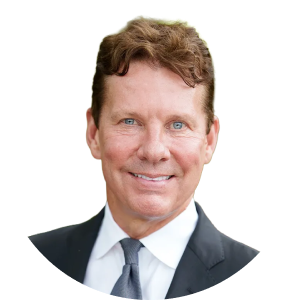
E.J. Kuiper
President and CEO of FMOL Health
- Positivity®
- Maximizer®
- Belief®
- Individualization®
- Developer®
E.J. Kuiper is president and CEO of FMOL Health, a $4 billion, not-for-profit integrated health system serving Louisiana and Mississippi. In his role, Kuiper focuses on building a culture of excellence, strengthening physician and team member engagement, and improving patient outcomes. Kuiper joined FMOL Health in 2024, bringing more than two decades of leadership experience in Catholic healthcare. Previously, Kuiper was CEO of the Midwest Division at CommonSpirit Health, overseeing operations across four states. Originally from the Netherlands, he began his U.S. career in 1991 as a physical therapist and later became chief operating officer of two hospitals. He also served as CEO of St. Anthony’s Health System and Illinois Division president of Hospital Sisters Health System, leading a nine-hospital, $1.4 billion division that received the state Malcolm Baldrige Award. He holds a doctorate in physical therapy from the University of St. Augustine and a master’s degree in health services administration from Florida Gulf Coast University.
“Fairly well doesn’t really sit well with me. Fairly well is not good enough.”
Kuiper stepped into a health system that was already doing well, and he treated that as a foundation to build on. Strong results can make it tempting to settle, yet he keeps asking what more is possible. That steady reach toward what’s next is consistent with his Maximizer, the strength he says brings him the most joy.
“I think it’s important that you recognize what’s going wrong, that you embrace it, that you own it. And then you can pivot to saying how we’re going to get this to a better place.”
When challenges arise, teams often look to the person at the top for how to respond. Kuiper meets them openly, naming what went wrong and owning it before turning to what can be better.
“If I expect world-class outcomes in our organization, you need to have a world-class training program for the leaders that are part of our organization.”
A high standard lands best when people are equipped to meet it. Kuiper pairs his expectations with a real investment in the leaders who carry them out, so their growth becomes part of the standard itself. Expectations paired with preparation tend to build lasting capability.
E.J. Kuiper:
[0:00] Through times in my career where I put out 17 fires throughout a day, got in the car, and was wondering if I made a difference at all. Because life as a leader shouldn't be about just putting out fires. And I think if you find yourself in a situation where all you do is put out fires, it's time to step back, reassess and connect your why with your purpose.
Jon Clifton:
[0:25] Most organizational charts put the leader at the top. E.J. Kuyper turned his upside down, 20,000 names above his own, built on the belief that leadership is a posture of service. That philosophy helped deliver the best financial year in Franciscan Missionaries of Our Lady's 113-year history and made it the only health system in the country to win Gallup's awards for both engagement and strengths in the same year. This is E.J. Kuiper, and this is Leading with Strengths. E.J., thanks for being here with us today.
E.J. Kuiper:
[1:03] Thanks for having me.
Jon Clifton:
[1:04] E.J., now, you have a really interesting background in healthcare. Can you just share a little bit as to what is it that inspired you to get into healthcare in the first place?
E.J. Kuiper:
[1:14] You know, I sustained a pretty significant knee injury playing soccer and spent a year and a half, two years rehabilitating. I had three surgeries over 19, 20 months and spent a lot of time trying to get back to playing competitively. That ultimately didn't work out. But over that two-year journey, I really got to appreciate the physical therapists, the sports medicine docs, the orthopedic surgeons that were part of the team trying to get, you know, to get me to a competitive level again. And while it was kind of a depressing period of time for me because I had different dreams, you know, career-wise, I really realized that there's a lot more to life than kicking a soccer ball around. So I wanted to be like those healthcare providers that were there for me during a very difficult time.
Jon Clifton:
[2:05] And how did you end up in the United States after that?
E.J. Kuiper:
[2:08] In my last year of training, HCA, Columbia HCA at the time, came to talk to my class. And there was a fairly significant shortage of physical therapists at the time in the United States. And they offered one- or two-year contracts. And that sounded like a pretty exciting thing to me. So while I was very disappointing to my mom, I did sign a one-year deal, told her that I'd be back a year later, but then ran into my future and current wife, Patty, who was a nurse on one of the med surgical floors that I worked on. So never went back to Europe, but love being here in the United States.
Jon Clifton:
[2:46] Now, you've been CEO at FMOL Health for just about two years now. A little bit over two years. And I think kind of everything that's going on there is setting new records from financials, culture. We know because Gallup audits how things are going. You guys have been recipients of our two top awards most recently. You guys are also at the cutting edge of innovation right now. Interestingly enough, though, you also have Maximizer as your number two. And so what is it right now that if you look across the board, any CEO might be incredibly satisfied with where you are. But my hunch would be that as a Maximizer, that there are still things that might be nagging at you as to say, this is a place where we aren't quite perfect yet. What are those places?
E.J. Kuiper:
[3:31] I think we have an opportunity to broaden education across our entire health system. We're doing it for all our leaders, obviously, new leaders coming into the job. We've done StrengthsFinder with our governing boards, but I really would like to broaden that to all 20,000-plus employees that we have, because ultimately differences are made in healthcare at the bedside or close to the bedside, so public facing. So I know that's our next phase, and we're going to actually roll that out in September. So, I'm very excited about that. You know, we're 95th percentile in the database right now. And while we shouldn't be focused too much on the percentile ranking, I do like to believe that 96th or 99th is better than 95th. So, we're going to keep pushing without overstressing the organization. You have to be careful. Those of us that have Maximizer in our top five have to remember that not everybody is wired the same way. So, we want to channel that energy in a positive way.
Jon Clifton:
[4:28] Now, when you talk about the journey of the culture at FMOL Health, you guys have a wonderful story to tell, but what inspired you in the first place to say, no, this needs to be something that we take incredibly seriously? And also, what is it that you attribute the success to?
E.J. Kuiper:
[4:45] You know, two and a half years ago, I inherited an organization that was really doing fairly well. Now, fairly well doesn't really sit well with me. Fairly well is not good enough, but the heritage is world-class. If you think about the story of the sisters that came over from Paris actually, crossed the Atlantic Ocean without any resources, didn't speak any English, and they built this health system over 113 years, it's quite impressive. So, this was not a situation where I walked in where a lot of things had to be fixed. It didn't have to go from poor to fair to good to great. It was in pretty good shape. It was a matter of focusing on all the important things and introducing some research behind the actions that were taken. Obviously, I have a history of a Gallup that goes back 20 plus years and knew even before I ever set foot in Baton Rouge that I wanted to bring the Gallup Organization in to partner with us.
Jon Clifton:
[5:43] Now, you're making a big investment, I believe, in all of your managers and leaders in the organization. Can you talk about what it is that you're doing? And also, I assume that comes from your Developer theme as well. But can you talk a little bit more about your own personal inspiration around that?
E.J. Kuiper:
[6:02] Well, it goes all the way back to Lincoln, Nebraska, back in the early 2000s. I was so thankful that HEA, a for-profit organization, invested in me as a very young leader at the time. It changed my life. I wouldn't be talking to you here today, Jon, if it wasn't for my trip to Lincoln, Nebraska, over two decades ago. I became part of the HEA Executive Development Program, but it all started right there in Lincoln, Nebraska. And I very much believe in paying it forward. You know, I know how much it changed me as a person. I know how much it allowed me to evolve as a leader. And I want to make sure that I create that kind of environment for all the leaders. So we do multiple days of training every year for existing leaders, for new leaders coming in. And I believe that's very important. If I expect world-class outcomes in our organization, you need to have a world-class training program for the leaders that are part of our organization.
Jon Clifton:
[7:02] When you went through that training 20 years ago, is there a learning or a few learnings that have stayed with you still today? And if so, what were those learnings?
E.J. Kuiper:
[7:10] Oh, absolutely. It's the overall Gallup philosophy that I've utilized every day of being a leader since I left Lincoln, Nebraska. I very much believe in leaning in on leading indicators if you expect success on the lagging indicators. I believe you very much have to invest in your people, into your leaders, into your managers if you expect your quality outcomes, your patient satisfaction outcomes, and your financials to be optimal.
Jon Clifton:
[7:40] How about with patients? You know, you must also, while you're making those visits, also drop in on patients. What's that relationship like for you as CEO?
E.J. Kuiper:
[7:51] It's changed for me, right? So, back when I was a physical therapist, I had a one-on-one relationship with the patients. It was very pragmatic. When I drove home at the end of the day, I never had to wonder, did I make a difference today? Because I did. I alleviated somebody's back pain. I helped somebody up out of bed for the first time after total joint surgery. You really saw one-on-one improvements with the patient. As I started kind of taking on leadership roles, I had to kind of shift that thinking a little bit. Instead of that one-on-one relationship, I had to remove barriers, try to seize on opportunities for a group of patients or for a group of nurses or therapists or healthcare workers to make sure that it's a more optimal environment. And now in my current role, I'm there to remove barriers for 20,000 plus employees. And that's very rewarding, but it's different than that one-on-one interaction that I was used to early on.
Jon Clifton:
[8:48] Speaking of that, you have a maybe a philosophy, maybe a strategy, the inverted org chart. Can you talk a little bit more about what that is?
E.J. Kuiper:
[8:59] Yes, as soon as I joined the FMOL team, I told them we're going to invert that org chart because it's my firm belief that I work for all 20,000 plus employees and thousands of doctors and nurse practitioners that work in our organization. It is our job as servant leaders to make sure that we create an environment that's optimal for healing. And so if we work for all of them, then we should be very much at the bottom of that organizational chart. So every org chart we show in our organization shows that.
Jon Clifton:
[9:30] You know, you did something that made a lot of news recently where you had pay increases across the board when the organization was having so much financial success. Can you talk a little bit about what inspired that particular decision? And also, is there one of your strengths that actually inspired that?
E.J. Kuiper:
[9:47] Well, I'm a people person. And we're in healthcare, which is, as you know, very complex. Lots of technology involved. We have beautiful buildings across the Gulf South, but our biggest asset are our people. There's no doubt that you can have all that technology and all that real estate, but if you don't have the culture, you're not gonna make a difference in a meaningful way. So I felt it important as we started improving our finances over the last several years that we shared those wins with our workforce. So I wanna make sure that when people decide to leave our organization, which happens from time to time, that it's not because pay is more competitive somewhere else. We're a world-class organization, and I think the overall benefit package should be world-class as well.
Jon Clifton:
[10:33] Now, you also have Individualization in your top five. And, you know, people with Individualization do a remarkable job at studying the people around them. But you work with 20,000 different people now, so it's hard to get to know everybody individually. So how is it you scale Individualization as a CEO?
E.J. Kuiper:
[10:54] Well, I think it's one person you meet at a time. So, I make it a point that I visit our hospitals, our clinics all the time, get out of the corporate office and meet the people that actually make a difference every single time. So, I love rounding and walking up and down clinic and hospital hallways and meeting somebody for the first time and then ask them for their origin story. I absolutely am fascinated by how people's lives play out and the random decisions that perhaps they made as a younger person that got them to where they are today. I like going to our orientation sessions in Baton Rouge. We have about 150 or so people every Monday that come into our organization for a full day. And I'd like to speak to them about my story that started in Europe that ended up in Baton Rouge and the weird twists along the way that brought me there. And I believe it was predestined and all those random decisions perhaps weren't all that random. And that knee injury that I had that I thought was such a negative thing in my life brought me to my wife. We have a wonderful family together. So everything happens for a reason. So I tell my story and then I'm so fascinated to hear everybody else's story. So I think 20,000 plus people each have a story that is fascinating and got them to the place where they are. And I'm so thankful that they're part of the FMOL family.
Jon Clifton:
[12:21] You know, thinking about developing people and having Developer as one of your themes, was there ever a time when you saw something in someone and it was, whether it was a natural talent of theirs or a gift, that you saw before they saw themselves?
E.J. Kuiper:
[12:37] You know, one of the mistakes that we make in healthcare, and perhaps they do it in other industries as well, is we tend to, in healthcare, take a great clinician. And when they're a great clinician, we also think they can be a great manager or leader. We have to be very careful not to make those mistakes. On the flip side, you may have somebody who is not necessarily a world-class clinician, but has really the talents to become a really good leader.
And so several times in my career, I have identified that in somebody and promoted them to a leadership position, which was kind of received by the group around this individual as, well, that's odd because he's not that great of a, let's say, physical therapist or medical technologist. But being a great clinician doesn't always or often translate in being a great leader, right? So identifying people early on that are not in management and you see certain talent sets that would lend well to being a leader are the ones that I really enjoy. Everybody's different. When I put the senior team together in Baton Rouge, the board told me, you make whatever changes you want to. You can bring in anybody you want to. And there were a lot of people that wanted to follow me to Baton Rouge. Ultimately, I was so blessed. There was a great group of leaders, but I didn't have to bring any outside talent in. Just tweaked a job description for certain senior executives and put together a team that is really high-functioning.
Jon Clifton:
[14:10] You're really passionate about helping people find their why. Where does that come from in you?
E.J. Kuiper:
[14:17] I think it was Pablo Picasso that once said that the meaning of life was to find your gift, but the purpose of life is to give it away. You know, that is really a philosophy that has stuck with me. I sent out that quote not too long ago to our people because it's a great reminder of why we're here on earth, really, right? And I think in order to find your purpose, you need to know why you get up every morning, what motivates you to make a difference. Because if there's not a connection between your why and your purpose, you're going to be drifting a little bit. And you may have to find a different way to express your talents. It's why I always want to hear people's origin stories because I want to see how that origin story and the why connects to what they're doing today in their current roles.
Jon Clifton:
[15:13] You know, we've found statistically how important that is for every single employee to feel connected to the mission and purpose of the organization. So you've effectively figured out how to scale that. Is there a secret behind that? And if there were executives that were struggling with that, what advice would you have for them?
E.J. Kuiper:
[15:33] I think taking a step back and looking at the big picture on a regular basis is very important. Leadership can be so stressful. You can be so focused on whatever fires are in front of you. And I've been through times in my career where I put out 17 fires throughout a day, got in the car, and was wondering if I made a difference at all. Because life as a leader shouldn't be about just putting out fires, right? It's spending time on matters that are strategic, that are big picture, not necessarily what's urgent and loud in front of you. And I think if you find yourself in a situation where all you do is put out fires, it's time to step back, reassess and connect your why with your purpose.
Jon Clifton:
[16:21] Now, you mentioned positivity. And I think for those of us that have very high Positivity, I know sometimes we can get referred to as people with toxic positivity, because no matter what it is that goes wrong, people look at us and think, how can they find positive things in this and whatever that might be? But do you ever find that there are times in your own personal leadership, especially with hospitals where there are limits to one's positivity and leadership?
E.J. Kuiper:
[16:49] I think it is important when things go wrong that you embrace that as well. Now, you can certainly turn it into an opportunity to improve, but you don't want to minimize when things are bad. And people are going to start thinking that you're just a naive, glass half full kind of person, no matter what situation you find yourself in. So I think it's important that you recognize what's going wrong, that you embrace it, that you own it. And then you can pivot to saying how we're going to get this to a better place.
Jon Clifton:
[17:18] Of all your leadership roles, there's going to be tough times. Was there a time when you really looked to your Positivity to help you personally get through that or help your team get through it?
E.J. Kuiper:
[17:27] You know, I started out on the for-profit side. So I worked for HEA for the first 15 years of my career before I switched to not-for-profit. And so I've been part of these rolling layoffs that are pretty typical on the for-profit side. And that's very difficult. You know, when you affect somebody's livelihood, when you have to sit across the desk from somebody and tell them that you no longer have a job for them, I think that's very difficult for anybody. But the way I'm wired, that's the kind of stuff that keeps me up at night. Very few things keep me up at night, but taking care of people is something that's very, very important to me. So having that positive outlook on how can we take this very negative thing and somehow make the organization stronger on the back end and treat the people that are negatively impacted in a gracious, empathetic manner is important to me and my strengths, I think, help me in that.
Jon Clifton:
[18:20] You know, there's a series of questions that we ask every single guest, and it is about which one of their top five they sort of associate when there's different things that they're faced with. But one is, of your top five, which one brings you the most joy?
E.J. Kuiper:
[18:37] Probably Maximizer.
Jon Clifton:
[18:39] Why?
E.J. Kuiper:
[18:39] I just love seeing things improve. Even if it's already extraordinary good, I love to bring it to best in the world, right? I just enjoy that and then celebrating with the people that actually make it happen. I really, really enjoy that.
Jon Clifton:
[18:55] If I had all of your loved ones around right now and I interviewed them and said, which of his top five gets on your nerves the most, what would they say?
E.J. Kuiper:
[19:04] Probably Maximizer. It's the when is it finally enough, you know. I remember talking to my CAO and Nicole Hidalgo when they first told me that we're in the 95th percentile and my mind immediately is thinking okay what is it going to take to get us to the 99th percentile, right, which is sometimes a little bit irritating or maybe very irritating. When is it ever enough? And it's true as a Maximizer you do have to recognize that top five percent in this enormous Gallup database is something to be celebrated. Doesn't mean we're going to settle for that, but you do have to recognize when people put in really hard work and are producing outstanding outcomes. So I think Maximizer, you have to protect that blind side, right? Belief is also in my top five, which come with a little bit of stubbornness as well. So you combine that Positivity, we can always do better with Maximizer with Belief. Some people are probably thinking, this guy, he never stops.
Jon Clifton:
[20:01] Is there a time when that stubbornness did create some kind of problem with Belief?
E.J. Kuiper:
[20:05] I'm sure. And sometimes people tell me that or sometimes they just talk behind my back.
Jon Clifton:
[20:10] How about in a positive way though? I mean, how about the stubbornness of Belief where it actually turned out and it was a good thing that it was being stubborn?
E.J. Kuiper:
[20:17] I remember having discussions with people that are saying, so the 67th percentile, we're in the top third in the world in engagement. Isn't that enough? Isn't that really good and very difficult for a health system, our size, our scale? I think believing in the fact that, yes, that is very good, but I know we can do better, I think is a powerful talent to have. You just have to make sure that you tap into your other strengths to make sure that the energy is positive as well. You know, for all the strengths that we have, if we channel the energy in the wrong way, it becomes your blind side. It becomes a negative. So you just have to be very cognizant of that.
Jon Clifton:
[20:57] When was it in the sort of arc of development of your Maximizer when you sort of had that awareness that maybe I'm pushing too much on this. Was there a time in your life when you felt that way?
E.J. Kuiper:
[21:08] Yeah, I think early on when I was a rehab manager or director, so I had maybe 100 people reporting to me. I always was trying to find ways to improve outcomes. But I had a lot of people on my team that were just pointing out the negatives or the barriers. And I didn't spend enough time validating that or appreciating the fact that these are real barriers. You can't just blow by that and say, yeah, but we're going to go here. You have to really work with the team to make sure that you create an environment where you actually can have outcomes that are in the top decile. So I think early on, I was probably too naive, too glass half full, not realistic enough. And I think I've evolved over time where I don't just blow past those real barriers that are in people's way. And then my Positivity, hopefully, is contagious so people start believing it themselves.
Jon Clifton:
[22:01] When you feel worried, when you feel afraid, is there one of your strengths that you always look to when times get tough?
E.J. Kuiper:
[22:10] Positivity. It's just instant. It's like a hardwired in me that even if people tell me just a horrible situation, instantly my mind clicks to how we're going to fix that. How can we remove those barriers? How can we optimize the silver cloud in this terrible situation? That part of my brain never shuts off.
Jon Clifton:
[22:33] You know, Don Clifton, in one of his original studies, it was actually his master's thesis, he asked a few hundred students at the University of Nebraska to just go look at people at a department store and just write down what they saw. And what he observed is that about 75% of everything that they wrote down, again, the only prompt was just observe a person, were negative things. And actually 50 of those students did not have a single positive thing to observe about another human being when just they could write anything down. So Positivity is unique. You could almost go so far as to say that it's, weird at times because, again, those of us that have it high, I have it in my top 10 as well, is that, you know, oftentimes when we observe things, we're in that 3% where it's an overwhelming amount of good that's seen. Do you ever feel like there are times where you are misunderstood as a result of that?
E.J. Kuiper:
[23:30] Yes, absolutely. And I have to tell you this, one of my weaknesses, I think, is opportunities for improvement, is that negativity really drags me down. It really does. It zaps my energy, puts me in a bad frame of mind. So I need to tap into other strengths to make sure that it doesn't get me down to the point where it's going to impact, you know, the process, the overall outcomes. I think having this prism, this positive, rosy-colored prism that we look through, ultimately is what keeps me going. It's one of the things that brings me energy, excitement. It's why when in front of a group of people, I always ask for positive stories as well, because I think it's contagious. Some would argue that negativity is more contagious than positivity, but as a positive person, I don't believe that.
Jon Clifton:
[24:22] You know, I think when somebody has Developer, they're constantly thinking about how others around them can grow. And you have the unique combination of that of Individualization so you can see what sort of unique talents they have and then Maximizer where you say, I just want to see them grow to their fullest potential possible. But I think one of the questions that one of us always is curious about with somebody with Developer is if they always are watching everyone else and concerned about their development. Who is it that's developing you?
E.J. Kuiper:
[24:52] I have a coach that I talk to on a very regular basis. It tends to get lonely at the top, right? And so there are certain things that would just not be appropriate for me to share with somebody that's on my team. So it's always good to talk to somebody on the outside. Kelly Bacon is a great friend. She's obviously one of your key executives. I enjoy talking to her. She served on my board back when I was in Omaha, Nebraska. And it's good to have somebody to touch base with that understand what it's like to be in a senior executive position and how difficult it gets sometimes. But you're absolutely right. You have to sometimes take a step back and say, hey, team is doing great. Am I still adding value? Is there something else that I need to tweak, do better?
Jon Clifton:
[25:34] As CEO, I think one of the things that all CEOs say that they have in common or leaders is that it's often the place where all the problems get taken. So what is it that you do in order to take on all of that negativity, especially when it can be a bit overwhelming for somebody with Positivity?
E.J. Kuiper:
[25:53] Well, I've got a great team of people around me, right? And so the problems ultimately that are placed on my desk are the ones that couldn't be solved up to that point. But I have such a great team around me, and my chief administrative officer, Hunter Richardson, is a very operations-focused leader. He catches my dreams all the time and then puts them in reality. He also dismisses a lot of my dreams, by the way, because he says you can only do so much at the same time.
Jon Clifton:
[26:23] So, he's your no man.
E.J. Kuiper:
[26:24] Absolutely. And I love him for it. I think by the time a problem comes to me, it's gone through so many brilliant senior executives that most of them are already taken care of. And most of that negativity that I just spoke to, they've already made carefully sure that it doesn't end on my desk because it does zap my energy. We are in an organization right now, Jon, that I'm so proud of. The culture is unbelievable. You can go to any clinic, any hospital, and you see people smiling, ready to serve. When people somehow in that kind of world-class environment find negative things to bring up, like I said, it tends to bring my energy levels down. So my team is pretty careful to make sure that they take care of all of those things. If you have 20,000 plus people working for you. There's thousands of doctors, hundreds of thousands of patient interactions every day. Some things are going to go wrong. That's just part of healthcare. It's just how do we handle those situations? And do we make sure that we bring it to a good outcome? And surrounding yourself with good people is more than half of the job of a CEO, I believe.
Jon Clifton:
[27:30] And so how do you do that? You're uniquely positioned to answer such a question because every executive is obsessed with improving or increasing their star density as somebody with Individualization, somebody with Maximizer. What do you do to do that?
E.J. Kuiper:
[27:45] Well, one of the things is we brought executive coaches in for all my senior leaders. So we gave them a panel of coaches to choose from. And so they each meet with those coaches on a regular basis. Now, I don't need to know any of the details of that. I just want to make sure that they're engaged with the coach and that they have a platform where they can talk about sensitive things without having to worry about it getting back to me or any of their peers. So I think that's important. You need to have education, training, coaching going on at every level of the organization. And then of the nine or 10 senior executives that report directly to me, they're all very different. And so the way I do my one-on-ones with Executive 1 is completely different than the one-on-ones with Executives 2, 3, 4 through 10. Just recognizing what motivates them? How are they wired? What are their top 10? Do they care about professional development or are they very happy with where they are professionally? What's going on at home? Is that potentially a barrier or not? So those discussions are very individualized per executive. And I think that's very important. You shouldn't treat people the same way. You treat everybody with grace, but the way you motivate them is different for everybody.
Jon Clifton:
[29:06] We've gone through your top five, but in thinking of the rest of the 34 themes, is there one of the themes that you envy, that you wish you might have in your top five?
E.J. Kuiper:
[29:16] Gosh, that's a really good question. Not really. I'm very happy with the way I'm wired. And I understand, not because it's such a great lineup of strengths, because all millions or billions of combinations are good ones. It's just a matter of, are you channeling the energy in the correct way? Are you recognizing your blind spots and make up for it with the strengths somewhere else in your top 10? I wouldn't change anything for me, but I am very careful about selecting people that work on my teams, that they bring certain strengths that, you know, make up for my shortfalls as a leader or as a person in general. The worst thing you can do is have a group of leaders and there's a whole lot of groupthink going on. You know, I say something and everybody just nods and we move in that direction. That's the worst thing that can happen. While it's not always fun as a leader, it is so valuable when people push back and say, I think you're wrong here, you know, and I appreciate people doing that. Now, I don't always, I'm a positive person, I don't always want to hear about what went wrong in 1987, but I do believe that mistakes in the past shouldn't be repeated. So, context is something that's really important. I need to make sure that I have somebody on my senior team that has Context in the top five.
Jon Clifton:
[30:33] And do you have that?
E.J. Kuiper:
[30:33] Yes.
Jon Clifton:
[30:35] And where have they been uniquely helpful in your leadership?
E.J. Kuiper:
[30:39] I think it is bringing back some of these examples of things that did or didn't work.
Jon Clifton:
[30:44] But is there one in particular that when they reminded everyone that it changed what your leadership was working on?
E.J. Kuiper:
[30:50] I think when, for example, it's very easy to say, this is how we're going to design our benefit plan because this is the feedback we're receiving from the field. But you make decisions in that realm, they have substantial implications, not just for our 20,000 employees, but for the three or four beneficiaries that they have. So you're talking about very impactful decisions that you make. So before you lock those in, you better learn from the people around the room that have been around the block a time or two.
Jon Clifton:
[31:18] You know, one of the things that your leadership is staying on the bleeding edge of science, technology, innovation, et cetera. I think every executive wants that, but you've delivered on it. In fact, FMOL Health has been on the cutting edge of this sepsis test, I believe, that you guys just rolled out. So for any executive that's sitting there thinking, I want to be innovative, we all want to be innovative, how do you actually get it from a strategy to real execution?
E.J. Kuiper:
[31:49] Well, it starts with having the talented people in your organization that can help you with the research that goes on behind all this innovation. And you have to develop organizationally the patience for those things to evolve over multiple years. This is not one of those we're investing today and tomorrow we're going to reap the benefits. Not all innovation is good innovation, right? Not all technology should be adopted at the bleeding edge. Sometimes just a little bit short at the leading edge is where you need to be. So I think prioritizing where you want to be as an organization, bleeding, leading, lagging. And, you know, the examples of bleeding edge AI perhaps are different than when we talk about clinical innovation, like the IntelliSEP test that you're talking about. When you're talking about literally life and death for patients, you want to make sure that you're on the leading edge, but you don't want to be on the bleeding edge, right? With AI adoption, which I know the Gallup Organization is all over that as well, obviously we feel very passionate about it. But we did put an ethics committee together that actually monitors all the AI innovation that's happening in healthcare in general, and in particular at FMOL Health, because we want to make sure that, like with any innovation, any technology, that it's utilized for the good.
Jon Clifton:
[33:11] What have you implemented so far with respect to AI that's cutting edge?
E.J. Kuiper:
[33:15] The cool technology that I always bring up is ambient listening. And the reason I like that is, so just picture a team of doctors, nurses going into a cath lab or into an OR, and they are talking to each other during the procedure. The AI ambient technology is picking up all that chatter. And then by the time the team walks out of the cath lab or the OR, the post-op note has already been drafted because they picked it up in the dialogue between the surgeon and the nurses. And so what I like about that is instead of a doctor or a nurse having to type for 15 or 20 minutes, all they have to do is edit a note. So let's say we save 10 minutes, and those 10 minutes can be invested right back at the bedside so they can spend more time one-on-one with the patient. That's cool technology to me.
Jon Clifton:
[34:08] And our data actually says exactly what you just said, which is when AI is paired with managers who care deeply with the people that they're working with, you actually see a significant increase in the percent of employees saying that they have the opportunity to do what they do best. But, of course, there's kind of the negative side of this where you have a lot of employees around the country, around the world that are worried that it's going to take their jobs. In fact, there's an even higher percentage of employees that are worried that AI is going to take their jobs where AI is being implemented in organizations. Do you guys have that concern? And if so, what do you say to employees?
E.J. Kuiper:
[34:45] I think the concern is out there. And that's why we have this ethics committee that's overseeing it, because I believe when you look at our mission and values, that this is not about eliminating positions. This is about producing better outcomes. Now, that doesn't mean that some jobs perhaps are going to evolve over time, but then perhaps we can use the talents of those individuals elsewhere in the organization, right? So there's no doubt that it's going to bring efficiency and it's going to change all of our jobs. If you fast forward, gosh, three or five years, who knows where AI is? But our mindset is not, this is just great. We can bring our FTE total down so we can bring higher margins to the table. This is about optimizing outcomes, better patient care for us.
Jon Clifton:
[35:33] You mentioned Context earlier. That's my number six. And Context has an interesting sort of view of the world because we actually look at the future and say, how will things be remembered? And, you know, there'll come a time where your leadership comes to an end. And how do you hope that your leadership is remembered at FMOL Health? And is there one of your strengths that you'd say, I wish people remembered me for that one?
E.J. Kuiper:
[35:59] Well, ultimately, Maximizer, I think, is the one that I think I tap into the most on a regular basis. I'm a very people-centric leader. And so I hope when I step away, hopefully many, many years from now, that people say, gosh, you know, healthcare is a difficult industry to be part of. But we had a lot of fun along the way when E.J. was part of the team. You know, that's what I hope. I recognize how difficult it is. You know, we have, as we speak, Jon, we have nurses right now in all our hospitals and clinics that probably have a difficult shift. It's hard out there, right? It's not easy. But I'd like to believe that we've created an environment where we show appreciation for their incredible hard work and that we have created an environment that's fun. We've connected it to the why, the organizational why. We connected their individual purpose with the organizational why. So that's what I hope, that they say. It was hard work, but we had some fun along the way.
Jon Clifton:
[37:01] You know, you're putting 20,000 people through strengths now. If there was one employee that is new and they find out that they have Maximizer in their top five, what advice would you have for them?
E.J. Kuiper:
[37:16] I think I would talk about the blind spot. I would say this is a wonderful strength that has helped me tremendously over several decades now. But remember that not everybody's wired the same way. Don't minimize legitimate barriers that are in people's way. And yes, we can improve, but make sure that you appreciate what people are going through.
Jon Clifton:
[37:39] E.J., thank you for being here today and talking about your strength story. And on behalf of all of us at Gallup, thank you for everything that you do for FMOL Health and for what you do for the country.
E.J. Kuiper:
[37:49] My pleasure. Thank you.
Transcript autogenerated using AI.
Interview Transcript down arrow Interview Transcript up arrow