World Happiness Report 2026: Happiness Rankings and Trends
The annual World Happiness Report assesses the current state of happiness across nearly 150 countries. The country rankings are powered by nationally representative data from the Gallup World Poll.
Happiness Worldwide in 2026
The World Happiness Report focuses on changes in life evaluations across time, countries and generations. This report has become an indispensable resource for satisfying the growing global interest in prioritizing happiness — or wellbeing — in policymaking.
The 2026 edition highlights the role social media plays in social connection, trust and shared experiences worldwide, with new analysis from expert contributors on mental health and social media across regions.
This edition explains how the timing and nature of social media use may help account for the striking variations in youth happiness across different parts of the world, drawing on insights from an international team of expert authors featured in the seven chapters that follow.
Gallup World Poll data on life evaluations are the primary source behind the annual happiness rankings for countries worldwide.
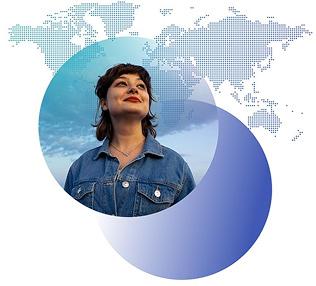



The World Happiness Report
The 2026 edition of the World Happiness Report investigates how happiness statistics add to the conversation on social media, trust, social connection and digital environments that shape wellbeing.
Chapter 1: Executive summary
01 Executive summary
The executive summary of the annual World Happiness Report distills key findings, analysis and recommendations into a clear, concise overview. It provides a snapshot of the report’s most important insights.
Chapter 2: International evidence on happiness and social media
02 International evidence on happiness and social media
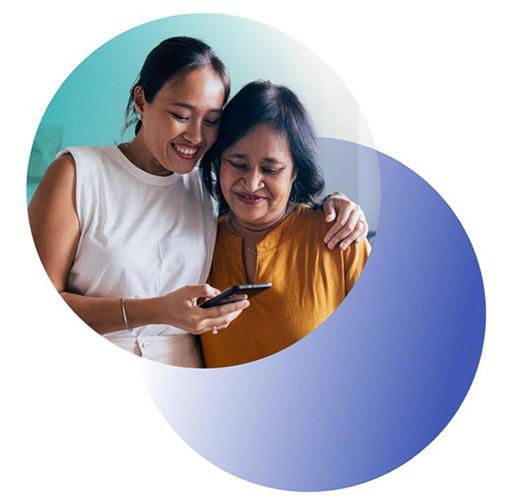
Global happiness trends show more countries gaining than losing happiness since 2006-2010 and Nordic countries again leading the rankings of international happiness. However, while people under age 25 in most countries are happier than they were 20 years ago, youth happiness has declined in several Western nations.
Social media plays a role in global happiness. Intensity and type of use matter more than simple access. Across 47 countries, life satisfaction is highest at minimal levels of use and declines at high levels, especially for girls and in English-speaking countries.
Download This Chapter :02 International evidence on happiness and social media
Chapter 3: Social media and large-scale harm
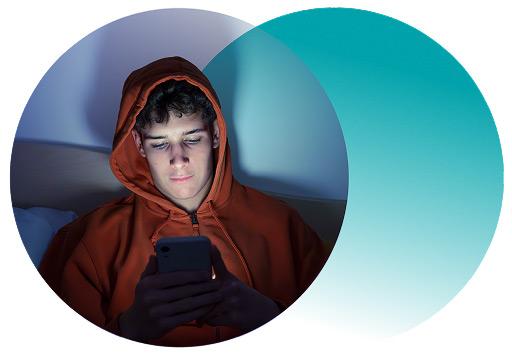
03 Social media is harming adolescents at a scale large enough to cause changes at the population level
Seven independent lines of evidence reveal the impact of social media on mental health and suggest that social media platforms pose significant risks to adolescent wellbeing.
Survey data, longitudinal studies, randomized experiments, natural experiments and internal company documents all point to elevated risks of depression, anxiety and direct harms such as cyberbullying and sextortion.
The scope of this harm is large enough to affect population-level measures of mental health. This chapter argues that the widespread adoption of always-available social media in the early 2010s likely contributed to rising adolescent mental health problems in many Western countries.
Download This Chapter :03 Social media is harming adolescents...
Chapter 4: Translating the science into policy
04 Translating scientific evidence into effective policies for health and technology requires care
Major scientific organizations reviewing social media and adolescent mental health have reached markedly different conclusions and policy recommendations despite drawing on similar bodies of research. This chapter explores why.
The stakes of getting these syntheses right are substantial. An analysis of three high-profile reports reveals strikingly little overlap in cited sources — less than 1% — along with substantial differences in how evidence is synthesized, communicated and qualified. Learn what these inconsistencies mean for policy, public trust and scientific credibility.
Download This Chapter :04 Translating the science into policy
Chapter 5: Social media and gender
05 Adolescent life satisfaction and social media use: gender differences in an international dataset
Analysis of 15 and 16-year-olds in 47 countries reveals a nonlinear relationship between social media use and life satisfaction. The findings highlight important gender and regional differences in how digital engagement relates to adolescent wellbeing.
Among female internet users, light use of the internet for seven activities, including social media, is associated with the highest average life satisfaction, while heavy use is linked to lower life satisfaction.
Among boys, patterns vary across regions, with heavy and non-use associated with greater variability.
Chapter 6: Social media and product traps
06 Social media, wasting time, and product traps
Experimental and valuation studies raise doubts about whether social media use makes people happy. Users who reduce or deactivate their accounts report higher happiness and lower anxiety, yet many would demand compensation to give up platforms.
Evidence suggests that people remain on social media because others do, creating “product traps” driven by social pressure and fear of missing out. The findings indicate that for many users, social media may reduce overall welfare despite continued engagement.
Chapter 7: Social media and socioeconomic status
07 Problematic social media use and adolescent wellbeing: the role of family socioeconomic status across 43 countries
Across 43 countries, problematic social media use is consistently associated with higher psychological complaints and lower life evaluation among adolescents.
The relationship is stronger for young people from lower socioeconomic backgrounds, particularly when it comes to life evaluations. Younger adolescents show greater vulnerability, and the association intensified between 2018 and 2022 in most regions. The findings highlight how digital risks intersect with existing social inequalities.
Download This Chapter :07 Social media and socioeconomic status
Chapter 8: Trust, social connections and emotional bonds
08 Internet use, social media, and wellbeing: the role of trust, social connections, and emotional bonds
Using instrumental-variable analysis across 30 European countries, this chapter finds that higher internet use reduces wellbeing on average, especially among younger groups.
Declines in interpersonal trust, institutional trust, perceived social activity and social meeting frequency account for much of the wellbeing loss among Gen Z and millennials. Older adults show greater resilience, supported by stronger attachment to country and more stable trust levels.
The wellbeing impact of internet use depends heavily on the social media saturation of one’s peer group.
Download This Chapter :08 Trust, social connections and emotional bonds
Chapter 9: Social media in the Middle East
09 Social media use and wellbeing in the Middle East and North Africa
Drawing primarily on data from the Arab Barometer, which surveys adults across the Middle East and North Africa, this chapter shows that social media use in the MENA region is among the highest globally, with heavy use common among younger groups. Moderate use shows little association with wellbeing, but heavy use is linked to higher stress, more depressive symptoms and a greater likelihood of feeling worse off than one’s parents.
Multiple-platform engagement, reliance on social media for news and interaction with influencers are associated with poorer outcomes. The findings suggest that intensity and type of use, rather than use alone, shape wellbeing effects in the region.
The World Happiness Report is published by Oxford’s Wellbeing Research Centre in partnership with Gallup, the UN Sustainable Development Solutions Network and the World Happiness Report’s Editorial Board. The rankings are powered by data from the Gallup World Poll.



World Happiness Report Global Media Coverage




Key Questions About the World Happiness Report
What is the World Happiness Report?
The World Happiness Report is an annual research publication that compares life evaluation data across countries to assess global wellbeing and examine happiness by country.
It uses nationally representative responses from the Gallup World Poll to measure how people rate their lives on a 0-10 scale and to analyze the factors associated with higher or lower life satisfaction.
Beyond publishing country rankings of world happiness, the report examines trends in trust, social support, health, economic conditions and other drivers of wellbeing. Each edition also explores a focused research theme — such as social media and digital life in 2026 — using cross-national survey data, longitudinal analysis and experimental evidence.
The report is published by Oxford’s Wellbeing Research Centre in partnership with Gallup and the UN Sustainable Development Solutions Network.
Where does the World Happiness Report get its data?
The World Happiness Report rankings are powered by data from the Gallup World Poll. Each year, the Gallup World Poll asks people in more than 140 countries and territories to evaluate their lives. Three-year averages of these life evaluations form the basis of the country rankings featured in the report.
How is happiness measured in the World Happiness Report?
The World Happiness Report measures happiness using life evaluations collected through the Gallup World Poll. Respondents answer the Cantril ladder question, rating their current lives on a scale from 0 (worst possible life) to 10 (best possible life). National averages of these scores, typically calculated as three-year averages, determine each country’s position in the world happiness ranking.
What is the Gallup World Poll?
The Gallup World Poll is a global survey and the primary data source behind the happiness rankings in the World Happiness Report. As the underlying world happiness survey, it measures life evaluations using nationally representative samples across more than 140 countries.
Launched in 2005, it represents the vast majority of the world’s adult population. The survey uses nationally representative samples and consistent questions to measure life evaluations and other aspects of wellbeing across countries and over time.
Ranking of Happiness by Country: How is it calculated?
Happiness rankings are based on average life evaluation scores from the Gallup World Poll. The survey’s consistent methodology allows for comparison across countries.
Researchers calculate three-year averages of national life evaluations to reduce year-to-year volatility and improve comparability. The report also analyzes six key factors associated with differences in life evaluation, including income, social support, healthy life expectancy, freedom, generosity and perceptions of corruption.
Which country is the happiest in the world in 2026?
Finland ranks first among the world's happiest countries in the 2026 World Happiness Report. It has held the top position for multiple consecutive years, reflecting consistently high average life evaluation scores in data collected through the Gallup World Poll.
What are the key findings of the World Happiness Report 2026?
The 2026 report finds that Nordic countries continue to lead world happiness rankings, with Finland ranked first among the happiest countries on Earth.
Finland is followed by a group of three that includes Iceland, Denmark and Costa Rica. Sweden and Norway complete the top six, followed by the Netherlands, Israel, Luxembourg and Switzerland rounding out the top 10. Costa Rica’s rise to fourth marks the highest-ever ranking for a Latin American country. This report highlights the importance of social support, trust and community in shaping life evaluations. It also notes shifts in country rankings and emphasizes how social and economic changes influence wellbeing across regions.
Can organizations partner with Gallup for global research?
Yes. Organizations can partner with Gallup to conduct large-scale global research using the Gallup World Poll infrastructure or through custom surveys. Gallup provides access to rigorous methodologies to ensure the highest-quality data collection among nationally representative samples.
Explore Global Happiness



Get This Report Via Email
We will send you a copy of this full report and updates about our latest global analytics research and polling.
Thank you for your request. We'll send your report soon.