
Manager Development: What It Is, Why It Matters and How It Works
Manager development is one of the most powerful performance strategies an organization can pursue.
Gallup research consistently shows that managers play a decisive role in shaping employee engagement, performance and retention.
This guide explains:
-
what manager development is and what it isn’t
-
why it matters to your organization’s performance
-
how to build a practical manager development plan
-
what to look for in a manager development program
-
how the Gallup Manager Program develops managers as strengths-based, engagement-focused coaches
What is manager development?
What is manager development?
How Effective Manager Programs Help
Today’s workforce expects managers to be people leaders who help employees perform, grow and find purpose in their work. To meet these expectations, advanced manager development programs equip managers to:
-
consistently coach employees
-
provide strengths-based development
-
lead with a focus on employee engagement
-
have difficult conversations and resolve conflicts
-
create accountability

What High-Quality Manager Development Is Not
Manager development is not a one-time training event for managers.
-
Training is often short-lived, tactical and surface level.
-
Development is repeatable and fosters habits, conversations and practices that create authentic growth in managers.
Today’s most sophisticated manager development programs go beyond traditional leadership training frameworks. They share traits with purposeful leadership development efforts that focus on sustained behavior change.
Why is manager development important?
Why is manager development important?
Managers account for 70% of the variance in team-level employee engagement, according to Gallup research. This means that more than any other role in an organization, managers determine whether employees are engaged.
This influence matters because Gallup research shows that engaged employees and teams drive key business outcomes, including organizational growth, profitability, and employee retention.
Culture: The Influence of Manager Development

Managers deliver your organizational culture because they shape the employee experience more than any other role.
While executive leadership often defines and designs culture from the top, employees experience that culture most directly through their managers.
Effective manager development equips managers to help your teams reflect the organization’s desired culture and achieve the performance linked to engaged teams.
The Benefits of Developing Managers
Investing in ongoing manager development leads to measurable improvements in business performance:
-
Managers who coach improve employee engagement.
According to Gallup’s latest State of the Global Workplace report, managers who receive training in coaching and people development see up to 18% higher engagement among their teams. They also realize a 20% to 28% boost in other manager performance metrics.
-
Engaged teams perform better.
The 11th edition of Gallup’s meta-analysis on engagement and organizational outcomes found the following differences in key performance metrics between the most engaged and least engaged teams:
What highly engaged employees achieve more of:
10% higher customer loyalty/engagement
14% higher productivity (production records and evaluations)
18% higher productivity (sales)
23% higher profitability
70% higher wellbeing (net thriving employees)
22% higher organizational citizenship (participation)
What highly engaged employees achieve less of:
78% less absenteeism
21% less turnover for high-turnover organizations
51% less turnover for low-turnover organizations
28% less shrinkage (theft)
63% fewer safety incidents (accidents)
32% fewer quality defects
Because managers connect executive strategy to frontline execution, developing managers is the most efficient way to improve these business outcomes. Without a formal manager development strategy, organizations leave performance to chance.
-
Skilled managers reduce turnover.
According to a 2024 Gallup study of employees who voluntarily left their organization in the past year, 42% said their manager or organization could have done something to prevent them from leaving. Considering the financial and cultural costs of turnover, the pivotal role managers play in employee retention deserves close attention.
42% of voluntary leavers say their departure could have been prevented
What do great managers do differently?
What do great managers do differently?
As reported in the bestselling book It’s the Manager, Gallup has conducted five decades of research into what makes a great manager.
—Jim Clifton and Jim Harter, Ph.D., It's the Manager
The Five Traits of Great Managers
To significantly improve the odds that someone will be successful in a managerial role, evaluate them on these five traits:
-
Motivation — inspiring teams to get exceptional work done
-
Workstyle — setting goals and arranging resources so teams can excel
-
Initiation — influencing others to act and pushing through adversity and resistance
-
Collaboration — building committed teams with strong bonds
-
Thought process — taking an analytical approach to strategy and decision-making
Organizations struggle to hire managers who naturally excel in all five requirements. Science-backed selection methods help organizations find candidates with high management talent. Successful ongoing development — the other half of managerial success — equips managers to encourage, guide, and hold their teams accountable, much like a traditional coach would.


Why the Best Managers Are Coaches
If leaders prioritize one action, Gallup recommends developing managers to become coaches.
In It’s the Manager, Gallup analyzed its data on more than 60 million employees worldwide alongside large-scale meta-analyses. The research included hundreds of studies on goal setting, feedback, engagement, individual differences and competencies. Gallup workplace scientists interviewed leaders, managers and employees.
—Jim Clifton and Jim Harter, Ph.D., It's the Manager
What the Management Research Reveals
Gallup’s analysis uncovered the following insights, among others:
Organizations using traditional performance management systems often struggle to inspire and develop employees. This is because managers using non-coaching approaches commonly lead to:
-
unclear and misaligned expectations
-
ineffective and infrequent feedback
-
unfair or missing evaluation practices
Coaching: How the Best Managers Get Results
The best managers in the world have three habits:
-
establish expectations
-
continually coach
-
create accountability
According to Jim Harter, chief scientist for Gallup's workplace management and wellbeing practices, “The new workforce doesn’t want an annual review at the end of the year. They want ongoing conversations with coaches who will develop them. We ought to move from a culture of boss delegation to coach development.”
Yet regular and meaningful coaching is still a challenge for most managers. Gallup research finds:
47% of employees report that they received feedback from their manager “a few times or less” in the past year.
34% of employees strongly agree that their manager knows what projects or tasks they’re working on.
26% of employees strongly agree that the feedback they receive helps them do their work better.
The Five Coaching Conversations Great Managers Use to Improve Performance
The following practical conversation framework guides managers to establish expectations, continually coach and create accountability. Managers who attend the Gallup Manager Program learn how to incorporate these conversations into their daily practice.
Manager Coaching Conversation #1: Role and Relationship Orientation
-
Primary objective: Get to know each individual and their strengths and establish expectations that align with those strengths and your organization’s objectives.
-
When: Once a year or when an employee’s role changes; 1-3 hours.
Manager Coaching Conversation #2: Quick Connect
-
Primary objective: Provide real-time feedback and ensure employees know whether they’re on the right track.
-
When: At least once a week; via email, calls, in-person conversations; 1-10 minutes.
Manager Coaching Conversation #3: Check-In
-
Primary objective: Review successes and barriers and align and reset priorities; and discuss expectations, workload, goals, and needs.
-
When: Once or twice a month; 10-30 minutes.
Manager Coaching Conversation #4: Developmental Coaching
-
Primary objective: Give employees direction, support, and advice — using their strengths as a guide — when they explore career, aspirational, or developmental opportunities.
-
When: Based on project assignments and development opportunities, as needed; 10-30 minutes.
Manager Coaching Conversation #5: Progress Reviews
-
Primary objective: Formally review performance progress and reset expectations as needs change. Strong progress reviews focus on celebrating success, preparing for future achievements and planning for development opportunities.
-
When: At least twice a year; 1-3 hours.
Becoming an effective coach is the most important skill a manager can develop. By mastering these coaching conversations, great managers can focus on the coaching moments that matter most.
What are the most important management skills today?
What are the most important management skills today?
Gallup research finds that there are seven expectations, or competencies, necessary for success in any role:
-
Build relationships. Create partnerships, build trust, share ideas and accomplish work.
-
Develop people. Help others become more effective through strengths development, clear expectations, encouragement and coaching.
-
Lead change. Embrace change and set goals that align with a stated vision.
-
Inspire others. Encourage others through positivity, vision, confidence, challenges and recognition.
-
Think critically. Gather and evaluate information that leads to smart decisions.
-
Communicate clearly. Share information regularly and concisely.
-
Create accountability. Hold yourself and your team responsible for performance.
“This list is Gallup’s simplest and most comprehensive explanation of the job demands required to achieve excellence for all employees in any organization,” write Jim Clifton and Jim Harter, authors of Gallup’s It’s the Manager.
According to the authors, each of these competencies aligns with “effective performance management practices that increase engagement and produce high performance.”
The best managers find unique ways, based on their own talents and strengths, to practice these competencies and create successful teams in thriving organizations.
What do the top manager skills look like in action?
Gallup interviewed finalists for its Manager of the Year award from highly engaged, award-qualifying organizations and identified eight behaviors that appear consistently in world-class managers.
These behaviors are a blueprint of the skills great managers must develop:

-
Translate purpose into action. Connect the organization’s mission to what the team and each person does day to day, especially during change.
-
Make people’s opinions count. Actively draw out ideas, listen, and act on input to encourage innovation and commitment.
-
Coach with candor. Create a climate where honest conversations, including about mistakes, are safe and productive.
-
Hold one meaningful conversation per week with each person. Treat frequent, real dialogue not as status-only check-ins but as a core commitment.
-
Individualize motivation. Learn what motivates each person and shape work so it’s compelling to them.
-
Recognize and reward excellence. Celebrate progress and wins consistently so people feel valued.
-
Care about employees as people. Understand the human context related to performance and adjust support accordingly.
-
Make “developing new stars” the No. 1 job. Focus on growth, succession and building future leaders — not just today’s tasks.

How do you build a manager development strategy that works?
How do you build a manager development strategy that works?
The strongest workplaces use a manager development strategy that is:

Strengths-based

Engagement-focused

Performance-oriented
As outlined in It’s the Manager, Gallup recommends organizations take the following steps to implement an effective manager development strategy:
-
Audit all current manager learning and development programs. Review all existing programs to ensure they support a strengths-based culture. Decades of Gallup research and client work find that manager development programs that acknowledge managers’ strengths outperform other approaches.
-
Enroll managers in Gallup manager development courses. These courses teach the fundamentals of strengths-based leadership, including deep learning on strengths, engagement and performance coaching.
-
Support managers as they shift from boss to coach. Provide curricula that help managers move toward a coaching approach in their daily work.
-
Reinforce the coursework with ongoing virtual learning experiences. Use continued learning opportunities to help managers consistently practice what they’ve learned.
-
Set expectations for executive involvement. Require executives to have strengths-based conversations with each manager or team leader once a week.
The Outcomes of Strengths-Based Manager Development
A 2022 Gallup meta-analysis of strengths-based manager development programs found that managers who completed courses like the Gallup Manager Program improved more than comparable peers in engagement and performance.
22% Managers improved their own engagement up to 22% more than nonparticipants.
18% Their teams improved their own employee engagement by up to 18% more than teams managed by nonparticipants, while having 21% to 28% less employee turnover.
20%-28% Managers had 20% to 28% higher likelihood of performance improvements compared to nonparticipants.
How will you know whether a manager development strategy is the right one?
Strong strategies ensure that managers who attend a manager development course can strongly agree that:
-
the course inspired them
-
the course taught them something that changes how they lead
-
they are applying what they learned from the course in their daily management practice
-
they have substantially improved their performance as a manager after participating in the course

The best manager development strategy shouldn’t feel like another item added to managers’ to-do lists. Instead, an effective approach helps managers optimize their daily work through meaningful conversations and strengths-based leadership practices.

How should you evaluate manager development programs?
How should you evaluate manager development programs?
The most effective manager development programs educate and train managers on how to coach employees to succeed.
When comparing different manager training options, ask the following questions. They help separate ineffective training courses from learning experiences that deliver real manager development.
-
Does the program teach managers to coach?
The best programs teach coaching as an authentic, ongoing dialogue, not a one-time conversation. They make coaching approachable and practical by teaching proven techniques. These programs give managers time to practice coaching in real scenarios they face in their roles.
Questions to ask the program provider:
-
How much time do managers spend practicing live conversations?
-
What frameworks do you teach managers to guide weekly, monthly and semiannual conversations?
-
Does the program teach managers how to discover and develop strengths?
The best programs go beyond identifying strengths. They show managers how to apply strengths to improve daily performance and business outcomes.
Effective development teaches managers how to use strengths to clarify expectations, distribute work, coach performance, tailor recognition and remove barriers to success.
Questions to ask the program provider:
-
How do managers practice applying strengths to goal-setting, delegation and coaching conversations?
-
How do you teach a manager to individualize support without creating inconsistency or favoritism?
-
Does the program teach managers how to engage employees?
The best programs teach managers how to improve employee engagement. Engaged employees contribute to better team performance and stronger business outcomes, and the manager accounts for 70% of the variance in team-level engagement. These programs equip managers with strategies to address the 12 elements of employee engagement in their everyday leadership.
Questions to ask the program provider:
-
How do you train managers to engage employees in their daily responsibilities?
-
What core behaviors do you teach managers, and how do you measure adoption?
-
Does the program provide tools managers can use immediately?
The best programs give managers resources they can use right away. Managers should receive conversation guides, templates, and other materials that support purposeful conversations and effective coaching.
Questions to ask the program provider:
-
What do managers get on day one that they can use in their next one-on-one meeting?
-
Do you provide manager-ready prompts for challenging situations such as underperformance, conflict or unclear expectations?
-
Does the program reinforce learning after the initial course?
The best programs emphasize ongoing development rather than a one-time training event. They offer managers access to on-demand resources and provide guidance after the course so managers continue to practice what they learn.
Questions to ask the program provider:
-
What happens in weeks two through 12 after the course?
-
What guidance do managers receive for continued practice?
Explore Gallup’s Programs: The Gallup Manager Program and Gallup’s other learning options for managers and leaders teach strengths-based, engagement-focused practices managers need to succeed.
What is the Gallup Manager Program and how does it work?
What is the Gallup Manager Program and how does it work?
The Gallup Manager Program is a two-day development course that teaches participants how to lead like the world’s best managers.
It’s a management development experience built on Gallup’s research.
Designed for busy managers, the course is practical, interactive and focused on conversations and coaching practices managers can use immediately.
What Managers Learn During the Gallup Manager Program
Participants learn how to incorporate a strengths-based, engagement-focused and performance-oriented coaching approach into their management style by:
-
understanding and applying their unique CliftonStrengths
-
implementing best practices for using CliftonStrengths with individuals and teams
-
applying employee engagement principles to motivate excellent performance
-
leading coaching conversations that support progress on goals and performance development
-
having difficult conversations and resolving conflict
What to Expect During the Gallup Manager Program
The program features live and self-paced learning delivered in person or virtually. Participants can expect in-depth instruction, opportunities to practice concepts and continued coaching after the course.
Course sections include:
-
The Demands of Today’s Workplace
-
Leading the Modern Workforce
-
Strengths-Based Coaching
-
The Science of Engagement
-
Engagement-Focused Coaching
-
Performance-Oriented Coaching
What’s Included With the Gallup Manager Program?
Participants receive practical resources that support learning and guide coaching, including:
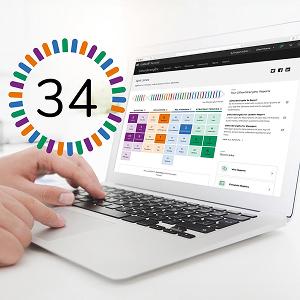

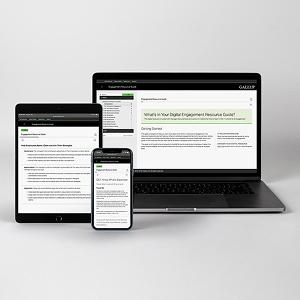

Get started with the Gallup Manager Program.
Get started with the Gallup Manager Program.
Whether you are looking for a manager training course for yourself or want to bring the program to a group of leaders in your organization, Gallup offers flexible options.

As a Group
Enroll a cohort or team of managers from your organization to learn and develop together. Contact us to explore this option.

As an Individual
Purchase a single seat and learn alongside managers from multiple organizations. This option allows for immediate registration.