World
Explore Gallup's research.

Finland remains happiest, but the latest World Happiness Report rankings show regional and generational shifts in global wellbeing.

Gallup's 2026 "State of the World's Emotional Health" report finds social media matters less to wellbeing than people may assume and not in the ways they might expect.
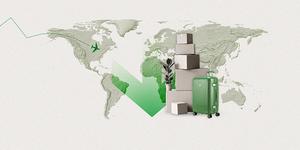
In 2025, fewer people worldwide are imagining their futures elsewhere. The U.S., long the world's most desired destination, is attracting less interest than at any point in nearly two decades.

In 2024, Gallup's global tracking reached a new milestone: 73% of adults worldwide said they feel safe walking alone at night in their city or area.
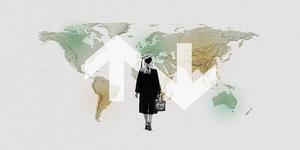
Gallup's Potential Net Migration Index shows where populations would grow or shrink if everyone who wanted to move permanently to another country did so.

New analysis from the World Risk Poll shows how disasters disproportionately affect low-income countries.

Ahead of Israel's election next week, public confidence in the honesty of elections has fallen and has grown increasingly divided.
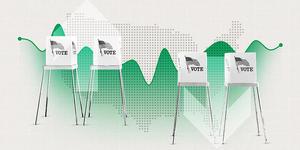
Confidence in the honesty of elections is highest among those disapproving of national leadership, a dynamic not seen anywhere else in the world.
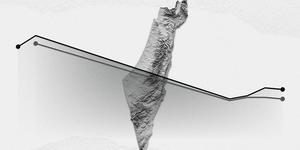
Relatively few Israelis or Palestinians back a two-state solution, with support splitting clearly along political lines in Israel but not Palestine.

U.S. leadership approval within NATO countries fell sharply in 2025, dropping 14 percentage points to 21%.

Sixty-nine percent of Americans say the media have a lot of freedom, a record low and the first time the U.S. ranks below the OECD average.

Across 37 countries, AI optimism outweighs concern, even as adoption and trust vary widely and Western countries express high levels of worry.
Global views of the UN's job performance are more positive than negative, with a median of 50% across 137 countries approving and 26% disapproving.
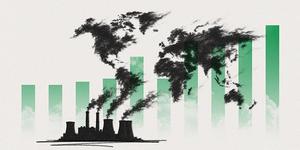
Data from the World Risk Poll find that about half of the world's adult population is worried about air pollution.

Cost is a barrier to veterinary care in Canada, affecting pets, families and care teams as veterinarians balance affordability and care standards.
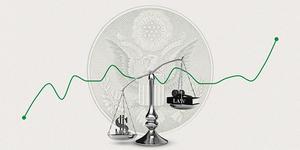
Perceptions of government corruption in the U.S. hit a record high in 2026, with broad agreement across partisan lines.
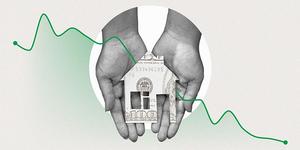
Over the past two decades, global satisfaction with the availability of local housing has become untethered from people's ability to afford it.
Despite recent progress, "The State of Food Security and Nutrition in the World" report shows both hunger and food insecurity remain above pre-pandemic levels and uneven across regions.
The World Risk Poll finds that one in 10 Americans name politics as the top risk to daily safety, with no other country rating it as a greater risk.
More adults worldwide say their community is a good place for minority groups than they did 20 years ago, and these perceptions are linked to people's broader outlook on life.