Organizations are quietly rewriting the role of manager.
Across industries, large employers are flattening structures and increasing the number of people reporting to each supervisor. Big tech companies, for example, have eliminated layers of middle management to expand team sizes and accelerate decision-making. Amazon has publicly discussed reducing the number of management roles to lower costs and streamline oversight. Analyses of recent layoff waves suggest that middle managers make up a disproportionately high share of role reductions, a trend some observers now refer to as the “Great Flattening.”
But increasing the number of direct reports to a single manager — often called “span of control” — isn’t just a structural change. It fundamentally reshapes the role of the manager and changes what it takes to practice effective leadership.
Average Span of Control in the U.S. Is Growing
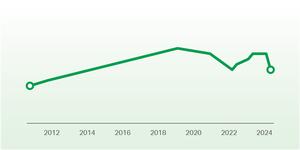
According to the Bureau of Labor Statistics, there is roughly one manager for every 11.5 employees. Gallup data show a similar pattern: The average number of people reporting to managers has increased from 10.9 in 2024 to 12.1 in 2025. This is a nearly 50% increase in team size since Gallup first measured in 2013.
The increase in average team size across the U.S. working population in the past year is largely influenced by a two-percentage-point increase in teams of 25 or more employees. That shift likely reflects what many organizations are doing in practice: downsizing or consolidating middle management roles while expanding the number of people who report to each remaining manager.
At the same time, the median team size has held steady at about five to six employees per manager or leader. In other words, a minority of very large teams is pulling the average up, while most managers still lead relatively small teams. Gallup data show that 37% of managers or leaders oversee fewer than five people, while roughly two-thirds (66%) manage fewer than 10. About one in five managers (22%) have 10 to 24 direct reports, and only 13% oversee 25 or more employees.
In 2020, Gallup conducted a meta-analysis of more than 200,000 manager-led teams to first examine the question of ideal team size. The findings showed that the manager’s innate tendencies — that is, manager quality — strongly shape how team size affects engagement.
Four Questions That Shape the Right Span of Control
Leaders face pressure to make decisions about how to best manage their workforce’s size and structure. Uncertainty about the future effects of AI on team size and employee management may add extra pressure to define the “ideal” span of control in management. Gallup research suggests that the answer depends on four factors:
- How engaged is the team?
- How much time do managers spend on individual contributor work?
- Do managers have the right talent for the role?
- Do managers give employees meaningful, regular feedback?
How Engaged Is the Team?
Gallup conducted a global meta-analysis examining the relationship between employee engagement and performance across teams of varying sizes. This analysis is a subset of Gallup’s ongoing global meta-analysis of employee experience and performance. The most recent study included 92,252 teams of different sizes across 104 organizations and 26 industries, with employees in 46 countries.
For this analysis, Gallup studied the relationship between employee engagement, productivity, turnover and employee wellbeing for:
- Small teams: four to nine employees
- Medium teams: 10 to 19 employees
- Large teams: 20 or more employees
For small and medium-sized teams, higher employee engagement is linked to increased employee productivity and wellbeing and lower turnover. For large teams, engagement is positively associated with higher wellbeing, but the relationship between employee engagement, productivity and turnover for these large teams varies by industry.
For example, among large teams in the services, transportation and healthcare industries, teams with high engagement scores are more productive than those with lower engagement scores. For other sectors, organizations with large team sizes have substantial variability in the association between engagement, productivity and turnover.
For these other industries, the relationship between engagement, productivity and turnover varies widely. Some large teams are more productive and have lower turnover when engagement is high; others do not. This variability means that for very large teams (20 or more employees), other factors come into play. Organizational leaders should consider the type of work being done, opportunities for coworkers to collaborate and some of the additional considerations discussed next.
Key takeaway: Team size is only as effective as the engagement behind it. Highly engaged teams of 12 or more workers who are supported by effective management — double the current median of six workers per team — can thrive, while poorly managed teams struggle, even when small.
How Much Time Do Managers Spend on Individual Contributor Work?
Individual contributor work encompasses tasks that fall outside a manager’s core leadership responsibilities. For example, a store supervisor might also stock shelves or check out customers; a bank manager may serve customers directly; and a research director or technology manager might contribute hands-on to the same projects as the teams they lead. These types of managers are often called “player-coaches.”
In Gallup’s U.S. study, 97% of managers report having some individual contributor responsibilities in addition to leading others. Managers spend a median of 40% of their time on individual contributor work. Those who exceed that threshold tend to lead smaller teams: nearly half manage fewer than five people, and about three-fourths manage fewer than 10.
Managers who spend less than 40% of their time on individual contributor work tend to maintain higher engagement than the average (37%), regardless of the number of workers reporting to them. Managers who exceed the individual contributor threshold have lower engagement, and this gets worse as the number of workers they manage increases.
Overall, managers are struggling more today than in the past. Compared with a few years ago, more managers report burnout, stress, job-seeking behavior and lower engagement. Contributing factors include rapid workplace change, cost pressures, a cooling and uneven labor market, and rising expectations of productivity per person.
When organizations widen spans of control without reducing managers’ individual workloads, they are not just redrawing the organizational chart — they risk weakening day-to-day performance management by compromising their managers’ own performance.
Key takeaway: Independent of other considerations, managers who are extreme player-coaches can stay engaged when managing a small team. But as their span of control widens, managers with higher levels of individual contributor workloads may struggle to balance their roles effectively. This is within the broader context of a decline in engagement among managers, regardless of team size, in the U.S. over the past few years.
Do Managers Have the Right Talent for the Role?
In studying thousands of managers over the past five decades, Gallup has identified five key traits of managers that lead to higher levels of engagement and performance among the teams they manage:
- Motivation: Inspiring teams to get exceptional work done.
- Workstyle: Setting goals and arranging resources for the team to excel.
- Initiation: Influencing others to act; pushing through adversity and resistance.
- Collaboration: Building committed teams with deep bonds.
- Thought process: Taking an analytical approach to strategy and problem solving.
Talented managers often rise to a challenge in situations where less talented managers struggle. When faced with very large teams (25 or more direct reports) and a heavy individual contributor workloads (greater than 40%), people with high management talent have higher engagement. Managers with medium and low talent show lower engagement as team size and individual contributor workload increase.
Work location also matters. When considering the managerial talent level and work location, a growing number of direct reports can negatively affect the engagement level of all managers, particularly those who work from home or in a hybrid setting. For on-site managers, increasing team size has a minimal impact on their engagement, although more talented managers consistently have higher engagement.
Key takeaway: Manager talent trumps span of control. When organizations use scientific methods to identify the right talent in managers, those managers can successfully lead larger teams and stay engaged in their work as team size grows. This helps fix declining manager engagement and reduces the number of managers an organization needs. And because manager engagement is strongly tied to employee engagement, the benefits extend across the whole team. Still, even highly talented managers who are fully remote face limits on how many people they can manage effectively. Organizations need to manage heavy individual contributor responsibilities situationally based on both the manager’s talent and the volume of non-managerial work they have.
Do Managers Give Employees Meaningful, Regular Feedback?
Gallup discovered that one habit for a manager in today’s workplace matters more than most others: providing meaningful feedback to each employee at least once per week. This practice nearly triples the percentage of engaged employees, which then influences many other performance outcomes.
Yet it remains uncommon. In a recent study, Gallup found that among nearly 15,000 employees, 16% said the last conversation with their manager was extremely meaningful. According to employees, meaningful manager feedback includes recognition or appreciation for recent work, collaboration and relationships, discussion of current goals and priorities, and a focus on employees’ strengths. These conversations don’t have to be long; 15 to 30 minutes, done consistently, is enough.
Across seven studies representing 44,025 responses, Gallup asked employees whether they had received meaningful feedback in the past week, gathered information about team size and measured engagement. Employees were highly engaged (about seven in 10) regardless of team size when they strongly agreed they had received meaningful feedback. When they did not strongly agree (responses from 1 to 4 on a 5-point scale), only one in four were engaged.
These findings are generally consistent regardless of the team’s work location. Hybrid employees tend to have the highest engagement, but for all work location situations, those who report receiving meaningful feedback in the last week are substantially more engaged.
Key takeaway: In today’s workplace, where employees feel increasingly disconnected from their organizations, managers’ open communication with employees is more important than the number of direct reports they have. Weekly, meaningful feedback supports employee engagement regardless of team size.
How Many Direct Reports Should a Manager Have?
The success of any changes to span of control depends on the manager’s ability to handle it. Some managers lead larger teams effectively; others perform better with fewer direct reports. The difference lies in the environment in which they work.
- Most managers remain responsible for small teams.
- The median span of control stays at six.
- Larger teams are becoming more common and can work, but only when managers have the right talent and support.
For leaders, this means that increasing span of control alone is not a performance strategy. Larger teams succeed only when organizations invest in the conditions that allow managers to lead them well.
Questions Leaders Should Reflect on Before Flattening Further
Before removing another layer of management or expanding team size, leaders should contemplate their answers to five questions:
- Do we understand the distribution of team sizes across the organization? Gallup finds that many organizations have too many managers overseeing fewer than five employees.
- Do we know which managers have the talent to lead larger teams? Are we using scientific assessments, or are we still promoting mainly based on tenure and past individual performance?
- Are we measuring engagement at the team level? Do we know which teams are at risk and how engagement changes as spans of control widen?
- Are we optimizing a player-coach model with the right balance between individual contributor work and coaching? Are our best managers spending more than 40% of their time on individual contributor work, limiting their capacity to coach?
- Have we made weekly, meaningful feedback an expected practice? Do managers have the skills, tools and coaching to hold short, frequent, high-quality conversations with every direct report?
If organizations can answer yes to these questions, larger spans of control can improve efficiency without weakening performance. If they can’t, short-term savings may undermine the daily manager-employee relationships that support long-term results.
Equip managers to lead larger teams effectively.
- Identify managers with the talent to lead bigger teams using Gallup’s validated selection and development tools.
- Measure engagement at the team level to track how performance and wellbeing change as spans of control grow.
- Make weekly, meaningful feedback a standard practice with Gallup Access tools that support consistent coaching at scale.