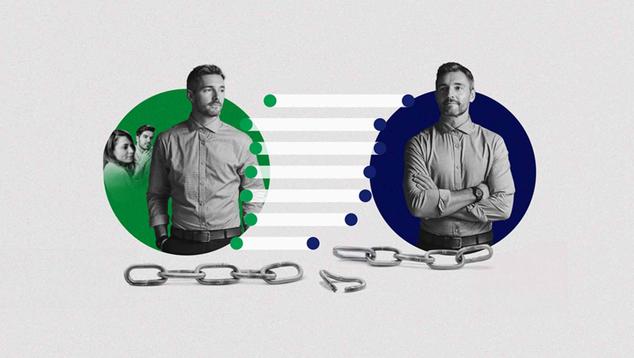
Less than half of leaders report that they are outstanding or exceptional at creating accountability, defined as holding everyone responsible for delivering exceptional performance. Gallup data further show that managers are even more pessimistic about their leaders’ abilities to hold teams accountable.
As workplaces today experience rapid change and rising expectations, these gaps in leadership development can have a direct impact on employee engagement and performance.
Gallup recently surveyed leaders on how well they believe they are performing across seven core leadership competencies. Managers in a separate sample were also asked to evaluate their leaders. Results indicate that both groups identify creating accountability as the lowest-rated competency.
These competencies emerged from a 2018 large-scale research effort examining leadership development in organizations, in which Gallup reviewed three decades of research and conducted a content analysis of 360 distinct behavioral job demands across 559 roles in 18 industries.
The database included job analyses of top performers in a wide range of roles, as well as competency models developed independently by other organizations.
When these models were aggregated and analyzed, Gallup found that seven higher-order competencies consistently define success and represent the core leadership skills leaders need to set the tone for their organizations:
- Build relationships
- Develop people
- Lead change
- Inspire others
- Think critically
- Communicate clearly
- Create accountability
These competencies shape performance only when leaders model them consistently and embed them in how work gets done every day. Gallup’s survey revealed that leaders are more likely than managers to rate themselves as exceptional or outstanding across every category. In fact, for six of the seven competencies measured, managers’ ratings of their leaders trail leaders’ self-ratings by at least 20 percentage points.
It is possible that this finding uncovers a common cognitive bias in which people are often unaware of their own areas of weakness and rate them as strengths. This bias has been found to be prevalent in 360 feedback assessments commonly used for performance management and developmental feedback, for example.
“Create accountability” is the lowest-rated competency for both groups — and notably, the one where managers and leaders are closest in agreement.
The data also highlight how fundamental this competency is to a strong focus on engagement within the organizational culture.
The 30% of managers who say their leaders are exceptional or outstanding in holding everyone responsible for exceptional performance are three times as likely to be engaged in their work as those who say their leaders are not (51% vs. 17%).
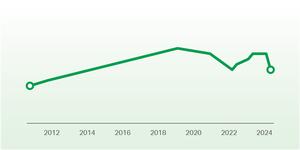
Employee engagement has been declining both in the U.S. and globally in recent years, and one of the elements that has dropped the most is clarity of expectations, which is related to being held accountable. The cost of getting accountability wrong, and the upside of getting it right, are significant. Teams with clear expectations produce substantially higher-quality work and are more efficient and profitable.
How Leaders Can Improve Accountability Now
Holding people accountable is uncomfortable, but learning how to improve leadership skills often begins with setting clear expectations for performance. Defining exceptional performance and expectations implicitly means telling some people they aren't meeting the standard. It also demands disciplined specificity, something that does not always come naturally to leaders more accustomed to operating at the level of vision and strategy.
True accountability extends beyond annual performance reviews or corrective conversations. It relies on translating organizational purpose into clear role expectations that define exceptional performance. Every manager needs to be able to articulate how their team creates customer value — whether directly through the work delivered or indirectly through the support they provide to others.
This clarity can be reinforced through consistent routines. Weekly manager conversations should integrate coaching, recognition, priority-setting and discussion of individual strengths. Accountability works only when it is practiced as a regular discipline that is fair, consistent and tied to performance, and not reserved for moments of correction.
This broader leadership responsibility (creating clarity on purpose, aligning people, making sound decisions and defining performance standards that hold) encompasses all seven competencies. The competency that leaders most often identify as weakest — creating accountability — is neither ambiguous nor unmeasurable. It is concrete, definable and strengthened through deliberate leadership development and practice, helping leaders improve leadership skills that shape engagement and performance.
If engagement and performance are to rise meaningfully, organizations in 2026 need to return to these fundamentals. Employees experience the workplace through their direct manager. When expectations are clear, coaching is frequent and accountability is consistent, performance can be measured and workplaces are wired for success.
The Seven Competencies Show Up in a Leader’s Four Core Responsibilities
Gallup’s research shows that most leadership expectations can be distilled to four core responsibilities: Purpose, people, decisions and performance.
The seven competencies do not compete with the core responsibilities; they make them operational. The four responsibilities describe what leaders are ultimately accountable for, while the seven competencies describe the high-quality leadership behaviors that fulfill those responsibilities day to day.
Most employees experience the workplace through their direct manager and local leadership, not just through executive messaging. When leaders and managers are strained, employees feel it in slower decisions, less coaching and less consistent communication.
Here’s how the seven competencies defined above fit into these broader leadership expectations:
Develop as a leader and build stronger accountability across your teams.
- Discover the foundation of great leadership and the four most important needs of followers.
- Explore how organizations develop managers who coach, align and deliver results.
- Track global trends on how followers are experiencing leadership.
- Learn how to build a culture of accountability at work.