![CS Teamwork PP > Top Card > 2026-03 [UPDATE]](https://imagekit.gallup.com/fusion/tr:n-emd_tmpl_dlp_bg_lg/CSFCMSEN/7a01d537-85b0-487e-970c-9df63e520bf3.jpg)
How to Improve Teamwork and Build High-Performing Teams
Teamwork is a performance system that turns individual talent into collective results. This page gives managers and executive leaders practical, strengths-based strategies — grounded in CliftonStrengths® methodology — to align expectations, foster psychological safety and build a high-performance culture, whether your team works in person, hybrid or remote.

Why Is Teamwork Important in the Workplace?
Why Is Teamwork Important in the Workplace?
Teamwork is how organizations turn individual talent into team performance. When managers build high-performing teams and strengths-based partnerships based on what each person does best, effective teamwork becomes a repeatable performance system that results in significant benefits:
29%more likely employees will stay with their company for the next year (employee retention)
42%more likely employees will remain with their current employer for their entire career
23% higher employee engagement
18% increased performance
73% lower attrition
The Connection Between Strengths, Engagement and Performance
Strong teams start with the individual. One of the most direct benefits of teamwork is the ability to turn personal talent into collective performance. CliftonStrengths helps employees understand their own natural talents and apply them in strengths-based partnerships so their team can collaborate more effectively and deliver stronger results.
When predicting both engagement and team performance, a team's awareness of its strengths matters more than the specific mix of those strengths. Knowing your own strengths and those of your partners leads to higher employee engagement and team performance.
Higher levels of engagement affect business outcomes such as:
 18%Higher Productivity23%Higher Profitability
 78%Lower Absenteeism21%Lower Turnover (in high-turnover orgs)
How to Improve Employee Engagement by Improving Teamwork
Effective teamwork is one of the most reliable paths to improving employee engagement. Managers are central to that process: helping team members build mutual trust, feel heard, connect to their organization’s purpose and take pride in the quality of the work they do together.
To foster teamwork and strengthen team engagement, managers should use these teamwork strategies:
-
Communicate frequently to encourage open dialogue.
-
Ask for feedback and follow through on action items.
-
Make recognition specific, timely, personal and connected to the organization’s mission.
-
Build partnerships between people with complementary strengths.
-
Tailor support to each person’s individual needs.
-
Create conditions for team members to develop close, trusting relationships.
How CliftonStrengths Improves Team Performance
CliftonStrengths improves team effectiveness by giving everyone a shared language for how they contribute. When team members can describe their strengths precisely, they communicate more clearly about what they need and what they bring, which reduces friction and strengthens coordination.
Teamwork involves assigning roles and working together toward specific objectives. When people are in roles that fit their strengths, their energy and confidence improve, and that momentum spreads through the team.
Great teamwork starts with the individual, grows through powerful partnerships, and scales when the team intentionally focuses its collective strengths on shared goals.
Understand, Appreciate and Use Your Individual Strengths


Build Powerful Partnerships
Purposefully Use Your Collective Talents and Strengths
Strengths-based teams in a high-performance culture tend to share these characteristics:
-
Team members can name and understand what each person naturally contributes.
-
Team members see a clear connection between each other's strengths and behavior and how strengths connect to success.
-
Teammates build intentional, strengths-empowered partnerships that fuel collaboration and results.
-
The team uses strengths awareness to plan, prioritize and direct action toward outcomes.
How Do You Build a Successful Team at Work?
How Do You Build a Successful Team at Work?
You build a successful team at work by helping people understand and appreciate their talents through CliftonStrengths and then focusing those strengths on individual and team outcomes through clear goals and shared expectations.
The most repeatable path to building high-performing teams is a four-step framework. These teamwork strategies replace the hope for chemistry with something more reliable: clarity about how each person naturally contributes and how the team defines success.
-

1. Self-discovery. Learn your CliftonStrengths and discover how you work best.
-
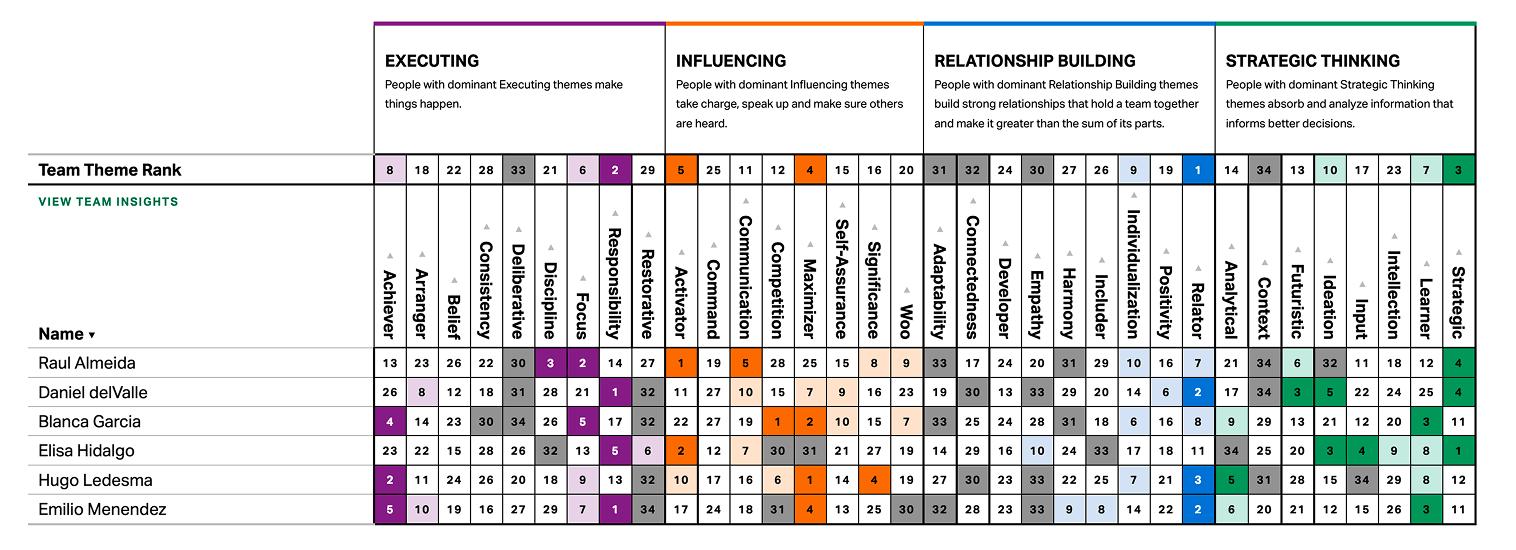
2. Team discovery. Use a CliftonStrengths Team Grid to see what the team brings collectively and which teammates’ strengths complement each other.
-

3. Self-aiming. Set strengths-based goals collaboratively with your manager so you own your performance outcomes.
-
4. Team aiming. Align on what success looks like for the team and how you’ll use strengths to deliver it together.
Step 1. Self-Discovery: How Do I Work Best?
Effective teamwork starts with knowing yourself. Because what makes a good team begins with the individual, each team member needs to understand their own CliftonStrengths to describe how they naturally contribute. That self-reflection builds the clarity and confidence that make someone a better partner.
Start by having each person identify their CliftonStrengths and reflect on:
-
what work gives them energy
-
what they do most reliably
-
what support they typically need from teammates
Step 2. Team Discovery: How Do We Work Best Together?
Once individuals know their strengths, make those strengths visible across the whole team. A great team knows what each member contributes and uses those differences to collaborate better, which is essential for improving teamwork in the workplace. A CliftonStrengths Team Grid helps the team:
-
Spot shared strengths within the group.
-
Identify gaps where individuals may need partnerships or support.
-
Define who has the strengths the team relies on most for common needs such as problem-solving or influencing.
Step 3. Self-Aiming: What Does Success Look Like for Me?
Strong teams don’t just assign tasks — they create ownership that boosts team productivity. That ownership starts with the individual. The most engaged employees have conversations with their manager to set goals together. When goals reflect people’s strengths, they feel more motivating, and the path to achieving them is clearer.
In a one-on-one meeting, managers and employees should agree on:
-
the outcomes each person owns
-
what exceptional performance looks like for each goal
-
which strengths they’ll rely on most to deliver results
Step 4. Team Aiming: What Does Success Look Like for Us?
The last step is creating a shared definition of success and a plan for how to improve team performance. Great teams know what members expect from each other, and great managers hold regular conversations to determine how to apply strengths to work, remove roadblocks and raise performance.
To lead a team discussion about strengths, managers should take four steps:

1. Review the team’s talents.
Use the Team Grid to identify where each team member excels.

2. Hold one-on-one conversations.
Ensure everyone understands their unique contribution to the team.

3. Have productive team conversations.
In a team meeting, ask team members to share their understanding of the team's collective strengths.

4. Collaborate and plan.
Use what you've learned to connect with team members, position work to fit strengths and recognize what the team does best together.
How Do You Improve Teamwork and Collaboration in the Workplace?
How Do You Improve Teamwork and Collaboration in the Workplace?
To improve teamwork at work, you must move beyond generic exercises. Teams need a foundation of shared expectations and a clear understanding of how each member thinks, feels and behaves.
Reliable teamwork strategies for improving teamwork and collaboration include these five foundational steps:
-
Set team expectations. Define the outcomes that the team needs to reach its goals.
-
Outline quality standards. Define what excellence looks like for every role.
-
Name the team’s strengths. Use the CliftonStrengths Team Grid to make each person’s contributions visible.
-
Aim and claim the strengths. Connect individual talents to measurable business outcomes.
-
Make strengths part of your culture. Use CliftonStrengths themes in daily interactions and apply the 5 C’s framework below to refine team performance over time.
With these steps in place, the team has clear goals, shared standards of excellence and the right people in the right roles.
Discover practical ways to apply strengths for greater teamwork in this episode of our Called to Coach podcast: "Fostering Teamwork With CliftonStrengths.”
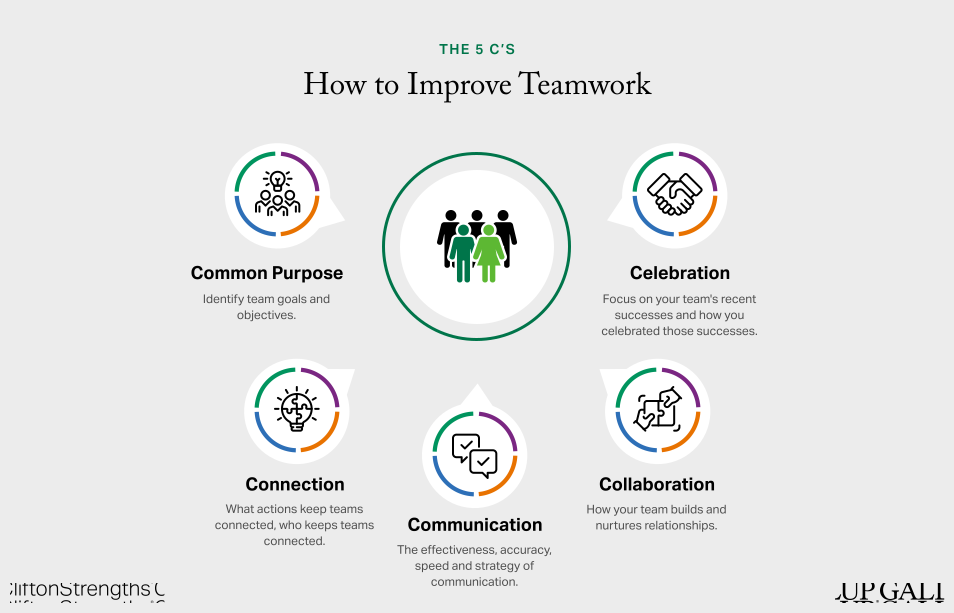
The 5 C’s Framework for Improving Teamwork
The 5 C’s framework gives managers concrete teamwork strategies for putting team building best practices into action:
-
Common purpose. Establish a shared mission that helps the team prioritize work and make decisions without constant manager intervention.
-
Connection. Build the trust the team needs to coordinate quickly and stay engaged, even in hybrid or remote settings.
-
Communication. Create reliable information flows that prevent stalls and rework.
-
Collaboration. Improve how team members build relationships to achieve a shared goal.
-
Celebration. Reinforce high performance and team identity through specific, timely recognition.
In practice: Choose one “C” each month to improve. Identify one action to take, run a 30-day experiment — a routine, conversation, meeting change or recognition practice — and evaluate progress at the end of the month.

Common Purpose
What it is: A shared mission and goals that help people prioritize work and make decisions without constant manager intervention. Teams align faster when every member can explain why the work matters and what success looks like.
How to strengthen team purpose:
-
Translate the team’s purpose into clear performance goals that define what the team will achieve, by when and how it will measure success.
-
Use strengths language to clarify which talents the team relies on when performance is strongest.
-
Use customer or stakeholder feedback to identify where the team succeeds and where it needs to adjust.
Quick team check-in questions:
-
What positive feedback do we get most often, and which strengths contributed to it?
-
What negative feedback do we get most often, and what might be causing it?
-
Are our goals clear, and do people understand how we set and update goals?
In practice: Start your Monday team meeting by naming the team’s top one to three outcomes for the week, who owns each one and how you’ll measure completion.

Connection
What it is: The quality of relationships and trust that help people coordinate quickly, ask for help early and stay engaged, even when teammates aren’t in the same location.
How to foster team connection:
-
Create consistent moments of connection through brief weekly touchpoints that keep people informed.
-
Build connection through strengths by helping people articulate how they naturally contribute and what they value in teammates.
-
Identify informal connectors — teammates who naturally rally others — and give them a clear role in maintaining team cohesion.
Quick team check-in questions:
-
What do we do on purpose to stay connected, and is it working?
-
When we feel most connected, what did we do differently that week?
-
Who helps this team feel like a team, and how can we support that role?
In practice: Open each weekly check-in by giving each team member 60 seconds to answer: “What are you focused on this week, and what do you need from the team to do your best work?”

Communication
What it is: Clear, reliable information flow — expectations, priorities, decisions and feedback — so work doesn’t stall, get duplicated or require rework. Teams need communication norms that don’t depend on the manager to translate everything.
How to improve team communication:
-
Set clear norms for how the team communicates, including channels, response times, decision notes and handoffs.
-
Make priorities visible and repeat them: what matters most this week, what can wait and what “done” looks like.
-
Use strengths as a clarity tool by translating misunderstandings into differences in how people naturally think and what they need.
Quick team check-in questions:
-
Where do we communicate well today, and where does it break down most often?
-
What information do people need earlier to do their best work?
-
What is one communication breakdown we can resolve this month?
In practice: Create a simple decision log — one shared document or channel thread — where the team records every decision in three lines: the decision, the owner and the next step with a date.

Collaboration
What it is: When two or more people combine their knowledge, skills and perspectives to achieve a shared goal. It goes beyond dividing tasks and focuses on co-creation and shared ownership. Collaboration improves when people recognize and value each other’s strengths and build relationships that make work easier and more effective.
How to improve team collaboration:
-
Make strengths visible and useful by ensuring teammates know what each person reliably contributes and where they may need support.
-
Address common collaboration challenges such as unclear expectations, poor communication, uneven contributions and partner conflict.
-
Recognize shared success by highlighting how collaborative partnerships and teamwork contributed to meaningful outcomes for the team or organization.
Quick team check-in questions:
-
Which relationships make getting work done easier, and where do we need to build more of them?
-
Do we recognize each other’s strengths day to day, or only when we’re under pressure?
-
What’s one change that would help us collaborate faster or with fewer handoff issues?
In practice: Hold a 10-minute “handoff huddle” to confirm who does what and when the handoff should occur.

Celebration
What it is: Recognition that reinforces performance and cohesion. Individual recognition supports engagement, and team recognition strengthens identity and sets a visible standard for strong performance.
How to celebrate team success:
-
Recognize outcomes and the strengths used to achieve them so that the team learns what to repeat.
-
Celebrate team wins in a way others can see, reinforcing team identity and modeling what success looks like.
-
Make recognition timely and specific: what the team accomplished, how and what comes next.
Quick team check-in questions:
-
What did we achieve recently that we should name and reinforce?
-
How did we acknowledge it, and did it feel meaningful?
-
How can we share this success in a way that strengthens pride and sets expectations for performance?
In practice: End each week by recognizing one team win and naming the strengths that made it possible.
What Are Practical Teamwork Tips for Better Performance?
What Are Practical Teamwork Tips for Better Performance?
If you are looking for practical teamwork tips to boost team performance, use these team-building best practices to move from theory to daily habit:
-
Take the CliftonStrengths assessment. Empower team members to identify their natural talents, which is a foundational step in building high-performing teams.
-
Examine your team’s talents. Use a CliftonStrengths Team Grid to visualize collective strengths and identify where members complement each other.
-
Define your goals. Set strengths-based goals that align with your organization’s mission and purpose.
-
Cultivate collaboration. Build partnerships between employees with complementary strengths to solve complex problems or generate new ideas.
-
Communicate frequently and meaningfully. Set clear expectations and provide consistent coaching to keep the team accountable. Use these conversations to strengthen teamwork.
-
Evaluate and improve engagement. Prioritize employee engagement because committed, enthusiastic teams consistently produce superior business outcomes.
-
Encourage friendships at work. Employees who have a best friend at work are seven times more likely to be engaged, and engaged employees produce stronger business outcomes across every industry.
-
Learn from other leaders. Explore Leading With Strengths or read Gallup CHRO Conversations insights to refine your teamwork strategies.
How to Unlock Powerful Partnerships With CliftonStrengths
Explore why work friends matter for your team and your business.
A Teamwork Check-In Routine (Weekly and Monthly)
The most effective teamwork tactics become habits when they follow a consistent rhythm. Use this check-in routine to maintain effective teamwork and improve team productivity. As you run these check-ins, name the strengths that led to progress and identify the partnerships needed to remove future friction.
Weekly Team Huddle (15-30 minutes):
-
Define outcomes. Restate the week’s top goals and the one to three priorities that matter most.
-
Clear roadblocks. Identify one collaboration obstacle — handoffs, decisions or resourcing — and assign an owner to resolve it.
-
Document progress. Capture decisions and next steps in a shared location so the team stays informed.
Monthly Performance Check (30-60 minutes):
-
Revisit standards. Recognize one example of excellent work and examine the strengths used to achieve it.
-
Check energy. Ask team members: “What has been giving you energy, and what has been draining you?” Adjust roles based on what you hear.
-
Identify key business outcomes. Choose one specific outcome to improve and agree on how the team will measure progress.
-
Audit the 5 C’s. Rotate check-in questions based on the 5 C’s framework (common purpose, connection, communication, collaboration and celebration).
What Are Effective Team-Building Activities for Work?
What Are Effective Team-Building Activities for Work?
Effective team-building activities for work help people perform better by clarifying individual contributions, optimizing team collaboration and establishing repeatable habits. The most successful team-building ideas for work develop the team’s ability to communicate, collaborate and perform.
Here are three strengths-based team-building exercises managers can use to improve effective teamwork:
-
Discover individual and team strengths. Complete the CliftonStrengths assessment to learn how each person naturally thinks, feels and behaves. Use the collective data to define primary roles and identify where team members need partnerships.
-
Strengthen partnerships with “Bring” and “Need” statements. Help teammates communicate clearly about what they contribute and what support they need to succeed, turning frustrations into actionable requests.
-
Use the CliftonStrengths Team Activities Guide to put strengths into practice. Hold structured sessions that address your team’s current needs such as alignment, communication, trust or performance. Treat each session as a practical opportunity to improve handoffs and how the team works together.
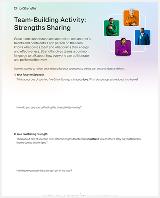
Team Activities Guide Samples
- Strengths Sharing activity. Help team members describe unique aspects of their talents to create greater awareness of the team’s collective potential.
- Your Contributions to the Team activity. Help team members understand how their specific talents complement their colleagues’.
What Is the Manager's Role in Improving Teamwork in the Workplace?
What Is the Manager’s Role in Improving Teamwork in the Workplace?
The manager is the primary operator of effective teamwork. Because managers account for 70% of the variance in team-level engagement, their role in building high-performing teams is not supportive. It is foundational. Managers help improve team performance and productivity by setting clear expectations, defining quality standards, and communicating frequently and intentionally.
If you are a manager looking for how to improve teamwork at work, prioritize these actions:
-
Own team engagement. Shift from a supervisor mindset to a coaching mindset that builds a strengths-based culture.
-
Set clear expectations. Define quality for every role so standards are objective, not based on guesswork.
-
Make strengths actionable. Use the CliftonStrengths Team Grid to help the team understand its collective dynamics and support partnerships.
-
Connect work to mission. Link day-to-day work to the organization’s mission, translating leadership direction into clear team priorities.
-
Communicate frequently and meaningfully. Use frequent Quick Connects, Check-Ins and Developmental Coaching to keep priorities and performance on track.
The best managers set expectations, distribute work, identify collaboration opportunities and keep the team moving in the same direction as priorities change. That requires consistent, active involvement and frequent communication with each team member.
Communicate Frequently: The 5 Essential Conversations
Improving teamwork in the workplace requires a consistent pattern of communication. These five conversations promote the transparency and trust that a team needs for success:
-

Role and Relationship Orientation. Define what success looks like in each role, set goals that challenge performance and connect individual work to team priorities. Use this conversation to clarify how each person’s strengths contribute and what great collaboration looks like with key partners.
-

Quick Connect. Use short, informal touchpoints to build relationships, show care and notice progress. Unlike formal work meetings, Quick Connects are brief moments to recognize a win, listen to ideas and stay connected. Encourage teammates to have Quick Connects with each other.
-

Check-In. Hold working conversations at least once per month to review priorities and progress, clarify expectations, and identify where people need support. Team Check-Ins create stability and alignment so that the team can perform at its best.
-

Developmental Coaching. Give in-the-moment feedback and future-focused coaching to improve real-time performance.
-

Progress Reviews. Hold formal conversations at least every six months to review achievements, agree on future growth targets and reinforce collaboration. Use this conversation to celebrate success, clarify how individual contributions add up to team results and identify barriers to effective partnerships.
Make Manager-Employee Conversations Meaningful
Gallup researchers studied the most common characteristics of meaningful and less meaningful conversations. These are the top five characteristics of meaningful conversations in order of importance:
-
Recognition or appreciation for recent work. Only 10% of employees say someone has asked them how they like to be recognized and appreciated, according to Gallup and Workhuman research. Only 23% of employees strongly agree that they get the right amount of recognition for their work. Those who do receive recognition are four times more likely to be engaged.
-
Collaboration and relationships. In hybrid work environments, collaboration and relationships are at risk. Gallup found that the connections between coworker relationships and both “intention to stay” and “likelihood to recommend the company” were stronger in 2022 than before the pandemic. Managers play a key role in bringing together the right team partners.
-
Current goals and priorities at work. Clarity about work expectations has been declining, particularly for younger workers. More remote work makes weekly Check-Ins essential as customer and business needs shift.
-
The length of the conversation. Between 15 and 30 minutes is enough time for a meaningful conversation, but only if it happens frequently. In fact, 15- to 30-minute conversations that occur regularly have a greater effect than infrequent 30- to 60-minute conversations. If managers don’t give employees feedback every week, they will need longer conversations to catch up.
-
Employee strengths or the things they do well. Managers have much more meaningful discussions about how each person gets their work done when those conversations focus on what that person does best. CliftonStrengths creates a foundation for more effective conversations that develop every team member’s potential.
Feedback is meaningful to employees when their manager focuses on recognition, collaboration, goals and priorities, and strengths.
The one topic employees perceive as less meaningful is discussing their weaknesses, or what they don’t do well. This might be because, in many conversations, employee weaknesses are all that managers address. Without the high-priority focus areas above, it’s difficult for managers to build trust and inspire their teams.
Make Strengths a Practical Operating System for Teamwork
A strengths-based approach improves team effectiveness only when it becomes part of daily operations. Managers should use the four CliftonStrengths domains — Strategic Thinking, Executing, Relationship Building and Influencing — to keep the team balanced and performing at its best.
With that knowledge, managers can:
-
Assign work intentionally. Match tasks to each person’s natural energy and talent patterns.
-
Build stronger partnerships. Pair members with complementary strengths to solve complex problems.
-
Reduce friction. Identify differences in approach early to address potential communication breakdowns.
Connect People to Purpose and Reinforce Culture
Managers serve as the link between leaders who define the mission and employees who do the daily work. That requires frequent communication and a willingness to help each person connect their role to the organization’s purpose and goals.
Managers who coach and develop their people, rather than simply overseeing tasks, create a team culture that sustains results.

Enroll your frontline supervisors in Conversations That Matter, Gallup’s manager training, featuring practical, research-backed techniques that promote focused, accountable, high-performing teams.
What Is the Leader's Role in Team Effectiveness?
What Is the Leader’s Role in Team Effectiveness?
Leaders set the conditions for team effectiveness. While managers lead day-to-day operations, leaders create the conditions that allow teamwork strategies to work consistently across every level of the organization. When leaders do not intentionally shape the culture, it forms by default, often creating divisions that put high-performance culture and employee retention at risk.
To ensure they’re building high-performing teams across the organization, leaders must:
-
Define mission, purpose and values. Give teams the direction they need to connect daily work to long-term goals.
-
Set disciplined priorities. Reduce organizational noise so teams make decisions faster and with greater clarity.
-
Invest in management capability. Equip managers with the manager development they need.
-
Enable talent sharing. Eliminate talent hoarding by giving managers the incentive to share high performers and build capability across every team.
-
Create the conditions for collaboration. Structure incentives that remove barriers such as conflicting goals or resource strain.
Leaders shape teamwork less through daily interactions and more through the systems behind the scenes: clarity of direction, the behaviors the culture rewards and the structures that determine whether teams can collaborate effectively.
Connect Teamwork to Mission, Purpose and Values
Teamwork success is based on a well-articulated mission. Without a shared vision, collaboration becomes transactional. Teams may finish tasks together, but they lack the commitment to adapt when conditions change. Leaders must ensure every employee can quickly answer:
-
What are we solving for?
-
What does success look like right now?
-
How does my team’s work connect to that goal?
Invest in Managers
Leaders who treat managers as the essential link between strategy and daily work, rather than as administrators, see stronger performance at every level of the organization. Strengthening team culture starts with what leaders do to help managers improve engagement, performance and partnership. To do that well, leaders should focus on three practices:
-
Equip managers. Give them the tools to set clear expectations and priorities.
-
Reinforce coaching. Build a consistent pattern of meaningful conversations across all levels of the organization.
-
Enable authority. Provide the resources they need to clear roadblocks for their teams.
Build Culture on Purpose, Not Perks
Employees’ connection to organizational culture is either shaped by intention or by default. When leaders focus too much on perks rather than purpose, teams can drift toward disengagement, and the organization risks losing its best people.
Leaders sustain a high-performance culture by reinforcing the organization's values through what they prioritize, reward and protect.
According to Gallup’s ongoing research on organizational culture:
2 in 10 U.S. employees feel connected to their company’s culture
Stop Talent Hoarding and Get Practical About Teamwork
One of the most effective teamwork strategies a leader can act on is promoting talent sharing. Talent hoarding occurs when high performers are repeatedly assigned to the same managers or projects, limiting their development and creating retention risk. Talent sharing — moving star performers into new roles, creating development opportunities and having honest conversations about career development — builds capability across every team and makes collaboration more sustainable.
To promote talent sharing, leaders can:
-
Make talent mobility and development a visible expectation for managers.
-
Reward leaders and managers who grow and share their high performers.
-
Identify and remove barriers that limit how top talent contributes.
How Do Remote or Hybrid Teams Improve Teamwork?
How Do Remote or Hybrid Teams Improve Teamwork?
Remote and hybrid teams improve teamwork by replacing accidental, in-person coordination with intentional clarity, connection and communication. Effective teamwork in a distributed workforce requires replacing spontaneous hallway or office conversations with structured, strengths-based routines.
To succeed in remote team building, prioritize these teamwork strategies as you manage culture across your distributed workforce:
-
Ensure Clarity
Remote teams need precision. Define quality and ownership so work doesn't stall or require rework.
In practice: Keep a shared, visible document that lists top priorities, owners and clear definitions of done.
-
Build Connections
Trust accelerates collaboration at work. Remote teams need to deliberately cultivate relationships to replace the camaraderie that develops naturally in person.
In practice: Build five to 10 minutes of relationship-building into one-on-one Check-Ins, peer touchpoints or intentional partner time.
-
Adapt Quickly
Distributed teams need tools and processes that keep collaboration moving so the team can respond quickly to challenges.
In practice: Standardize where the team records decisions and handoffs so everyone can see progress, regardless of time zone.
Managing Culture in Distributed Workforces
Culture is "how we do things around here," and in remote environments, managers must intentionally reinforce expectations to build high-performing teams.
Managers build a successful remote team culture by:
-
Reinforcing shared norms. Set explicit expectations for response times, decision documentation and handoff rules.
-
Recognizing wins. Highlight the strengths that led to team success to reinforce those behaviors.
-
Monitoring the experience. Proactively ask about obstacles, motivation and what support each person needs.
Quick Teamwork Q&A
Quick Teamwork Q&A
What Is Teamwork?
Teamwork is a structured, goal-oriented process where team members use their individual strengths, trust one another and communicate openly to achieve high performance. It depends on clarity about roles, mutual accountability and a shared sense of purpose that connects their daily tasks to larger goals.
How Can I Build a Great Team?
To build a great team, leaders must look beyond generic perks and focus on the science of building high-performing teams. Based on research from more than 183,000 teams, the most successful organizations prioritize:
-
manager talent
-
playing to team members’ strengths
-
setting motivational goals
-
meaningful coaching conversations
-
frequent recognition

How Do You Build Team Culture in the Workplace?
Build a positive team culture by creating conditions where performance and connection thrive:
-
Learn your team’s strengths and engagement level. Use the CliftonStrengths assessment and the Gallup Q12® survey to connect individual talent to business outcomes.
-
Build trust. Create space for team members to connect and have open conversations about how people work best.
-
Improve information flow. Identify talent patterns that create divisions and put routines in place to keep communication moving.
-
Resolve conflict productively. Use the CliftonStrengths Team Grid to help teammates understand differences in how people think and approach work.
-
Onboard managers effectively. Help new managers understand the team’s natural talents and expectations early so they build credibility quickly.
How Do You Create Psychological Safety on Your Team?
Psychological safety in the workplace is the condition that gives people the confidence to share ideas and take smart risks without fearing blame. Organizations can strengthen it by:
-
Inviting honest input. Regularly ask for perspectives from everyone, especially those who tend to speak less.
-
Correcting harmful dynamics. Address behaviors like interrupting or dismissive comments immediately.
-
Showing humility. When leaders acknowledge their own missteps, they show that mistakes are part of progress.
What Are Examples of Successful Strengths-Based Teams?
Southwest Airlines, Stryker and more than 90% of Fortune 500 companies have used CliftonStrengths. Companies that build a strengths-based culture have employees who are more engaged, have higher performance and are much less likely to leave.
Read more about the organizations that use strengths-based development to bring the best out of their people every day.


Start Improving Your Team Today
Start Improving Your Team Today
Explore more resources and information about CliftonStrengths for your team and organization.